
Quick summary: Learn how traceability in agriculture enables accurate GHG accounting, Scope 3 emissions reporting, and audit-ready, low-carbon supply chains for sustainable agribusiness.
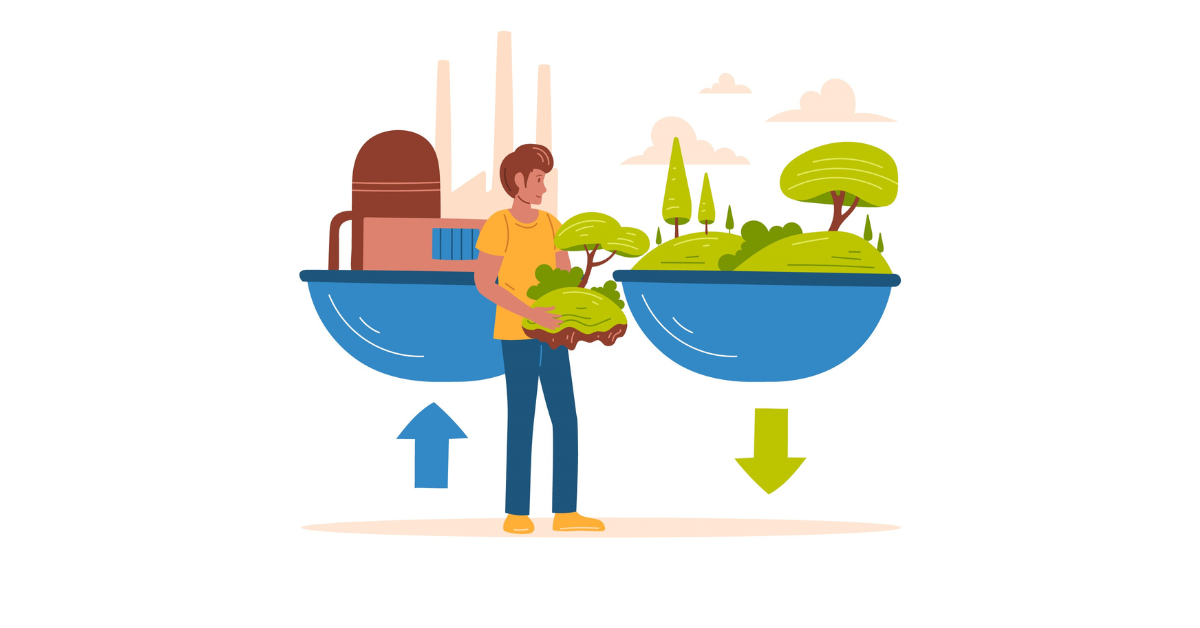
GHG accounting breaks down the moment emissions are calculated without knowing which farm, which batch, or which product they belong to. Today, most agricultural emissions are still reported using averages, surveys, and assumptions data that cannot be tied to the physical flow of crops through the supply chain. Traceability for GHG Accounting in Agriculture is essential to produce accurate, audit-ready emissions data across fragmented value chains. It links GHG emissions directly to specific farms, plots, batches, and products by capturing primary farm-level activity data inputs, practices, yields and following the physical flow of goods through aggregation, processing, and distribution.
Buyers and regulators are increasingly rejecting these estimates because they cannot be verified, audited, or traced back to source. The result is mounting compliance risk and credibility gaps. Without traceability, GHG accounting is guesswork not evidence. Unlike estimation-based models, traceability enables precise Scope 3 attribution, prevents data leakage, and supports product-level carbon footprints
Key Takeaways
Accurate GHG accounting in agriculture depends on linking emissions to physical reality specific farms, plots, harvests, and product batches. Without traceability, emissions remain abstract estimates rather than verifiable data.
Emissions must follow the product. Each farm plot has unique inputs, practices, yields, and loss rates that directly influence emissions. Traceability connects fertilizer use, irrigation, fuel consumption, and crop practices at the plot level, then carries this data forward to harvest batches, lots, and shipments. This ensures emissions are attributed to the actual product sold, not averaged across regions or suppliers.
Traceability enables the shift from estimates to primary data. Traditional GHG models rely on secondary datasets and emission factors applied broadly. Traceable systems capture primary activity data what was applied, where, when, and in what quantity allowing emission factors to be applied accurately and consistently.
It is the missing bridge between data layers. Traceability connects:
The real-world cost of missing traceability is high. Without it, companies face audit failures, double counting, misattributed emissions, and growing exposure to greenwashing claims. As buyers and regulators demand verifiable, product-linked emissions, traceability is no longer optional it is the foundation of credible agricultural GHG accounting.
Guide to Supply Chain Traceability:
Unlock end-to-end visibility in your agri supply chains and ensure compliance.
GHG Accounting in Agriculture:
Learn how farm-level data and traceability drive accurate, audit-ready emissions reporting.
For agri-food companies, Scope 3 emissions account for 80–90% of total climate impact, and the majority of these emissions originate at the farm. Using regional averages or supplier declarations no longer meets buyer, regulatory, or audit expectations. Accurate Scope 3 reporting requires primary, farm-level emissions data that reflects what actually happened on each plot not what typically happens in a region. Without this granularity, emissions are misallocated, reduction plans are ineffective, and audit risk increases sharply. GHG emissions in agriculture are driven by activities, not assumptions. To calculate credible emissions, data must be captured across three layers: inputs, practices, and outputs.
Input use is the largest driver of on-farm emissions, particularly nitrous oxide (N₂O) from fertilizers and CO₂ from energy use.
Why it matters: Emission factors vary by input type and usage pattern without exact data, calculations default to unreliable averages.
Farming practices determine how inputs translate into emissions and sequestration.
Why it matters: Two farms using the same fertilizer can have vastly different emissions depending on how the land is managed.
Emissions must be normalized against what is produced to calculate product-level footprints.
Why it matters: Without accurate output data, even precise input data produces misleading carbon footprints.
Scope 3 accuracy is impossible without farm-level emissions data. Inputs, practices, and outputs together create a verifiable emissions record that can be traced to specific products, suppliers, and markets. As regulators and buyers move from estimates to evidence, farm-level data is no longer a “nice to have” it is the foundation of credible agricultural GHG accounting.
For high-integrity GHG reporting, emissions must follow the product not just the farm. Farm-level data alone cannot explain how emissions move through aggregation, processing, and export. Once crops are pooled, split, or transformed, emissions attribution breaks down unless batch- and lot-level traceability is in place. This is where most agricultural emissions accounting fails.
A single farm may produce multiple harvest batches with different practices, yields, and emissions intensities. When these batches are aggregated, processed, or shipped, emissions must be carried forward and re-allocated in proportion to the physical flows. Without batch-level traceability, emissions are averaged or misassigned creating distorted product footprints and audit exposure.
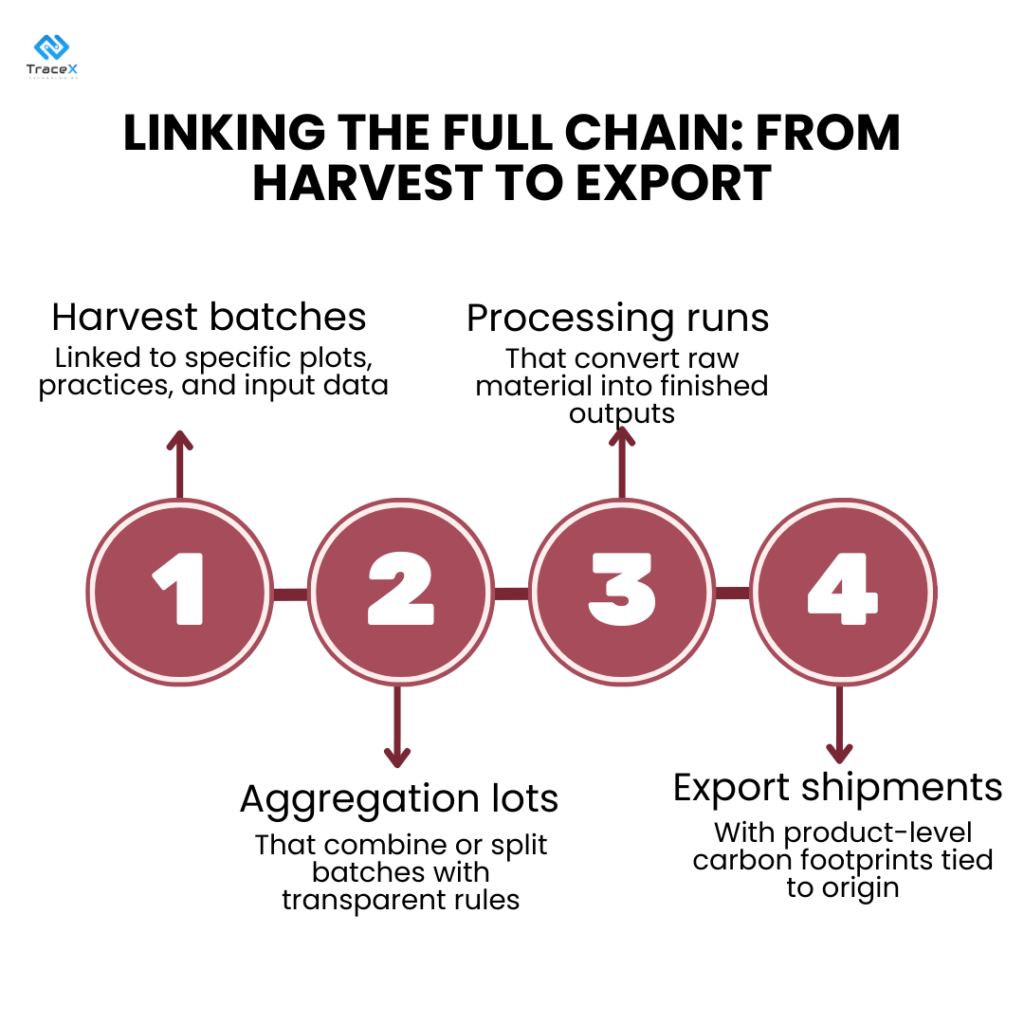
In traditional mass pooling, low-emission batches can be mixed with high-emission ones, allowing emissions to “leak” across products or markets. Batch-level traceability enforces controlled allocation, ensuring emissions stay with the correct volumes, buyers, and claims critical for Scope 3 reporting, SBTi FLAG, and buyer audits.
Both models fail without digital traceability.
Batch-level traceability transforms emissions attribution from estimation to evidence. It enables product-level carbon footprints, prevents greenwashing, and meets rising regulatory and buyer demands for auditable, defensible agricultural emissions data.
Aggregation is where agricultural supply chains gain efficiency and where emissions integrity is most often lost. When crops from hundreds or thousands of farms are pooled without emissions traceability, carbon data becomes detached from physical product flows, creating silent but serious risk.
At aggregation centers, produce with vastly different emissions profiles driven by fertilizer use, irrigation intensity, or practices gets mixed under a single lot ID. Without batch-level rules, low-emission volumes are averaged with high-emission ones, distorting product footprints.
In processing facilities, raw inputs are split across multiple processing runs, yields vary, and losses occur. If emissions are not reallocated at each transformation step, the resulting outputs carry inaccurate or inflated carbon claims.
During export consolidation, shipments are assembled from multiple processing lots. Without chain-of-custody continuity, emissions may be incorrectly assigned to markets, buyers, or certifications triggering non-compliance risks.
Regulators and global buyers increasingly expect verifiable chain-of-custody integrity, not estimates. Frameworks like SBTi FLAG, CSRD, and buyer-specific carbon disclosures demand proof that emissions claims align with physical product movement. Any break in traceability raises red flags during audits and due diligence.
Spreadsheets cannot model real-world complexity splits, merges, losses, and transformations across time and locations. They rely on static assumptions, manual reconciliation, and delayed reporting. At scale, this leads to double counting, emissions leakage, and audit failure.
Without emissions traceability through aggregation, carbon accounting becomes guesswork. Digital, batch-level chain of custody is the only way to preserve emissions integrity from farm to export.
Accurate GHG accounting in agriculture cannot scale on surveys, spreadsheets, or annual estimates. Digital traceability platforms solve this by embedding emissions data directly into day-to-day supply chain operations turning reporting into a byproduct of execution, not a separate exercise.
Digital platforms record primary activity data at the source fertilizer application, fuel use, irrigation, crop practices, and yields directly from farmers and field teams. This replaces proxy-based emission factors with verifiable, plot-level inputs, dramatically improving Scope 3 accuracy.
Emissions are mathematically linked to physical product flows. As crops move from farm → harvest batch → aggregation lot → processing run → shipment, emissions follow the material. This prevents averaging errors and enables product-level carbon footprints, not just farm-level totals.
Instead of backward-looking annual reports, digital systems provide near–real-time emissions insights. Companies can identify hotspots mid-season, course-correct practices, and validate reductions before audits or buyer reviews critical for SBTi FLAG and CSRD alignment.
Immutable, time-stamped records ensure data integrity across multiple stakeholders. Every data point from farm activity to batch conversion is auditable, reducing greenwashing risk and strengthening buyer and regulator confidence.
Digital traceability platforms turn fragmented agricultural data into continuous, audit-ready GHG intelligence at the scale modern food and agri supply chains demand.
TraceX provides a highly integrated digital platform that bridges the gap between farm operations and verified emissions reporting, enabling agribusinesses to achieve audit-ready GHG accounting at scale.
TraceX platform captures activity data at the farm and plot level fertilizer use, irrigation, fuel, and crop practices and links them directly to harvest batches. This ensures that emissions are accurately attributed to the physical product, not just the farm.
The platform tracks every stage from inputs (seed, fertilizers, chemicals) to outputs (harvest, processing, storage). This end-to-end attribution provides precise product-level carbon footprints, essential for Scope 3 reporting and sustainability claims.
TraceX organizes and stores emissions and traceability data in a structured, auditable format. Companies can seamlessly meet:
Traceability is no longer optional it is the foundation of credible GHG accounting in agriculture. By linking emissions to specific farms, plots, and product batches, agribusinesses can move from estimates to verifiable, audit-ready data. Batch-level and lot-level tracking, combined with digital platforms like TraceX, ensures accurate Scope 3 reporting, compliance with SBTi FLAG and CSRD, and reduces exposure to greenwashing risks. Integrating traceability into your supply chain not only strengthens sustainability credentials but also enhances market access, operational efficiency, and stakeholder trust.
Chain of Custody in Supply Chains:
Ensure product integrity and regulatory compliance from farm to fork.
Read our in-depth blog on chain of custody.
Digital Traceability for Food Transformation:
Discover how digital platforms are reshaping food supply chains for transparency and efficiency.
Explore the blog here.
Agricultural GHG Emissions:
Learn how traceability and farm-level data enable accurate, audit-ready emissions accounting.
Dive into our blog on agricultural GHG emissions.
Yes. Batch-level traceability ensures that emissions are accurately linked to specific product lots, preventing misattribution and supporting credible Scope 3 reporting.
No. Auditable GHG accounting requires farm-level activity data inputs, practices, and yields to verify emissions rather than relying on averages or estimates.
Data should be captured at the farm, plot, and batch level, including inputs, practices, outputs, and post-harvest handling, to ensure precise emissions attribution and regulatory compliance.