
Quick summary: Explore how Nigeria’s rubber exporters can achieve EUDR compliance through digital traceability, geolocation mapping, and blockchain verification. Learn how platforms like TraceX simplify Due Diligence Statement (DDS) creation, ensure deforestation-free sourcing, and future-proof rubber exports to the EU market.
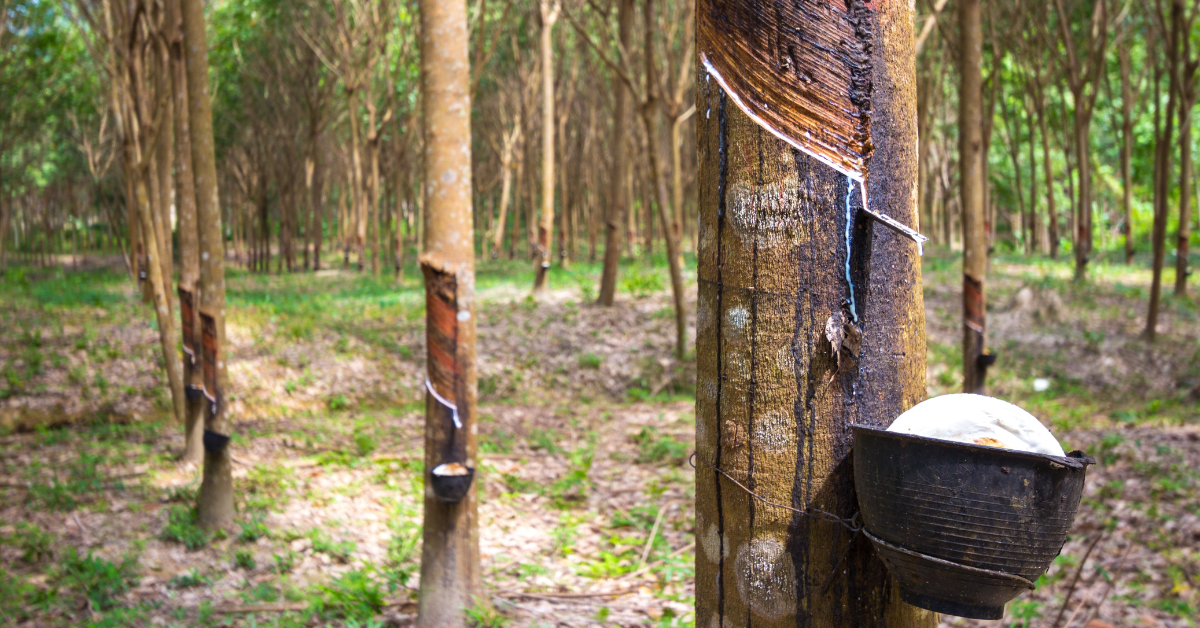
EUDR Compliance for Rubber Exporters in Nigeria requires proving that all rubber and rubber-wood products are deforestation-free, legally sourced, and fully traceable to mapped plantation plots. Exporters must collect polygon-level geolocation, verify land-use legality, document harvesting cycles, and maintain an unbroken chain of custody from farm to processor. They must also conduct risk assessments for sourcing regions, ensure supplier declarations are accurate, and submit a compliant Due Diligence Statement (DDS) before accessing the EU market. Effective EUDR Compliance for Rubber Exporters in Nigeria depends on robust traceability systems, verified documentation, and strong supplier oversight.
Nigeria is one of West Africa’s most important natural rubber producers, with the European Union serving as a key export destination for raw rubber, rubber-wood, and processed rubber products. Although smaller in scale compared to major Asian producers, Nigeria’s rubber exports to the EU have shown steady potential as demand grows for sustainably sourced natural rubber used in tyres, industrial products, footwear, adhesives, and emerging green industries. The country’s rubber value chain spans upstream latex tapping, midstream processing (TSR rubber, ribbed smoked sheets), and an expanding downstream manufacturing segment.
Rubber plantations in Nigeria are largely concentrated in the South–South and South–East regions including Edo, Delta, Cross River, Ondo, and Akwa Ibom areas with rich agroforestry potential but also sensitive ecological landscapes. Historical land-use change, encroachment, and the expansion of smallholder plantations have raised concerns linked to deforestation, especially as global buyers increasingly demand verifiable, sustainability-aligned sourcing. The sector is predominantly smallholder-driven, with over 70% of rubber coming from small farms, creating significant challenges in achieving consistent traceability, legality verification, and plantation-level documentation.
With rising global pressure for ethically produced rubber particularly from automotive, tyre, and medical manufacturing sectors Nigeria faces increasing scrutiny from international buyers. This shift is driving the adoption of digital traceability tools, geolocation mapping, and EUDR-aligned verification systems to ensure Nigeria’s rubber remains competitive in EU and global markets. Nigerian exporters are now being encouraged to move away from paper-based record-keeping toward technology-driven traceability platforms that strengthen documentation and supply-chain transparency.
The EU Deforestation Regulation (EUDR) places natural rubber and key rubber-derived products directly within its scope. Relevant Harmonised System (HS) codes include:
The regulation entered into force on 29 June 2023, with full due-diligence obligations effective 30 December 2025 for large and medium operators, and 30 June 2026 for micro and small enterprises.
For Nigerian rubber exporters, aligning with EUDR requirements will require robust geolocation mapping of rubber plantations, inclusion of smallholders in digital data systems, verification of land legality, and transparent chain-of-custody documentation from farm to export point. Early investment in digital traceability, satellite-based risk assessments, and compliant due-diligence systems is essential to maintain EU market access and reinforce Nigeria’s position in the global sustainable rubber economy.
Master the step-by-step process of submitting Due Diligence Statements under the new EUDR rules.
Read the blog on filing DDS for EUDR compliance
Don’t wait until deadlines tighten learn how traceability, digital documentation, and risk intelligence can keep your exports compliant and competitive.
Read our latest blog on EUDR rubber regulations
Nigeria’s rubber industry dominated by smallholders and characterized by fragmented supply networks faces significant hurdles as it prepares for EUDR enforcement. The regulation’s strict requirements for deforestation-free production, land legality, and full farm-level traceability introduce structural, logistical, and technological challenges that rubber exporters must urgently address to maintain access to the EU market.
EUDR requires polygon-level geolocation for every rubber plot supplying the export chain. In Nigeria, the majority of rubber comes from smallholders with:
Mapping tens of thousands of dispersed plantations across Edo, Delta, Cross River, Ondo, and Akwa Ibom poses one of the sector’s biggest compliance burdens.
Nigeria’s rubber belt overlaps with regions that have experienced historical deforestation and land-use change. Exporters must prove that no forest was cleared after 31 December 2020, which is challenging due to:
This requires advanced satellite monitoring and risk assessment systems not commonly used in the sector.
Land tenure in parts of Nigeria is complex, with traditional ownership structures, community lands, and formal land titles often overlapping. Exporters must verify:
Smallholders frequently lack formal documentation, making legality verification difficult and creating potential EUDR non-compliance risks.
Nigeria’s rubber supply chain involves multiple intermediaries:
smallholders → aggregators → cooperatives → processors → exporters
At each stage, traceability can be lost due to:
Full chain-of-custody traceability under EUDR requires digital tracking systems that many small and medium operators do not yet have.
Rubber trees felled after latex exhaustion are often sold as rubber-wood, a category also covered under EUDR. Nigeria faces challenges because:
This complicates compliance for exporters handling both latex-based products and rubber-wood derivatives.
EUDR requires operators to identify, document, and mitigate sourcing risks. Nigerian exporters often lack:
Without standardized risk-assessment frameworks, DDS submissions may fail EU scrutiny.
Each export to the EU requires a Due Diligence Statement (DDS). For Nigerian exporters, challenges include:
Any missing data can lead to shipment delays or rejection in the EU entry point.
Many smallholders and cooperatives lack:
Exporters must invest in training, field data collection, and onboarding systems to bring upstream suppliers into EUDR compliance.
Nigeria’s rubber sector includes many small and medium exporters who face:
This can strain financial resources and slow compliance efforts.
Nigeria’s rubber export sector faces significant challenges under the EUDR—from mapping smallholder plots and verifying legality to achieving end-to-end traceability and risk assessment. Overcoming these hurdles will require digitalization, strong supplier engagement, geospatial tools, and transparent chain-of-custody systems. Early action will be critical to maintaining EU market access and strengthening Nigeria’s position in the global sustainable rubber industry.
The EU Deforestation Regulation (EUDR) requires all rubber exported to the EU to be fully traceable, legally sourced, and proven deforestation-free creating significant challenges for Nigeria’s smallholder-dominated and highly fragmented rubber sector. TraceX’s EUDR Compliance Platform offers a digital, scalable, and transparent solution that enables Nigerian exporters to meet regulatory demands efficiently while strengthening supply-chain integrity and safeguarding long-term EU market access.
TraceX platform connects smallholders, cooperatives, aggregators, processors, and exporters through a unified digital ecosystem. Each batch of rubber is assigned a unique digital ID linked to verified geolocation, land legality documentation, and chain-of-custody data, ensuring consistent traceability and audit readiness from plantation to export terminal.
Field officers and cooperative managers can capture farm polygons, ownership documents, production data, and compliance records directly through mobile devices. TraceX platformautomatically compiles this information into EUDR-compliant Due Diligence Statements (DDS), eliminating manual paperwork, reducing human error, and supporting seamless submission to the EU’s central reporting system.
Every transaction—from latex tapping to aggregation, processing, and export—is recorded on TraceX’s tamper-proof blockchain ledger. This immutable record provides verifiable proof of origin and legality, giving EU regulators and buyers complete confidence in Nigeria’s rubber supply chains and simplifying compliance audits.
Given Nigeria’s highly decentralized rubber production spread across Edo, Delta, Cross River, Ondo, and Akwa Ibom TraceX platform enables rapid smallholder onboarding through intuitive mobile tools. Farmers are GPS-mapped, verified, and integrated into the digital supply chain, ensuring full visibility and inclusive compliance across thousands of small plots.
TraceX solution uses satellite imagery, geospatial analysis, and machine-learning algorithms to identify deforestation risks around rubber plantations. The system flags potential post-2020 land-use changes, highlights high-risk sourcing areas, and provides early alerts empowering Nigerian exporters to take proactive mitigation measures before issues jeopardize EU shipments.
TraceX platform functions as a secure shared data layer connecting exporters, regulators, partner organizations, and certification bodies. This transparency accelerates verification, improves data accuracy, supports third-party audits, and strengthens Nigeria’s credibility within EU sustainability frameworks.
With blockchain-anchored traceability, advanced risk analytics, and automated DDS workflows, TraceX transforms EUDR compliance from a regulatory burden into a strategic asset. Nigeria’s rubber exporters can enhance transparency, build buyer trust, protect smallholder livelihoods, and secure uninterrupted access to premium EU markets.

EUDR compliance represents a fundamental shift for Nigeria’s rubber export industry, reshaping how rubber is produced, documented, and delivered to EU markets. As the EU enforces strict deforestation-free and legality requirements, Nigerian exporters must transform their supply chains to meet new transparency and traceability standards. Compliance is no longer optional it is essential for maintaining market access, protecting export revenues, and strengthening Nigeria’s position in the global rubber economy.
Nigeria’s rubber exports to the EU must be traceable back to specific plantation plots. Exporters must provide:
This creates a new baseline where rubber cannot enter the EU unless its exact origin is digitally mapped and verified.
Exporters must demonstrate that no forest was cleared to establish or expand rubber plantations after the EUDR cut-off date. This requires:
Failure to prove deforestation-free sourcing can result in shipment rejection or regulatory penalties.
Nigeria’s exporters must show that rubber is produced in accordance with national laws, including:
Given Nigeria’s mix of formal and informal land regimes, legality verification becomes a critical and challenging requirement.
Rubber supply chains in Nigeria often include multiple intermediaries. EUDR now requires:
This eliminates undocumented sourcing paths and strengthens accountability.
Every shipment entering the EU must be accompanied by a DDS, asserting:
This becomes a legally binding declaration errors or incomplete data pose major compliance risks.
The burden of compliance does not fall only on farmers. Exporters must:
This enhances professionalism and transparency across Nigeria’s rubber ecosystem.
While demanding, EUDR compliance positions Nigeria as a competitive source of sustainable natural rubber. Exporters that comply gain:
Compliance becomes a strategic advantage, not just a regulatory obligation.
EUDR compliance for Nigeria’s rubber exporters means achieving end-to-end visibility, legality verification, and deforestation-free proof across all supply sources. It demands digital transformation but opens the door to more resilient, transparent, and globally competitive rubber export systems. Exporters that invest early in traceability and risk management will lead the future of Nigeria’s sustainable rubber economy.
Achieving EUDR Compliance for Rubber Exporters in Nigeria is essential for safeguarding long-term access to the EU market and strengthening the country’s position in the global rubber economy. By investing in plantation-level mapping, legality verification, transparent chain-of-custody systems, and digital traceability, Nigerian exporters can transform compliance into a strategic advantage. Early adopters will not only avoid regulatory disruptions but also build stronger buyer confidence, protect smallholder livelihoods, and elevate Nigeria’s reputation as a reliable source of sustainable, deforestation-free natural rubber.
Understand the key components of EUDR compliance and how to streamline your DDS process efficiently.
Read the blog on EUDR Due Diligence
Learn how AI-driven automation and intelligent workflows simplify data collection, verification, and reporting.
Explore the blog on Agentic AI for EUDR
Discover how digital onboarding bridges the gap between smallholders and EUDR compliance.
Read our blog: Smallholder Onboarding for EUDR Compliance
EUDR compliance requires Nigerian exporters to prove that all rubber products are deforestation-free, legally sourced, and traceable to their plantation of origin before entering the EU market.
The EU is a major destination for Nigeria’s rubber exports. Compliance ensures continued market access, strengthens buyer trust, and positions exporters as sustainability leaders in the global value chain.
Nigerian exporters must map supply chains to the farm level, capture geolocation coordinates (GeoJSON), verify legal sourcing, and submit a Due Diligence Statement (DDS) via the EU portal before shipment.
Common challenges include fragmented smallholder networks, limited digital infrastructure, manual documentation, and lack of standardized traceability frameworks across the value chain.
Beyond meeting EU regulations, compliance drives supply chain transparency, builds brand credibility, enhances ESG performance, and opens access to premium global markets demanding sustainable rubber for the Nigerian exporters.