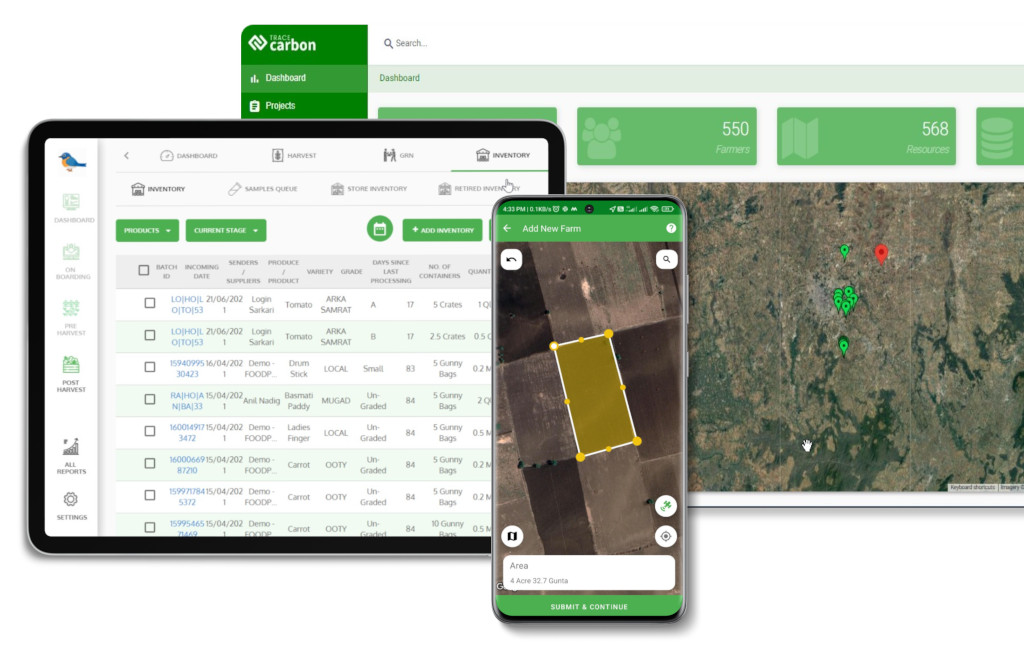
Quick summary: TraceX helps rubber part companies in Poland meet EUDR requirements with automated Due Diligence Statement (DDS) generation, farm-level traceability, and deforestation risk verification.
EUDR DDS for Rubber Parts Supply Chain in Poland requires Polish rubber parts manufacturers and exporters to prove that all-natural rubber used in their components is legally sourced, deforestation-free, and traceable to farm-level geolocation. Under the EU Deforestation Regulation, companies must submit a Due Diligence Statement (DDS) verifying supplier compliance, polygon mapping, land-use legality, and an unbroken chain of custody for every shipment. Implementing structured data capture, supplier onboarding, and digital traceability systems is essential for Polish rubber parts producers to meet EUDR requirements, reduce compliance risk, and maintain uninterrupted access to EU and global markets.
The EU Deforestation Regulation (EUDR) introduces strict traceability, legality, and geolocation requirements for natural rubber and rubber-derived products entering the EU market. Since natural rubber sourcing is associated with deforestation risks in major producing regions, Polish importers, processors, manufacturers, and distributors must ensure that every rubber input is deforestation-free, legally produced, and traceable back to its plantation of origin.
Poland is a major European hub for automotive, machinery, electrical equipment, household appliances, and industrial engineering all sectors that rely heavily on rubber components. EUDR applies to the full spectrum of HS codes relevant to Poland’s rubber parts supply chain, including:
These categories cover raw rubber, processed intermediates, and high-precision rubber parts used across Poland’s automotive OEM clusters, machinery plants, appliance factories, and broader industrial sectors—all requiring EUDR-validated compliance.
Poland has become a critical node in Europe’s industrial and mobility manufacturing ecosystem, with major production centres in Silesia, Wielkopolska, Lower Silesia, Mazovia, and Podkarpackie. Ports such as Gdańsk, Gdynia, and Szczecin serve as important entry points for natural rubber imported from Asia, Africa, and Latin America.
Under EUDR, importing any rubber product (HS 4001–4017) into Poland requires:
before goods can be placed on the EU market.
The regulation covers every stage of Poland’s rubber supply chain, from imported raw rubber and compounds to finished components assembled in Polish factories and subsequently distributed across Europe.
EUDR affects the complete lifecycle of rubber parts flowing into Poland from plantations in Thailand, Indonesia, Vietnam, Côte d’Ivoire, Liberia, and Malaysia to Polish ports, industrial clusters, logistics networks, parts manufacturers, and downstream European markets.
Polish operators must now:
These capabilities are essential for maintaining production continuity, ensuring regulatory compliance, and safeguarding Poland’s position as a leading European manufacturing and rubber-parts engineering hub.
Master the step-by-step process of submitting Due Diligence Statements under the new EUDR rules.
Read the blog on filing DDS for EUDR compliance
Explore how rubber parts importers can achieve traceability, transparency, and compliance under EUDR.
Read the full blog on EUDR Rubber Compliance
Polish manufacturers, importers, processors, and distributors of rubber parts including seals, gaskets, hoses, belts, tyres, vibration-control systems, and industrial rubber assemblies face a demanding compliance landscape under the EU Deforestation Regulation (EUDR). As a major European hub for automotive, machinery, appliances, transportation equipment, and engineering industries, Poland is deeply exposed to upstream sourcing risks and multi-tier supplier complexity. The key challenges include:
EUDR requires Polish operators to map every batch of natural rubber back to its exact plantation polygon.
Challenges:
Even small rubber components used in Polish automotive, machinery, or appliance production must be linked to farm-level origin an unprecedented requirement for the sector.
Polish rubber parts manufacturers rely on complex global supply chains involving processors, traders, compounders, converters, and OEM suppliers.
Challenges:
Without digital systems, building an end-to-end audit trail becomes extremely difficult.
Poland’s rubber components industry spans all major EUDR-regulated HS codes from raw rubber and compounds to tyre systems and precision-engineered parts.
Challenges:
This creates a substantial administrative burden for Polish importers and processors.
Rubber compounds, vulcanized sheets, and mixed polymer inputs often originate from multiple plantations.
Challenges:
This is a major concern for Polish automotive and machinery suppliers dependent on compounded rubber.
Polish operators must assess deforestation risk using geolocation, satellite data, and legal records.
Challenges:
Advanced digital tools are required to perform accurate and repeatable risk assessments.
Poland sources natural rubber from Thailand, Indonesia, Vietnam, Côte d’Ivoire, Liberia, and Malaysia regions with varying digital maturity.
Challenges:
Polish companies face immediate disruption risks if suppliers cannot meet EUDR standards.
EUDR requires accurate DDS filings prior to placing products on the EU market.
Challenges:
For Poland’s time-sensitive industries automotive, machinery, appliances delays can impact entire production lines.
Polish rubber parts companies face unprecedented complexity under EUDR from plantation-level provenance and multi-tier supplier onboarding to geospatial validation, risk scoring, and batch-by-batch DDS submission. Manual processes cannot meet these demands, making digital compliance platforms essential to safeguard operations, avoid regulatory disruptions, and ensure supply-chain continuity.
The EU Deforestation Regulation requires all natural rubber and rubber-derived materials entering or circulating within Poland to be fully traceable, legally sourced, and deforestation-free. Given Poland’s importance as a manufacturing powerhouse spanning automotive components (Silesia, Greater Poland), machinery, household appliances, aerospace parts, and industrial engineering manual DDS preparation is no longer viable. The TraceX EUDR Compliance Platform provides a unified digital infrastructure that automates and streamlines DDS workflows across Poland’s HS 4001–4017 supply chain.
TraceX automatically generates EUDR-compliant DDS filings for natural rubber, compounds, tyres, hoses, belts, gaskets, seals, anti-vibration mounts, and other HS 4016/4017 components entering Poland via ports such as Gdańsk, Gdynia, and Szczecin.
The platform:
Polish operators gain a consistent, audit-ready DDS workflow.
TraceX creates an immutable, tamper-proof digital trail for each rubber batch as it moves from plantation to processor to Polish manufacturing sites.
This ensures:
OEMs, Tier 1 suppliers, and distributors benefit from a traceability system they can trust.
Using TraceX mobile tools, plantations, smallholders, cooperatives, and processors in Asia, Africa, and Latin America can capture legality documents and upload geolocation polygons directly from the field.
For Polish manufacturers managing multi-tier global suppliers, this enables:
This solves a major compliance bottleneck at the source.
TraceX provides real-time dashboards with:
Polish importers, automotive suppliers, machinery manufacturers, and component assemblers can proactively mitigate risk and maintain full compliance ahead of EUDR deadlines.
A large Polish automotive rubber components manufacturer sourcing rubber compounds from Thailand and Côte d’Ivoire can use TraceX to map supplier plantations, verify legality, and auto-generate DDS filings for each container arriving at the Port of Gdańsk.
Within weeks, the company can achieve:
With blockchain-backed traceability, AI-powered risk assessment, and scalable supplier onboarding, TraceX transforms EUDR compliance into an opportunity. Polish rubber parts companies gain operational resilience, audit-proof documentation, reduced supply-chain risk, and stronger ESG credentials across automotive, machinery, home appliances, and industrial sectors.

EUDR compliance is not just an administrative requirement it reshapes how Poland’s rubber parts industry sources, manufactures, and trades across Europe. Poland is a major production base for automotive components, machinery parts, industrial systems, household appliances, rail equipment, and heavy engineering. All of these sectors rely heavily on rubber inputs regulated under HS 4001–4017. The implications are significant:
If natural rubber or rubber-based parts cannot be traced back to verified, deforestation-free plantations, shipments may be delayed or rejected at Polish ports. This creates production risks for Poland’s automotive clusters in Silesia, Poznań, Wrocław, and Kraków where “just-in-time” manufacturing leaves no room for compliance gaps.
Poland exports rubber-intensive products to Germany, France, the Netherlands, and the wider EU. Non-compliance could threaten Poland’s role in European supply chains, as OEMs increasingly prefer suppliers with transparent, low-risk sourcing.
Polish companies must validate plantation polygons, legality records, risk scores, and DDS filings for every shipment. Without digital systems, administrative workload will escalate, affecting procurement teams, logistics operators, and quality-control units.
Polish manufacturers depend on suppliers from Thailand, Indonesia, Vietnam, Côte d’Ivoire, and Malaysia regions with inconsistent digital readiness. Ensuring EUDR-aligned documentation across thousands of smallholders is a major operational challenge.
OEMs, Tier 1 suppliers, and EU regulators will demand proof that rubber inputs used in Polish factories are legally sourced and deforestation-free. Traceability becomes a business requirement tied to contract renewals, supplier scorecards, and ESG evaluations.
If suppliers are slow to comply, Polish importers may face:
EUDR enforcement will redefine the operational, financial, and reputational landscape for Poland’s rubber parts sector. Companies that digitize early mapping suppliers, securing DDS workflows, and building transparent chains of custody will not only maintain market access but strengthen their position in Europe’s industrial value chains. Those who delay risk supply disruptions, compliance failures, and lost competitive advantage.
EUDR DDS for Rubber Parts Supply Chain in Poland is now a strategic priority for ensuring uninterrupted production, regulatory alignment, and long-term competitiveness. By adopting digital traceability systems, automating DDS workflows, and strengthening supplier onboarding across global sourcing regions, Polish manufacturers can transform compliance from a burden into a competitive advantage. Early movers will secure resilient supply chains, reduce audit and customs risks, and position Poland as a trusted, high-integrity manufacturing hub within the EU’s evolving regulatory landscape.
Understand the key components of EUDR compliance and how to streamline your DDS process efficiently.
Read the blog on EUDR Due Diligence
Learn how AI-driven automation and intelligent workflows simplify data collection, verification, and reporting.
Explore the blog on Agentic AI for EUDR
Unpack the biggest hurdles faced by importers under EUDR and how technology can turn compliance into a competitive edge.
Read blog on Challenges for EU Importers
The EUDR is an EU regulation requiring companies to prove that natural rubber and rubber-derived components used in Polish manufacturing are deforestation-free, legally sourced, and fully traceable to plantation level. It applies to raw rubber (HS 4001), intermediates, and finished rubber parts used in Poland’s automotive, engineering, and industrial sectors.
A DDS is a mandatory declaration submitted by Polish operators confirming that all rubber inputs raw, compounded, or integrated into rubber parts comply with EUDR. It must include farm-level geolocation data, legality documentation, supply-chain mapping, and a risk assessment proving no post-2020 deforestation.
All manufacturers, Tier-1/Tier-2 automotive suppliers, importers, distributors, and traders placing rubber components on the EU market must comply. This spans gaskets, seals, hoses, belts, bushings, moulded components, and other rubber parts falling under HS 4001–4017.
Polish rubber parts manufacturers face major EUDR challenges such as tracing natural rubber back to verified plantation polygons, collecting accurate GeoJSON coordinates from thousands of smallholders, and validating legality documentation across multi-tier, global supply chains. The complexity increases as many components pass through processors, compounders, and intermediaries before reaching Poland, making manual DDS preparation slow, inconsistent, and high-risk. Ensuring deforestation-free sourcing, maintaining audit-ready documentation, and coordinating data across diverse suppliers remain the biggest operational hurdles under the EUDR.
TraceX digitizes supplier onboarding, collects verified geolocation and legality data, integrates satellite-based deforestation alerts, and automatically generates EUDR-compliant DDS files. The platform eliminates manual consolidation, reduces compliance time, and ensures exporters and Polish automotive suppliers maintain audit-ready, tamper-proof records.
Yes. TraceX’s mobile-based tools allow smallholders, cooperatives, and processors to upload documents, GPS coordinates, and traceability data even in remote regions. This ensures full upstream transparency, enabling Polish rubber parts makers to meet EUDR requirements even when sourcing from diverse and decentralized supply networks.