
Quick summary: Traceability in the cassava value chain ensures farm-to-market transparency, quality control, and compliance, helping Nigerian and African exporters meet global buyer standards and access premium markets.
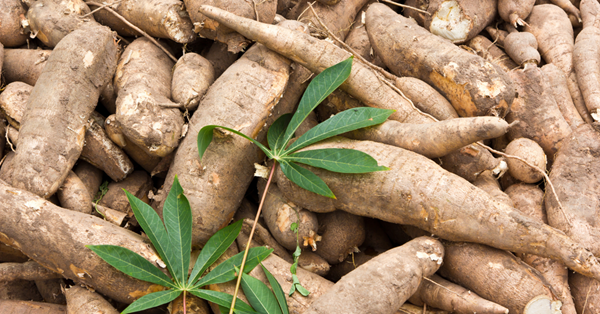
Cassava is one of the world’s most important staple and industrial crops, supporting millions of smallholder farmers and supplying food, starch, ethanol, and animal feed markets. Yet despite its scale and importance, the cassava value chain remains largely opaque, fragmented, and under-documented. Cassava Value Chain Traceability refers to the ability to digitally track cassava from farm-level production through aggregation, processing, and final market distribution. It involves recording verified data on farmer identity, farm location, harvest batches, processing activities, and product movement to ensure full chain-of-custody.
As global buyers, food processors, and regulators increasingly demand proof of origin, quality, and responsible sourcing, traditional cassava supply chains are struggling to keep up. Without reliable traceability, producers face rising risks quality disputes, food safety incidents, rejected shipments, and lost market opportunities making traceability no longer optional but essential for competitiveness and growth.
Effective traceability improves food safety, quality control, and compliance with buyer and regulatory requirements while reducing losses and supply chain risk. From farm to market, traceability enables transparency, accountability, and market access for cassava processors, exporters, and industrial buyers.
Key Takeaways
The cassava value chain is a multi-stage system that connects millions of smallholder farmers to food, industrial, and export markets. While it supports large volumes and diverse end uses, the structure of the chain creates significant traceability challenges if not digitally managed.
Cassava production is dominated by smallholder farmers cultivating small, dispersed plots, often using traditional practices. Farm-level data such as plot location, planting cycles, input use, and harvest volumes is rarely documented in a standardized way. This lack of structured records makes it difficult to verify origin, yields, or production practices from the start of the supply chain.
After harvest, cassava roots are sold to local collectors or aggregation centres. At this stage, roots from multiple farms are commonly mixed to meet volume requirements. Without batch identification or farmer-level documentation, origin information is lost early in the supply chain, creating blind spots that carry forward into processing and trade.
Cassava is processed into a wide range of products, including garri, high-quality cassava flour (HQCF), starch, ethanol, sweeteners, and industrial inputs. Processing involves washing, peeling, grating, fermentation, drying, and milling each step transforming the product. When input batches are not digitally linked to output products, traceability between raw roots and finished goods breaks down.
Processed cassava products move through wholesalers, industrial buyers, food manufacturers, and exporters. Domestic trade is often informal, while export markets increasingly require documented origin, quality, and compliance data. Without traceability, processors struggle to meet buyer audits, food safety requirements, and sustainability expectations.
Traceability typically fails at farm registration, aggregation, and batch segregation. Manual records, informal transactions, and lack of digital systems prevent consistent chain-of-custody, limiting transparency, increasing risk, and restricting access to premium and regulated markets.
Read the Ultimate Food Traceability Guide: Discover best practices, challenges, and solutions for end-to-end supply chain transparency.
Ensure Food Safety with Traceability: Learn how digital traceability protects your products, mitigates risk, and builds buyer confidence.
Traceability in the cassava value chain is the ability to systematically track cassava roots and derived products from farm-level production through aggregation, processing, distribution, and final markets using verifiable data and documented chain-of-custody. It ensures that every physical movement of cassava is linked to reliable digital records that confirm origin, handling, and transformation.
Traceability begins at the farm with the identification of farmers, plot locations, planting cycles, and harvest volumes. As cassava moves through local collection points, processing facilities, and logistics channels, each transaction, batch split, or transformation is recorded and linked. This creates a continuous audit trail that allows processors and buyers to trace finished products such as starch, flour, or ethanol back to specific farms and harvest periods.
Physical traceability refers to the controlled movement and segregation of cassava batches to prevent mixing of different sources. Data traceability complements this by capturing digital records farmer IDs, batch numbers, timestamps, and process logs that validate what happened to the product at each stage. Both are required: physical controls without data lack proof, while data without physical segregation lacks credibility.
Cassava is highly perishable and often sourced from thousands of smallholder farmers, increasing the risk of quality variation, contamination, and undocumented sourcing. Batch-level traceability allows processors to isolate quality issues, manage food safety risks, and comply with buyer and regulatory requirements. Origin verification also supports sustainability claims, contract enforcement, and access to formal domestic and export markets.
Traceability in the cassava value chain faces significant obstacles due to the structure of the industry, the prevalence of smallholder farms, and the lack of standardized digital systems. These challenges impact product quality, food safety, and market access.
Cassava is primarily cultivated by smallholder farmers managing scattered, low-input plots. Farms are often remote, and production practices vary widely from one farmer to another. This fragmentation makes it difficult to standardize data collection or ensure consistent quality. Informal sourcing networks exacerbate the problem, as multiple farmers’ produce may be aggregated without proper identification, making it impossible to trace outputs back to individual farms.
Implications: Lack of farm-level data limits verification of sustainable practices, inputs used, and yields key information required by buyers and regulators.
Cassava roots are typically collected by local intermediaries and moved to aggregation centres or processors. During these stages, mixing of roots from different farms is common. Without batch identification or digital recording, the origin of each lot becomes unclear.
Implications: Loss of origin data compromises traceability increases the risk of cross-contamination and prevents processors and exporters from proving provenance to buyers or meeting regulatory requirements.
Most cassava value chains rely on paper-based recordkeeping for farm production, harvest volumes, and batch tracking. Data is often incomplete, inconsistent, or delayed. Yield, quality, and processing information may not be recorded at all, or only partially documented at collection points.
Implications: These gaps make it difficult to maintain a complete chain-of-custody. It slows compliance audits, increases the risk of errors, and reduces confidence among industrial buyers and export markets.
Cassava is highly perishable, and poor post-harvest handling such as improper drying, storage, or delayed processing can lead to spoilage or high cyanide levels. Quality variation is common, especially in mixed batches.
Implications: Without traceability, processors and exporters cannot isolate quality issues or recall affected lots efficiently. This poses food safety risks, reduces buyer confidence, and can result in shipment rejections or market penalties.
TraceX provides a comprehensive digital traceability platform designed to address the key gaps in the cassava value chain from smallholder farms to export or industrial markets. Its end-to-end approach ensures transparency, quality, and compliance, making cassava supply chains more resilient and market-ready.
TraceX begins by digitally registering each farmer, capturing verified identities, cooperative or village affiliations, and land ownership or tenure documentation. GPS coordinates or polygon mapping of cassava plots are recorded to establish the precise origin of every batch. This ensures that farm-level data is structured, auditable, and linked to every future transaction.
Benefits: Eliminates reliance on informal records, verifies farm location for compliance, and enables accurate yield and production tracking.
Every cassava harvest is assigned a unique digital batch ID in TraceX, which stays linked to the originating farm and moves with the product throughout aggregation, transportation, and processing. Batch-level tracking captures volume, quality metrics, and movement at every stage, preventing mixing and enabling precise chain-of-custody documentation.
Benefits: Supports recall readiness, quality verification, and buyer transparency.
As raw cassava roots are transformed into garri, starch, flour, ethanol, or other products, TraceX links each processed output to its input batches. The platform tracks yield conversions, losses, and processing parameters, creating a clear, auditable link between raw material and finished goods.
Benefits: Ensures product integrity, enables accurate inventory and output reporting, and facilitates compliance with food safety and sustainability requirements.
All traceability data in TraceX is stored on a secure, tamper-proof blockchain, providing time-stamped, immutable records accessible to authorized stakeholders. This enables audit-ready traceability trails that can satisfy regulatory requirements, global buyer standards, and sustainability or ESG reporting.
Benefits: Protects data integrity, builds buyer confidence, and supports premium market access.

Traceability in the cassava value chain is a strategic necessity .Because cassava has a rapid post-harvest deterioration rate (spoiling within 48–72 hours), visibility is the difference between a high-value product and industrial waste.1
Here are the four primary use cases for cassava traceability:
For industrial-scale processors, traceability is about yield optimization and feedstock consistency.
In the food sector (High-Quality Cassava Flour – HQCF, Garri, and gluten-free snacks), traceability is the foundation of food safety and brand trust.
For exporters targeting Europe, Asia, or North America, traceability is a Market Access requirement.
Governments and NGOs use traceability to manage seed systems and subsidy distribution.
| Stakeholder | Primary Driver | The Traceability Solution |
| Industrial/Ethanol | Starch Yield | Time-stamped harvest-to-factory logs. |
| Food Processor | Safety/Compliance | Verification of cyanide removal processes. |
| Exporter | Global Access | DPPs with geolocated farm polygons. |
| Government | Food Security | Seed-to-sale tracking of improved varieties. |
Traceability in the cassava value chain is no longer optional it is essential for ensuring quality, compliance, and market access. By implementing farm-level digital onboarding, batch-level tracking, processing monitoring, and secure blockchain-backed data storage, stakeholders can transform fragmented, opaque supply chains into transparent, verifiable, and market-ready systems. Digital traceability reduces risk, improves operational efficiency, strengthens buyer confidence, and opens doors to premium and regulated markets, making it a strategic advantage for cassava producers, processors, and exporters alike.
See Traceability in Action: Explore how digital traceability connects raw inputs to processed food outputs and ensures compliance across transformation stages.
Discover the best traceability solution and learn what to look for when choosing a platform that delivers end-to-end visibility, compliance, and scalability.
Strengthen Your Food Supply Chain: Read our blog on modern food supply chain management and how traceability improves efficiency and resilience.
Traceability is the ability to track cassava from farm-level production through aggregation, processing, and distribution using verified data and chain-of-custody systems.
It ensures product quality, food safety, compliance with buyer and regulatory requirements, and access to premium or export markets.
Challenges include fragmented smallholder production, informal aggregation, lack of digital records, batch mixing, and post-harvest quality risks.
Digital platforms enable farm registration, batch-level tracking, processing monitoring, blockchain-backed records, and audit-ready reporting, closing gaps in transparency and compliance.
Yes. Verified origin, documented quality, and full chain-of-custody enhance buyer confidence, reduce rejection risk, and unlock regulated and premium international markets.