Quick summary: DCF sourcing ensures products are deforestation- and conversion-free. Learn how it supports compliance, ESG goals, and resilient, future-ready supply chains.
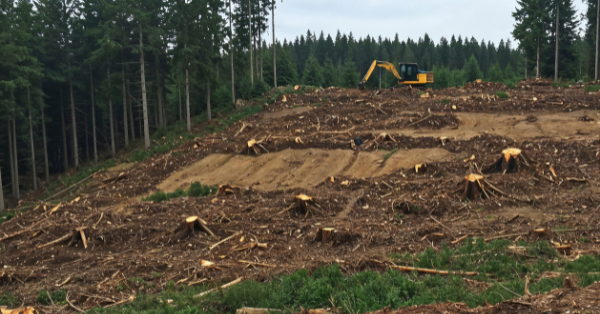
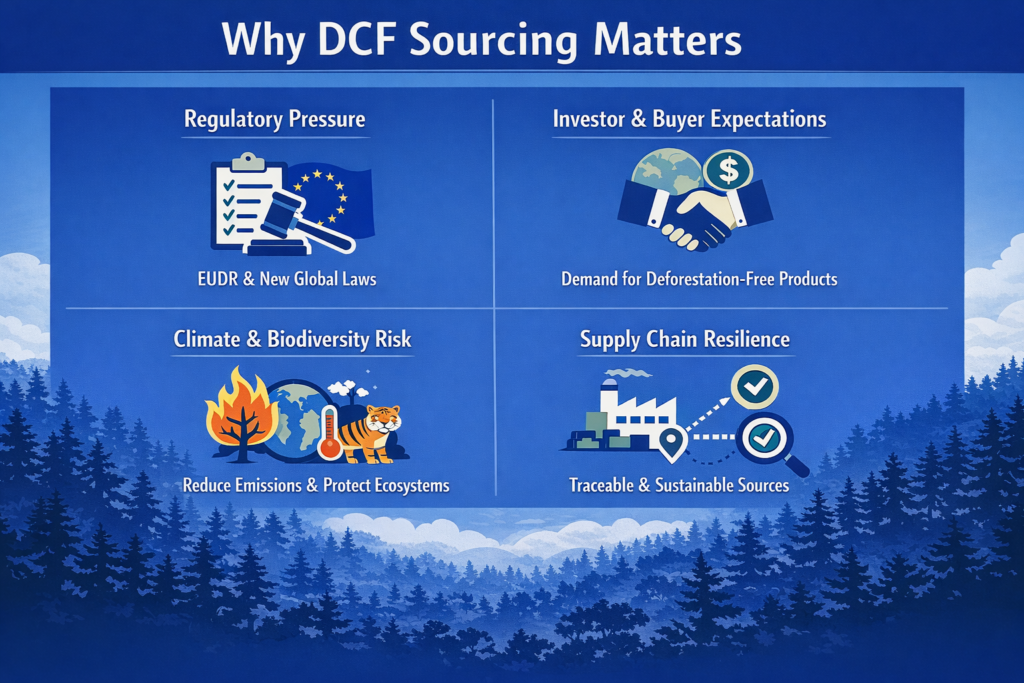
Global supply chains are under unprecedented scrutiny and for companies sourcing agricultural and forest-risk commodities, “business as usual” is no longer an option. From tightening regulations like the EU Deforestation Regulation (EUDR) to rising investor and customer expectations, brands are being asked a difficult question: Can you prove your products are not driving deforestation or land conversion? This is where DCF sourcing comes in. Short for Deforestation- and Conversion-Free sourcing, it goes beyond traditional “deforestation-free” claims by addressing the loss of all natural ecosystems not just forests. DCF sourcing (Deforestation- and Conversion-Free sourcing) ensures commodities are produced without causing deforestation or land-use conversion after a defined cut-off date. It is essential for regulatory compliance, SBTi FLAG targets, and credible ESG reporting.
For many organizations, the pain point isn’t intent, but execution: fragmented supplier data, unclear cut-off dates, and growing pressure to align with frameworks like SBTi FLAG make compliance complex and risky.
In this guide, we break down what DCF sourcing really means, how it differs from deforestation-free approaches, and why it has become a critical foundation for credible, compliant, and future-ready supply chains.
Key Takeaways
DCF sourcing (Deforestation- and Conversion-Free sourcing) is a responsible sourcing approach that ensures agricultural and forest-risk commodities are produced without causing deforestation or the conversion of natural ecosystems after a defined cut-off date. It requires companies to verify that their supply chains do not contribute to the loss of forests or other natural landscapes such as grasslands, wetlands, and savannahs.
At its core, DCF sourcing moves supply chains away from environmental harm and toward measurable, verifiable sustainability.
DCF sourcing addresses both, recognizing that environmental damage does not stop at forest boundaries.
“Zero deforestation” commitments focus only on forests, leaving other high-value ecosystems unprotected. This can unintentionally shift land-use pressure from forests to grasslands or wetlands.
DCF sourcing closes this gap by:
As a result, DCF is widely considered a more comprehensive and future-proof standard for sustainable sourcing.
Understand the key drivers of global deforestation and why they matter →
Read our guide to building deforestation-free supply chains for EUDR →
DCF sourcing is especially critical for forest- and land-use-risk commodities, including:
These commodities are frequently in scope for regulations, corporate sustainability commitments, and climate frameworks such as SBTi FLAG.
While the terms deforestation-free and DCF (Deforestation- and Conversion-Free) are often used interchangeably, they are not the same. The difference lies in scope, environmental impact, and long-term credibility and that difference is becoming increasingly important as regulations and climate frameworks tighten.
Deforestation-free sourcing focuses solely on preventing the clearing of natural forests for agricultural or commercial use after a defined cut-off date.
Key characteristics:
Deforestation-free commitments were an important first step, but they leave critical gaps in ecosystem protection.
Land-use change does not stop at forests. When deforestation is restricted, agricultural expansion can shift to non-forest natural ecosystems, a phenomenon known as leakage.
Conversion refers to the transformation of these ecosystems into farmland, plantations, or industrial land often with equally damaging consequences:
Ignoring conversion can undermine the environmental benefits of deforestation-free commitments.
Non-forest ecosystems play a critical role in climate and biodiversity stability:
Because these ecosystems are not always legally defined as forests, they are vulnerable under deforestation-only approaches.
DCF sourcing expands protection to all natural ecosystems, not just forests. This makes it a more robust and credible sustainability standard.
DCF sourcing:
As climate policy, biodiversity regulation, and ESG expectations evolve, companies relying only on deforestation-free claims may face compliance gaps and reputational risk.
| Feature | Deforestation-Free (DF) | Deforestation & Conversion-Free (DCF) |
| Core Definition | No conversion of forests to agricultural use after the cut-off date. | No conversion of any natural ecosystem to agricultural/industrial use. |
| Land Types Covered | Primary, secondary, and regenerating forests (per FAO definition). | Forests + Savannahs, Grasslands, Peatlands, Wetlands, and Mangroves. |
| Regulatory Driver | EUDR (Mandatory for EU market access). | SBTi FLAG, SBT-N, and CSRD (Corporate Disclosure). |
| Scope 3 Impact | Captures Land Use Change (LUC) emissions from forests only. | Captures total Ecosystem Conversion emissions (critical for peat/savannah). |
| Cut-off Date Standard | Dec 31, 2020 (for EUDR compliance). | Varies, but 2020 is the industry standard (Accountability Framework). |
| Operational Goal | Market access & Legal safety. | “Nature-Positive” status & Climate resilience. |
A cut-off date is one of the most critical and most misunderstood elements of DCF (Deforestation- and Conversion-Free) sourcing. It defines the point in time after which any deforestation or land-use conversion makes a commodity non-compliant.
In DCF sourcing, a cut-off date is a fixed reference date used to assess land-use change. Commodities are considered DCF-compliant only if the land they were produced on was not deforested or converted after that date.
If deforestation or conversion occurred after the cut-off date, the product does not qualify as DCF regardless of whether the activity was legal or illegal.
Cut-off dates apply at the plot or production-unit level, not just at the country or supplier level, and are typically verified using geolocation and historical land-use data.
Cut-off dates vary depending on the regulation, standard, or framework, but they all serve the same purpose: preventing recent and ongoing ecosystem destruction.
Common examples include:
As regulations converge, 2020-based cut-off dates are becoming the global norm.
Cut-off dates are essential because they:
DCF sourcing is required for SBTi FLAG targets because it prevents emissions from deforestation and land conversion in agricultural supply chains.
Deforestation- and Conversion-Free (DCF) sourcing is a core requirement not an optional add-on under the Science Based Targets initiative (SBTi) FLAG framework. FLAG (Forest, Land and Agriculture) addresses emissions and removals from land use, making credible sourcing practices essential for companies with exposure to forest- and land-risk commodities.
The SBTi FLAG framework applies to companies whose activities involve agriculture, forestry, or land use, or that source commodities linked to deforestation and land conversion.
Key FLAG requirements include:
FLAG targets are designed to ensure companies contribute to limiting global warming by tackling one of the largest sources of emissions: land-use change.
SBTi FLAG requires companies to halt deforestation and conversion across their value chains. DCF sourcing is the mechanism that makes this requirement operational.
DCF sourcing is mandatory because it:
Without DCF sourcing, companies cannot credibly demonstrate alignment with FLAG’s core objectives.
Land-use change is a major driver of greenhouse gas emissions due to:
DCF sourcing supports emissions reduction by:
By stopping emissions at the source, DCF sourcing directly contributes to FLAG-aligned climate mitigation.
To meet SBTi FLAG expectations, companies must back DCF claims with credible evidence, not self-declarations alone.
Typical evidence includes:
Implementing Deforestation- and Conversion-Free (DCF) sourcing requires moving from high-level commitments to practical, verifiable actions across the supply chain. Below is a step-by-step approach that aligns with regulatory, ESG, and SBTi FLAG expectations.
Start by identifying commodities linked to deforestation or land conversion risks.
Common forest- and land-risk commodities include:
This step helps you prioritize efforts and focus on commodities most exposed to regulatory and reputational risk.
Develop a clear, written DCF sourcing policy that:
A well-defined policy creates alignment internally and sets clear expectations for suppliers.
Supplier mapping is critical for traceability and risk assessment.
Key actions include:
Without supplier and origin visibility, DCF compliance cannot be verified.
DCF sourcing depends on location-specific evidence.
Data collection typically includes:
Geolocation enables satellite monitoring and objective assessment of deforestation and conversion against the cut-off date.
See how farm mapping enabled deforestation-free cocoa sourcing in Nigeria →
Use geospatial analysis and risk assessment tools to evaluate:
This step transforms raw data into actionable compliance insights.
DCF sourcing is not only about exclusion it also involves improvement.
Best practices include:
Supplier engagement is essential for long-term compliance and supply continuity.
DCF compliance is ongoing, not a one-time exercise.
Effective monitoring includes:
Reporting should:
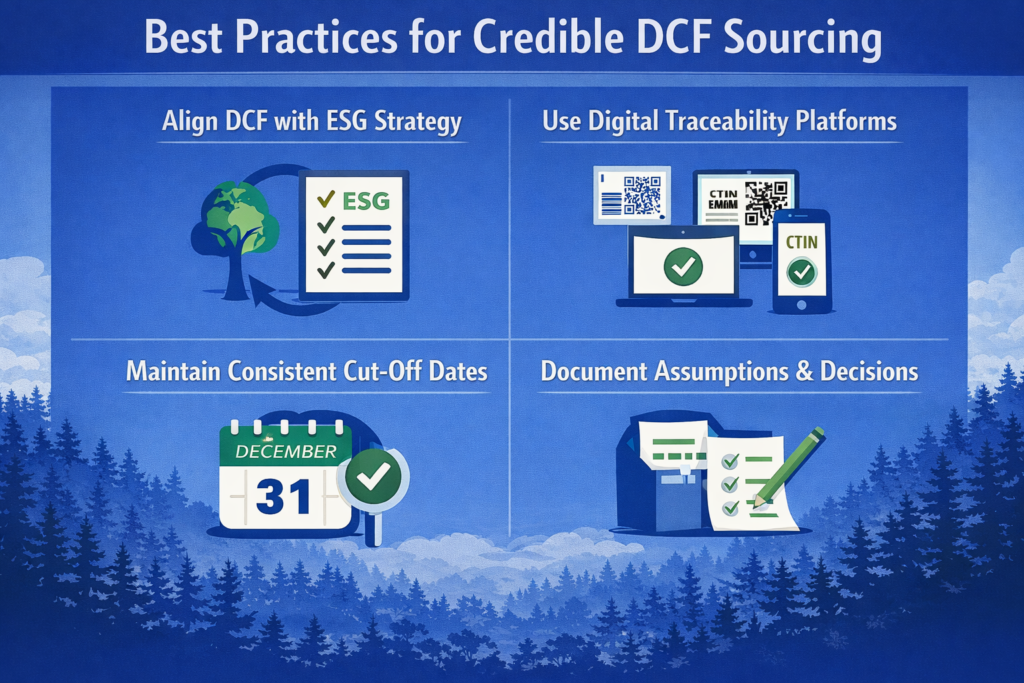
Credible DCF (Deforestation- and Conversion-Free) sourcing depends on strong monitoring, verification, and reporting systems. Together, these elements provide the trust and proof that regulators, investors, and buyers expect moving DCF from a policy statement to a defensible compliance practice.
Satellite monitoring is the backbone of DCF verification because deforestation and land conversion are location-specific and time-bound.
Key components include:
Geospatial analysis enables companies to:
This approach provides scalable, consistent monitoring across global supply chains.
Supplier declarations remain an important but supporting layer of DCF verification.
Typical documentation includes:
However, declarations alone are not sufficient. Best practice is to:
This strengthens accountability while keeping suppliers engaged.
Independent verification adds credibility and reduces compliance risk.
Third-party verification may include:
Audits help ensure:
Third-party assurance is increasingly expected in high-risk commodity supply chains.
Transparent reporting turns DCF efforts into measurable outcomes.
DCF performance is commonly reported through:
Effective reporting includes:
Consistent, evidence-backed reporting builds trust and reduces exposure to greenwashing claims.
While DCF (Deforestation- and Conversion-Free) sourcing is increasingly expected, implementation is complex, especially across global, multi-tier supply chains. Understanding the most common challenges helps companies design realistic, scalable, and inclusive DCF programs.
One of the biggest barriers to DCF sourcing is limited visibility beyond Tier 1 suppliers.
Common issues include:
Without accurate data, companies struggle to verify land-use change against cut-off dates. Overcoming this challenge requires structured supplier onboarding, clear data requirements, and trust-building over time.
Many forest-risk commodities are produced by smallholder farmers, who often face structural constraints.
Key challenges include:
Excluding smallholders can disrupt supply chains and create social risks. Successful DCF programs balance rigor with inclusion by simplifying data collection, providing support, and allowing phased compliance where appropriate.
DCF sourcing must work across thousands of suppliers and large geographic areas.
Scaling verification is difficult due to:
Companies need scalable tools such as satellite monitoring and risk-based approaches, focusing deeper verification efforts where risk is highest.
DCF sourcing often sits at the intersection of multiple frameworks and requirements.
Challenges include:
Misalignment increases compliance complexity and the risk of inconsistency. Best practice is to adopt the strictest common denominator and build flexible systems that can support multiple reporting formats.
TraceX’s Regulatory Compliance Platform helps companies implement DCF sourcing by enabling end-to-end digital traceability, from supplier onboarding and geolocation capture to risk assessment, monitoring, and audit-ready reporting.
It simplifies compliance with regulations and ESG frameworks by turning complex DCF requirements into scalable, data-driven workflows.
DCF sourcing is no longer a niche sustainability initiative it is becoming a baseline requirement for companies operating in forest- and land-risk supply chains. As regulations tighten, investors demand credible ESG performance, and climate frameworks like SBTi FLAG set clearer expectations, businesses must move beyond high-level commitments to verifiable, data-driven action. By embedding DCF sourcing into procurement, traceability, supplier engagement, and reporting processes, companies can reduce environmental risk, strengthen compliance, and build resilient supply chains that stand up to scrutiny today and in the future.
Understand what FLAG means for land-use emissions and supply chains →
Explore the SBTi FLAG guidelines and compliance expectations →
Learn how land-use change drives emissions—and how FLAG addresses it →
DCF sourcing is not universally mandatory yet, but it is required under specific regulations, buyer requirements, and climate frameworks such as SBTi FLAG. It is rapidly becoming a baseline expectation for high-risk commodities.
Regulations like the EU Deforestation Regulation (EUDR) and emerging global deforestation laws require companies to ensure products are not linked to deforestation and increasingly, land-use conversion after defined cut-off dates.
DCF focuses on deforestation and ecosystem conversion, while NDPE (No Deforestation, No Peat, No Exploitation) also includes social criteria such as labor rights and community impacts. DCF is narrower but more directly aligned with climate and land-use regulation.
Yes. Smallholders can comply with DCF requirements when companies provide simplified data collection, technical support, and phased compliance approaches, rather than exclusion.
Yes. Credible DCF sourcing typically requires farm- or plot-level geolocation data to verify land-use change against cut-off dates using satellite monitoring.