Quick summary: Digital farm management is becoming essential supply-chain infrastructure for agribusinesses. Learn how farm digitization enables traceability, compliance, and operational control at scale.
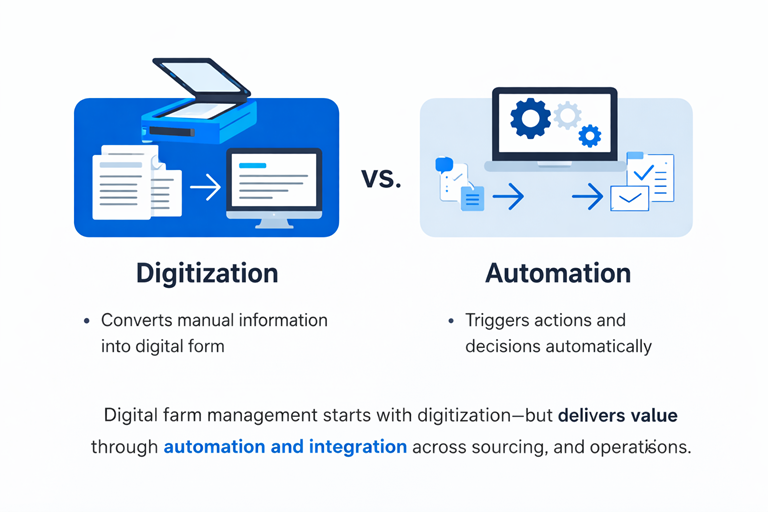
Agribusinesses are under growing pressure to digitize farm operations as supply chains become more complex, regulated, and risk-exposed. Climate volatility is disrupting yields, regulations are pushing accountability closer to the farm, and sourcing networks now span thousands of smallholders across regions. Digital farm management addresses this problem by turning farms into connected data points within the supply chain, linking farmers, plots, production, and transactions in a single, continuously updated system
Yet many organizations are still trying to manage this complexity using paper records, spreadsheets, and disconnected tools and systems that were never designed to deliver real-time visibility, traceability, or control.
The cost of this gap is rising fast. Fragmented farm data leads to delayed decisions, inconsistent reporting, compliance blind spots, and reactive firefighting when audits or disruptions hit. What once felt manageable at small scale now becomes a structural risk at scale.
This guide explains what digital farm management really means for agribusiness, why it matters now, and what organizations must get right to move from manual oversight to confident, data-driven farm operations.
Key Takeaways
Digital farm management is the structured use of digital systems to capture, manage, and update farm-level data across the entire agricultural lifecycle from farmer onboarding and plot mapping to production, post-harvest activity, and sourcing decisions. It turns farms from static records into active, connected data entities within the agribusiness supply chain.
At its core, digital farm management helps agribusinesses understand who is farming, where production happens, what is produced, and how it moves using real-time, verifiable data rather than paper or spreadsheets.
Includes:
Does not include:
Digital farm management is about operational control and data continuity, not just farm productivity.
Digital farm management replaces record-keeping with living systems that reflect how farms actually operate over time.
Regulations, buyer expectations, and risk management now demand proof at the farm and plot level. Without accurate farm-level data, agribusinesses face:
Digital farm management provides the data foundation needed to connect farms to procurement, sustainability, and compliance outcomes, making it a critical capability for modern agribusiness supply chains. With TraceX Digital Farm Management, this foundation becomes operational and scalable.
Want to understand how farm-level data protects market access?
Read our complete guide on Farm Management for Traceability and see how leading agribusinesses are building compliance-ready supply chains.
Sustainability starts at the farm – but credibility comes from data.
Learn how digital farm management enables sustainable agriculture through traceability, continuous monitoring, and evidence-based reporting.
Read: Farm Management for Sustainable Agriculture
Digital farm management is often misunderstood as a field-level or agronomy tool. In reality, it exists to serve multiple teams across the agribusiness, many of whom may never visit a farm but still depend on accurate, farm-level data to do their jobs effectively. As supply chains become more regulated, fragmented, and risk-exposed, farm data has become shared infrastructure, not a niche operational detail.
Procurement teams are responsible for securing supply, managing supplier relationships, and reducing sourcing risk, often across thousands of smallholders. Without digital farm management, procurement relies on aggregated data, late reports, and manual reconciliation.
Farm-level data allows procurement teams to:
Even without visiting farms, procurement teams depend on structured, continuously updated farm data to make defensible sourcing decisions.
Sustainability teams are accountable for traceability, impact reporting, and public claims but are often forced to work with incomplete or second-hand data.
Digital farm management enables sustainability teams to:
Farm-level data turns sustainability from narrative-based reporting into evidence-based accountability.
Compliance teams are under pressure to demonstrate that sourcing meets legal requirements such as EUDR and broader due diligence laws. Their biggest risk is not non-compliance it is missing or unverifiable data.
Digital farm management supports compliance teams by:
Even without field exposure, compliance teams rely on farm-level data as legal evidence, not operational detail.
Operations teams coordinate farmer onboarding, field activities, data collection, and post-harvest workflows. Fragmented tools and paper processes slow execution and create data gaps that impact downstream teams.
Digital farm management helps operations teams:
For operations, digital farm management is the bridge between field reality and enterprise systems.
Even when teams never set foot on a farm, their decisions, risks, and performance are tied to what happens there. Farm-level data has become critical supply-chain infrastructure, connecting sourcing, sustainability, compliance, and operations through a shared, trusted foundation.
Digital farm management ensures that this data is accurate, continuous, and usable so every team can operate with confidence, not assumptions.
Digital farm management is not about adding more tools in the field it’s about fixing structural problems that break sourcing, traceability, and compliance at scale. These are the four failure points that repeatedly surface across agribusiness supply chains.
Most agribusinesses still manage farm data across a patchwork of:
This data is often trapped at the field or cooperative level, disconnected from procurement, sustainability, and compliance systems.
Why does this break operations?
Digital farm management solves this by creating a central, continuously updated system of record for farms accessible across teams and seasons.
In many sourcing models, a “farm” is treated as a single unit. In reality:
Without plot-level mapping:
Plot-level digitization matters because risk, legality, and land-use change occur at the plot level, not the farm name. Digital farm management preserves this granularity, enabling defensible traceability and risk assessment.
Field data collection is still heavily manual in many programs:
The impact:
Digital farm management replaces manual workflows with mobile-first, intuitive tools that capture data once, validate it at the point of entry, and sync it automatically reducing friction for both field teams and downstream users.
Farm data often looks sufficient until an audit or buyer review begins.
Common failure points include:
When data cannot be verified, compliance breaks, regardless of sourcing intent.
These blind spots lead to:
Digital farm management addresses this by making farm data audit-ready by design structured, validated, and continuously updated so compliance does not depend on last-minute reconstruction.
Digital farm management must solve more than record-keeping. It must create trusted farm-level data that flows cleanly into procurement, sustainability, and compliance workflows closing gaps before they become operational or regulatory failures.
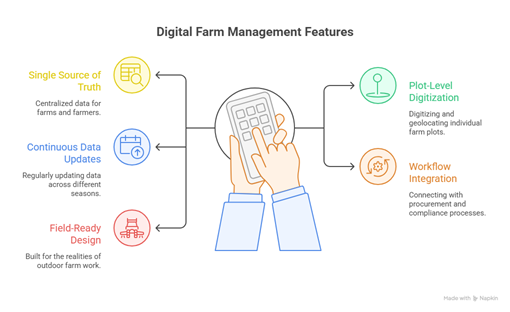
Digital farm management only works when it is built on the right foundations. These building blocks are not optional features; they are the minimum requirements for creating farm-level data that can support sourcing, traceability, and compliance at scale.
Every digital farm management system must start with clear, persistent farmer identities.
This means:
What matters is longitudinal data, not one-off surveys. Farmer identity should evolve season after season, capturing changes in plots, crops, volumes, and participation. Without this continuity, data becomes fragmented and unreliable.
Traceability and risk assessment depend on plot-level visibility, not farm names or village coordinates.
Non-negotiables include:
Plot digitization ensures that land-use change, deforestation risk, and production claims can be assessed where they actually occur at the plot level.
Field data must be captured where and when it happens.
Effective systems provide:
When tools are hard to use, adoption drops and data quality suffers. Digital farm management succeeds only when field workflows are fast, simple, and reliable.
The post-harvest stage is where value and risk converge.
Digital farm management must support:
Most importantly, it must preserve traceability through aggregation, ensuring that volumes can still be linked back to farms and plots after mixing.
Data collection alone does not equal control.
Non-negotiable capabilities include:
By surfacing gaps early, digital farm management prevents downstream failures such as audit issues, rejected claims, or blocked market access.
Together, these elements turn farm data into operational infrastructure. Without them, agribusinesses are left reacting to issues after they occur. With them, farm-level data becomes accurate, continuous, and usable supporting procurement, sustainability, and compliance with confidence.
Regulatory expectations are changing the role of farm data. Frameworks like EUDR and broader due diligence laws are no longer satisfied with high-level assurances or aggregated reporting. They are pushing accountability all the way to the farm and often the plot level.
Modern regulations place legal responsibility on companies that place products on the market. To meet that responsibility, they must be able to demonstrate where products were produced, under what conditions, and on which land.
This shift is driven by:
As a result, farm-level data is no longer optional, it is regulatory evidence.
Regulators and competent authorities increasingly expect farm data to be:
When any of these elements are missing, compliance breaks—even if sourcing practices are responsible.
Digital farm management provides the infrastructure required to meet these expectations.
Deforestation-free sourcing
By digitizing farm plots and linking them to production data, companies can assess deforestation risk at the plot level and demonstrate compliance with cut-off dates.
Due Diligence Statements (DDS)
Structured farm-level data feeds directly into due diligence workflows, reducing manual effort and minimizing the risk of incomplete or rejected submissions.
Audit readiness
Because data is continuously captured and validated, audits become a matter of access not reconstruction. Evidence is already in place when requested.
Document-based compliance relies on PDFs, declarations, and static reports. These models fail because:
Regulations require data, not paperwork. Digital farm management replaces document chasing with continuous, verifiable data flows.
Digitizing contract farming operations starts with turning fragmented, paper-based farmer relationships into structured, data-driven systems. This means geo-tagging farms at onboarding, capturing plot-level data, digitizing contracts, and tracking crop cycles, input usage, and harvest declarations through mobile-first tools. A well-designed digital platform connects farmer data to procurement, compliance, and payment systems, enabling real-time visibility into production commitments, reducing side-selling, and strengthening traceability from farm to buyer. Instead of chasing spreadsheets and field reports, agribusinesses gain a centralized, audit-ready view of their supplier network, improving supply stability, compliance readiness, and farmer engagement at scale.
Farm Management for Sustainability Standards and Certifications is the structured use of digital systems to capture, validate, and manage farm-level data required to meet evolving sustainability requirements. It goes beyond simple farm registration by integrating plot-level mapping, input tracking, harvest records, and transaction traceability into a continuous, auditable framework. As certifications and regulations increasingly demand verifiable proof, not just documentation, effective farm management ensures agribusinesses can demonstrate compliance, reduce audit risk, and maintain access to premium and regulated markets with confidence.
Making your farm supply chain export-ready requires more than collecting supplier declarations it demands structured, verifiable, and shipment-linked farm data. This starts with digitizing farm-level records, including plot geolocation, crop cycles, input usage, and harvest volumes, and connecting that data directly to procurement batches and export documentation. An export-ready system enables automated risk assessments, audit-ready traceability, and seamless generation of compliance records required by regulators and overseas buyers. When farm data flows digitally into inventory, ERP, and due diligence workflows, exporters can respond quickly to customs inquiries, reduce shipment delays, and protect continued access to high-value markets like the EU.
Digital procurement solutions powered by farm data transform sourcing from reactive buying to predictive decision-making. By integrating real-time farm-level insights such as crop progress, yield forecasts, geolocation, compliance status, and risk indicators, procurement teams gain early visibility into supply availability and potential disruptions. This enables smarter contracting, optimized purchase planning, and reduced dependency on last-minute spot buying. When farm data connects directly with ERP and inventory systems, companies can align procurement with production realities, strengthen supplier performance management, and secure compliant, traceable raw materials for export and retail markets.
An enterprise-grade digital farm platform must go far beyond basic record-keeping apps and offer robust infrastructure that connects farm operations to compliance, procurement, and export workflows. It should include mobile-first data capture tools for field officers and farmers, enabling real-time recording of crop cycles, inputs, and harvest data even in low-connectivity environments. Integrated geospatial mapping is essential for plot-level traceability and regulatory alignment, while a built-in risk engine should assess compliance, climate, and supplier risks automatically. Seamless API integrations with ERP, inventory, and reporting systems ensure farm data flows across the organization without manual intervention. Strong data governance frameworks and role-based access controls are critical to protect sensitive information while enabling transparency for regulators, buyers, and internal teams. Together, these capabilities elevate the platform from a simple farm app to a scalable digital backbone for traceable, compliant, and export-ready supply chains.
Digitization fails not because the goal is wrong, but because it is approached incorrectly. These are the most common missteps.
Farm data changes every season. Treating digitization as a one-off initiative leads to outdated records and false confidence. Digital farm management must be ongoing and operational, not project-based.
Data collected without validation quickly becomes unusable. Missing geolocation, inconsistent identifiers, or incorrect volumes surface later often during audits. Validation must happen at the point of entry, not after.
Many digitization efforts stop at the farm gate. This breaks traceability once products are aggregated or traded. Without capturing post-harvest transactions, farm-level data loses its value downstream.
Tools designed for pilots often fail at scale. They struggle with large farmer networks, multi-region operations, or seasonal variability. Scalable digital farm management systems are built for real-world complexity, not demonstrations.
Farm data is often collected for sustainability or compliance but never used by procurement. When farm data isn’t integrated into sourcing decisions, risk remains invisible until it’s too late.
Digitizing farms without disrupting operations requires a phased, structured rollout rather than a sudden system overhaul.
Digital farm management only delivers value when it works consistently, across regions, seasons, and large farmer networks. TraceX farm management solutions are designed with this reality in mind, focusing on operational adoption, data continuity, and scalability rather than one-off pilots or isolated tools.
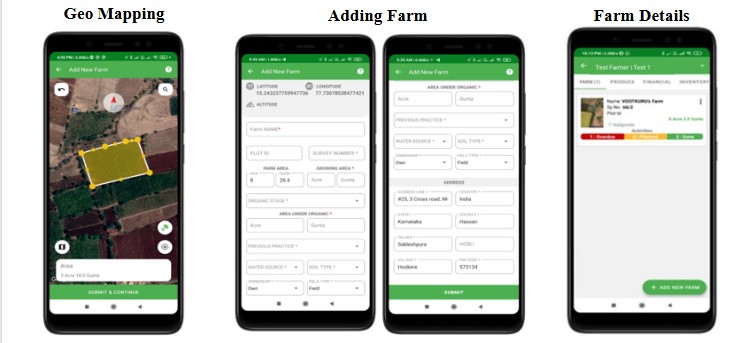
TraceX enables agribusinesses to digitize farms at the level that actually matters: plots, not just farms or villages. Each farmer is linked to one or more precisely mapped plots, with clear boundaries and season-level crop associations. This preserves the connection between land, production, and sourcing over time forming the foundation for traceability, risk assessment, and compliance.
Field teams operate in low-connectivity, high-pressure environments. TraceX provides mobile-first workflows designed for real-world field conditions, with offline functionality and simple user experiences. Data is captured once, validated early, and synced automatically, reducing delays, errors, and follow-up work while improving adoption among field staff.
Traceability often breaks after harvest, when crops are aggregated and transferred. TraceX’s workflows digitize post-harvest transactions, capturing volumes, dates, and ownership changes while preserving links back to farms and plots. This ensures that traceability survives aggregation and remains intact through procurement and processing stages.
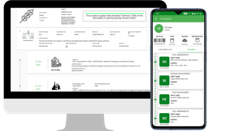
At the core of TraceX is an integrated farmer ledger that maintains a continuous, longitudinal record for each farmer spanning identity, plots, crops, deliveries, and transactions. Built-in risk visibility highlights data gaps, geolocation issues, and sourcing risks early, allowing teams to address problems before they escalate into compliance or operational failures.
TraceX is built to support large, complex sourcing networks, not small-scale demonstrations. Its architecture supports thousands of farmers, multi-region operations, and seasonal variability while integrating with procurement, compliance, and enterprise systems. This makes digital farm management a repeatable operating model, not a standalone initiative.
By combining farm digitization, field-ready workflows, post-harvest traceability, and integrated risk visibility, TraceX enables agribusinesses to manage farms as structured, reliable data assets at scale, and with confidence.
Digital farm management has moved beyond being a field tool or an IT upgrade. It is now core supply-chain infrastructure. As regulations tighten, sourcing networks expand, and scrutiny increases, agribusinesses can no longer afford reactive compliance built on documents and assumptions. The shift is toward operational control where farm-level data is continuously captured, validated, and connected to procurement, compliance, and sustainability workflows. Agribusinesses that get this right treat farm digitization as a permanent capability: they invest in plot-level visibility, mobile-first field execution, post-harvest traceability, and early risk detection. The result is not just compliance, but resilience where market access, buyer trust, and operational efficiency are protected by design, not managed in hindsight.
Export markets demand proof not promises.
Learn how farm management systems help exporters meet buyer requirements, reduce shipment risk, and maintain traceability from farm to port.
Read: Farm Management for Export-Ready Supply Chains
Contract farming breaks down when data does.
Discover the most common challenges in contract farming and how digital farm management helps agribusinesses manage growers, contracts, and delivery commitments at scale.
Read: The Real Challenges of Contract Farming
Traceability doesn’t start at the warehouse it starts at the farm.
Read how digital traceability connects farmers, plots, and post-harvest flows into a single, auditable supply chain.
Read: Digital Traceability in Agribusiness
Because farm-level data underpins procurement, traceability, compliance, and sustainability. Without reliable farm data, downstream systems fail regardless of how advanced they are.
By capturing and validating farm and plot data continuously, it prevents missing or unverifiable data from surfacing during audits or regulatory reviews.
No. Procurement, compliance, and operations teams all depend on farm-level data—even if they never visit farms.
Reactive compliance rebuilds evidence after issues arise. Operational control surfaces risk early and embeds compliance into everyday workflows.
They treat digitization as ongoing infrastructure, prioritize plot-level accuracy, integrate post-harvest data, and connect farm data directly to procurement decisions.