
Quick summary: Supplier Data Collection in EUDR for the Rubber Supply Chain in France: understand legal responsibilities, mandatory plantation-level data, common supplier data gaps, and how French rubber importers, traders, and manufacturers can achieve EUDR compliance without disrupting imports, processing, or EU market placement.
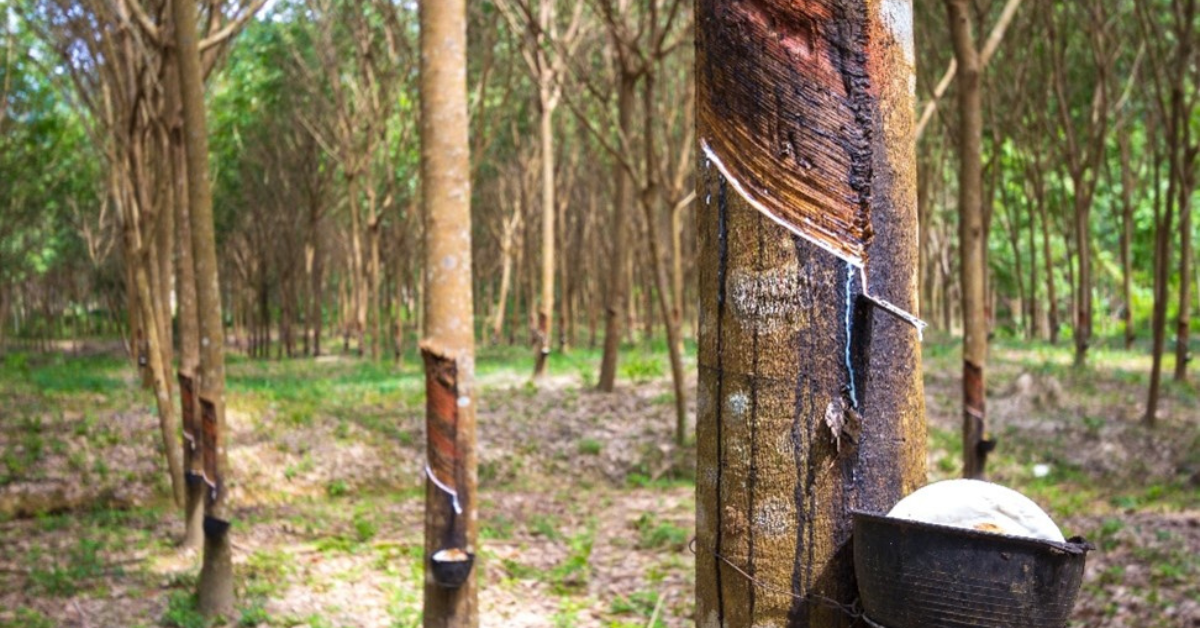
Supplier Data Collection in EUDR for Rubber in France has quickly become a critical compliance priority for French rubber importers, processors, tire manufacturers, and traders. As one of the EU’s major industrial economies with strong automotive, aerospace, and industrial manufacturing sectors, France plays a significant role in the import, processing, and utilization of natural rubber under the EU Deforestation Regulation (EUDR).
France is not simply a consumer of rubber products. It is a major manufacturing and processing hub for tires, industrial rubber components, transport equipment, and engineered goods. Large volumes of natural rubber enter France through key ports such as Le Havre and Marseille, are stored and processed, and then converted into finished or intermediate goods for domestic use or redistribution within the EU.
Because of this role, French-based companies frequently qualify as EU operators under EUDR when placing rubber or rubber-derived products on the EU market — making compliance legally binding and operationally unavoidable.
Under EUDR, operators must collect plot-level geolocation data, assess deforestation risk, and submit structured Due Diligence Statements (DDS). For rubber supply chains that depend on complex smallholder networks in Southeast Asia, West Africa, and Latin America, supplier data collection becomes both technically demanding and legally decisive.
This guide is designed specifically for:
• Rubber importers operating through French ports
• Tire manufacturers sourcing natural rubber directly or through intermediaries
• Industrial rubber component manufacturers
• Rubber traders managing multi-origin supply flows
• Processors converting rubber into intermediate compounds or finished goods
• Compliance and sustainability teams implementing EUDR frameworks
• Procurement teams responsible for risk-based supplier due diligence
If your business imports, processes, or places rubber on the French market, mastering Supplier Data Collection in EUDR for Rubber in France is essential to maintain EU market access, prevent shipment disruptions, and mitigate enforcement exposure.
The EU Deforestation Regulation (EUDR), adopted by the European Commission, requires rubber placed on the EU market to be proven deforestation-free and legally produced.
In France, responsibility applies to:
France serves as a major industrial destination for natural rubber imports, particularly for tire manufacturing and industrial applications. Natural rubber arrives via French ports, is processed into compounds, tires, seals, belts, and automotive components, and then sold domestically or across EU member states.
When a French company is the first entity placing rubber or rubber-derived products on the EU market, it becomes legally responsible under EUDR even if upstream sourcing occurs outside the EU.
Under EUDR, companies placing rubber or rubber-derived products on the EU market must prove that the material:
• Is deforestation-free (not produced on land deforested after 31 December 2020)
• Complies with the laws of the country of production
• Is supported by a submitted Due Diligence Statement (DDS) before market placement
Failure to comply may result in:
• Blocked or delayed shipments
• Rejected DDS filings
• Financial penalties
• Enforcement investigations
• Reputational damage
EUDR applies to natural rubber and specific rubber-derived products listed in the regulation’s annex, making compliance a legal precondition for continued EU trade.
For rubber supply chains serving France’s manufacturing ecosystem, compliance depends entirely on structured supplier-level data.
Required documentation includes:
• Precise farm- or plantation-level polygon geolocation coordinates
• Country and sub-national production region
• Production and harvesting timelines
• Traceability linking rubber volumes to specific plots and suppliers
• Risk assessment and mitigation documentation
Without validated farm-level geospatial data and shipment-linked traceability, compliance cannot be demonstrated.
No geolocation data = no compliant DDS.
No DDS = no legal placement on the EU market.
France holds a strategically exposed position in the EU rubber ecosystem due to:
• Strong automotive and tire manufacturing presence
• Industrial production of rubber components
• Import dependency for natural rubber raw material
• Integrated EU distribution of finished goods
While France may not match the Netherlands in transit volumes, it has high regulatory exposure due to its role in converting raw rubber into finished or semi-finished goods placed on the EU market.
In many cases, French manufacturers are considered operators when they place rubber-based products on the market for the first time transferring legal accountability directly onto domestic companies.
Unlike pure logistics hubs, France’s exposure is tied to value addition and manufacturing transformation, which still triggers full EUDR due diligence obligations.
For rubber importers, tire manufacturers, industrial processors, and automotive suppliers in France, supplier data collection is not an administrative formality.
It is the central compliance mechanism under EUDR.
Plot-level mapping, structured supplier onboarding, deforestation risk assessment, and shipment-level traceability must now be integrated into procurement, sustainability, and trade compliance workflows.
In the French rubber supply chain:
Compliance begins at the plantation
but legal responsibility is enforced at the point of market placement.
If supplier data for rubber is incomplete, inconsistent, or cannot be verified, the consequences under the EU Deforestation Regulation (EUDR) are immediate and commercially disruptive for French operators:
• Rubber imports can be delayed or stopped at French ports and customs
• Natural rubber or rubber-derived products cannot legally be placed on the EU market
• Authorities may impose administrative penalties and financial fines
• Companies face heightened audit scrutiny and enforcement reviews
• Downstream EU customers may refuse deliveries without valid Due Diligence Statement (DDS) references
In practice, a single missing plantation polygon, incomplete geolocation file, or unverifiable supplier declaration can block an entire shipment — even if the rubber is intended for tire manufacturing, automotive components, aerospace parts, or industrial applications within France.
For France, where rubber is heavily integrated into manufacturing supply chains, compliance gaps do not remain confined to import operations they cascade into production lines, supplier contracts, and EU-wide distribution networks.
Read our blog on Supplier Data Management for EUDR to learn how Dutch cocoa companies can standardize supplier data, validate geolocation, and remain audit-ready without disrupting imports or processing operations.
Explore our guide on Supplier Assessment under EUDR to see how to score cocoa suppliers by deforestation risk, data quality, and traceability before shipments arrive at Dutch ports or contracts are finalized.
Under EUDR, any company in France that places rubber or rubber-derived products on the EU market or trades rubber without a valid DDS reference — depends on complete, verifiable supplier data, even if that data originates upstream.
Below is a role-by-role breakdown tailored to the French rubber ecosystem.
French-based rubber importers carry direct EUDR responsibility when importing natural rubber from outside the EU.
If you import rubber through French ports and place it on the EU market, you are considered a first operator. You must:
• Collect plantation- and supplier-level data
• Verify polygon-level geolocation and deforestation-free status
• Conduct and document risk assessments
• Implement mitigation measures where required
• Submit a Due Diligence Statement (DDS) prior to placement
Even if exporters or traders provide documentation, legal responsibility remains with the French importer placing the rubber on the EU market.
France has a significant industrial base for tire manufacturing and rubber component production.
French-based manufacturers become first operators under EUDR when they:
• Import natural rubber directly from origin countries
• Place processed rubber products on the EU market under their name
• Control import documentation and customs declarations
In these cases, manufacturers must ensure:
• Plantation-level data is complete and verifiable
• Traceability is preserved through processing and transformation
• A valid DDS is submitted before products are sold or distributed
Processing rubber does not reduce compliance responsibility. In many cases, transformation increases exposure because traceability must remain intact across manufacturing stages.
French traders may operate as first operators or downstream operators depending on their business model.
If you import rubber into France from outside the EU:
You are a first operator and must collect, verify, and submit supplier data and a DDS.
If you trade rubber already placed on the EU market:
You are a downstream operator, but you must still:
• Receive a valid DDS reference
• Maintain traceability to the compliant batch
• Retain transaction records for audits
Trading rubber without a valid DDS reference creates direct compliance risk even if the material is not physically transformed.
Companies purchasing rubber after it has been legally placed on the EU market are considered downstream operators.
They do not submit a new DDS if:
• A valid DDS reference exists
• The rubber remains unchanged
• Traceability is preserved
However, they must still:
• Verify the existence and validity of the DDS
• Retain transaction and supplier documentation
• Pass DDS references further downstream
If the DDS is missing, incomplete, or unverifiable, downstream operators in France may face operational disruption and, in certain scenarios, indirect liability exposure.
This distinction is especially important in France’s integrated manufacturing environment.
• Rests with the first operator placing rubber on the EU market
• Includes liability for false, incomplete, or misleading data
• Affects every actor in the supply chain
• Manufacturers, distributors, and component producers depend on upstream plantation data
• One upstream data gap can halt production or block distribution
In practice:
You may not be the first operator
but you remain operationally dependent on compliant upstream data.
For rubber entering France’s industrial ecosystem, supplier data integrity determines whether production continues uninterrupted or faces regulatory and contractual disruption.
To comply with EUDR for rubber placed on or processed within the French market, supplier data is mandatory:
Missing even one of these elements can invalidate a Due Diligence Statement and prevent legal placement on the EU market.
In France’s manufacturing-driven rubber sector, incomplete supplier data does not just delay imports it can disrupt factory output, customer contracts, and cross-border EU distribution.
| Compliance Pillar | Key Data Points Required | Critical “Why” for Audits | |
| 1. Supplier Identity & Onboarding | • Smallholder ID / Dealer License • Business Registration (Processors) • Tier-1 to Tier-N Mapping • Ownership/Landlord details | Rubber often passes through “Village Dealers” before reaching a processing plant. KYC is essential to ensure that “middlemen” aren’t laundering rubber from unmapped or illegal forest incursions into the factory supply. | |
| 2. Geolocation & Plot-Level Proof | • GeoJSON Polygons (Mandatory >4ha) • GPS Center Points (Allowed <4ha) • Coordinates to 6 decimal places • Satellite Baseline (Post-Dec 2020) | Rubber trees (Hevea brasiliensis) look identical to natural forest in low-res satellite data. Accurate polygons allow high-res AI to detect “monoculture rows” vs. natural forest canopy to confirm no clearing occurred after the 2020 cutoff. | |
| 3. Harvest & Mass Balance | • Monthly Dry Rubber Content (DRC) • Tapping Cycle Logs • Batch IDs for Smoked Sheets/Latex • Processing Yield Ratios | Unlike timber, rubber is harvested daily. Auditors use Mass Balance Verification to check if a factory’s output exceeds the biological yield capacity of its mapped polygons. If you produce more than your mapped trees can “bleed,” it’s a red flag for illegal sourcing. | |
| 4. Legality & Land Tenure | • Land Use Permits / Concession IDs • Proof of Customary Rights (if applicable) • Labor & Human Rights Declaration • GPSNR Alignment (Sustainability Policy) | In Southeast Asia and Africa, many smallholders operate on customary land without formal titles. Auditors look for National Rubber Board registrations or tax receipts as “proxy evidence” of legal land-use rights to satisfy the legality requirement. |
Even the most established rubber importers, tire manufacturers, automotive suppliers, and industrial processors in France are facing EUDR compliance challenges because global rubber supply chains were not built for plantation-level geospatial verification.
In practice, most Due Diligence Statement (DDS) risks linked to rubber placed on the French market originate from recurring supplier data weaknesses upstream.
Natural rubber production often depends on dispersed smallholder networks across Southeast Asia, West Africa, and Latin America.
Common challenges include:
• Small, geographically dispersed plots
• Inconsistent tapping and production records
• Seasonal supplier turnover
• Aggregated shipments blending rubber from hundreds of farms
For French manufacturers relying on stable raw material flows, this fragmentation complicates the collection of verified plantation-level data particularly when rubber is already en route to French ports or manufacturing facilities.
Despite the industrial scale of France’s rubber-consuming sectors, supplier documentation at origin often remains manual.
Typical formats include:
• Handwritten farm records
• Paper-based collection logs
• Informal trader receipts
• Locally maintained spreadsheets
EUDR requires structured, verifiable, and geospatially validated information. Paper-based documentation cannot support the speed, auditability, and precision required for rubber placed on the EU market through France.
Without digitization, supplier documentation becomes a compliance bottleneck.
Geolocation weaknesses are one of the most common failure points in EUDR compliance.
Issues include:
• Missing polygon boundaries
• Incorrect coordinate formats
• Overlapping or duplicated plots
• Incomplete plantation mapping
When geolocation data is unreliable:
• Authorities cannot properly assess deforestation risk
• Satellite validation becomes inconclusive
• DDS submissions may be flagged or rejected
For rubber sourcing regions with micro-level deforestation variation, polygon-level accuracy is essential. Poor geospatial data is one of the fastest routes to DDS rejection for French operators.
Legality verification introduces additional complexity.
Documentation may arrive:
• In local languages without certified translation
• Using land classification systems unfamiliar to EU regulators
• With inconsistent farmer names or identification codes
• Without clear proof of land-use rights
Under EUDR, ambiguity itself constitutes compliance risk even if rubber production is environmentally responsible.
French operators must be able to demonstrate both deforestation-free status and legal production. Incomplete legal documentation undermines DDS credibility.
Aggregation is standard practice in rubber trading, but it introduces structural traceability risk.
If the link between:
plantation → plot → volume → shipment → processed product
is broken at any stage, EUDR compliance cannot be demonstrated.
In France’s manufacturing context, traceability must also survive transformation from raw latex or block rubber into tires, seals, hoses, and automotive components.
Once aggregation obscures plot-level linkage, compliance becomes difficult to reconstruct retrospectively.
For rubber companies operating in France, EUDR readiness depends not on collecting more data but on collecting structured, validated, and shipment-linked data aligned with DDS requirements.
Focus first on EUDR-relevant suppliers connected to rubber placed on the EU market.
Actions:
• Map all suppliers linked to rubber imported or processed in France
• Identify suppliers providing:
• Plantation-level traceable rubber
• Aggregated rubber volumes
• High-volume or recurring shipments
• Segment suppliers by:
• Volume
• Geographic deforestation exposure
• Data quality maturity
Prioritization model:
• High volume + high deforestation exposure → immediate remediation
• High volume + moderate exposure → accelerated validation
• Low volume + high exposure → remediation or disengagement
Outcome:
Compliance risk is addressed before rubber enters French manufacturing supply chains or is placed on the EU market.
Unstructured supplier documentation is the largest operational bottleneck.
Best practices include:
• Structured questionnaires aligned to EUDR DDS data fields:
• Supplier identity and legal status
• Plantation-level polygon geolocation
• Production timelines
• Legal compliance declarations
• Digital-first supplier onboarding
• Mandatory digitization standards for manual submissions
Critical point:
If supplier data formats do not map directly to DDS submission requirements, manual reconciliation will delay compliance and increase audit exposure.
Data collection without validation does not meet EUDR requirements.
Key validation measures include:
• Polygon completeness and boundary checks
• Coordinate accuracy
• Alignment with recognized rubber-growing regions
• Confirmation of compliance with the 31 December 2020 cut-off
• Satellite overlay analysis
• Assessment of proximity to protected or high-risk zones
• Data completeness
• Geographic deforestation exposure
• Aggregation complexity
• Traceability continuity
High-risk suppliers should be:
• Flagged prior to contract execution
• Assigned corrective action plans
• Replaced where mitigation is not feasible
Outcome:
DDS rejections are prevented upstream not discovered after rubber has entered French ports or production facilities.
TraceX EUDR Compliance Solutions enable French rubber importers, manufacturers, and traders to transition from fragmented supplier documentation to structured, DDS-ready compliance.
Key capabilities include:
• Digital supplier onboarding with plantation-level KYC capture
• GPS-verified polygon mapping for accurate plantation documentation
• AI-driven geospatial validation to detect deforestation exposure
• Automated EUDR-aligned risk scoring
• DDS-ready structured data integration with ERP and procurement systems used by French operators
For rubber companies operating in France, TraceX transforms supplier data collection from an administrative burden into a scalable compliance infrastructure that supports uninterrupted manufacturing and EU market access.
Build an EUDR-ready rubber supply chain without chasing fragmented documentation manually.
Supplier Data Collection in EUDR for the Rubber Supply Chain in France is no longer a support function it determines whether rubber can legally be imported, processed, and placed on the EU market.
As a major industrial and manufacturing economy within the EU, France’s exposure lies in value addition and transformation. Compliance failures do not just delay imports they disrupt production schedules, customer commitments, and EU distribution flows.
Companies that structure supplier data collection now will secure:
• Continued EU market access
• Stable manufacturing operations
• Reduced audit and enforcement risk
• Stronger commercial credibility with buyers
In France’s rubber sector, supplier data integrity is the foundation of EUDR readiness and the difference between compliant market participation and operational disruption.
Understand what EUDR means for your rubber supply chain. Read our complete guide to EUDR cocoa compliance and learn how to protect EU market access.
Explore our guide on EUDR for Operators and Traders to understand legal responsibility, DDS handover, and what checks you must perform before buying or selling coffee in the EU.
Dive into our practical breakdown of EUDR Due Diligence , including required data, risk assessment steps, and how to avoid delays at customs.
French companies placing rubber on the EU market must collect:
Without this structured data, a Due Diligence Statement (DDS) cannot be submitted, and rubber or rubber-derived products cannot be legally placed on or traded within the EU market.
Yes if the company is the first operator placing natural rubber on the EU market.
French importers sourcing rubber directly from non-EU origin countries must hold verified plantation- or plot-level polygon geolocation data to demonstrate deforestation-free sourcing.
Manufacturers sourcing rubber already placed on the EU market must:
Processing rubber into tires or industrial components does not eliminate EUDR obligations traceability must remain intact through transformation.
Yes, and digital submission is strongly recommended.
Non-EU suppliers including smallholder farmers, plantation operators, traders, and exporters can provide EUDR data through:
Digital data collection improves validation accuracy, reduces administrative delays, and significantly lowers DDS rejection risk for rubber entering France.
Under EUDR requirements established by the European Commission, operators in France must retain all due diligence documentation and supplier data for at least five years.
Documentation must be made available to French competent authorities upon request during audits or enforcement reviews.
If supplier data changes such as:
The company must reassess deforestation risk and update its due diligence documentation.
Material changes may require a new or revised DDS before rubber linked to the updated data can be legally placed on or traded within the EU market.
Failing to update data after material changes exposes French operators to enforcement risk and potential market access disruption.