
Quick summary: EUDR Deforestation Risk Assessment for Rubber Supply Chain in Côte d’Ivoire: Learn how to evaluate deforestation risk, collect plantation geolocation data, address traceability gaps, and prepare Côte d’Ivoire rubber exports for EU enforcement.
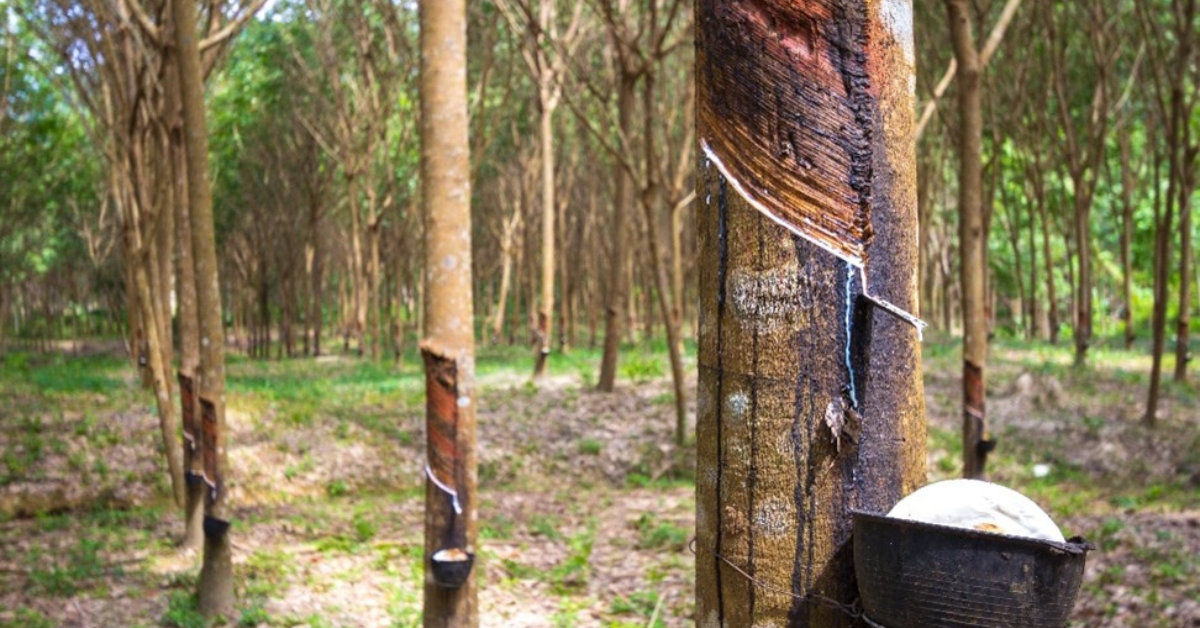
A single unmapped plantation plot could stop your rubber shipment at EU borders. Under the EU Deforestation Regulation (EUDR), companies placing rubber and rubber-derived products on the EU market must now prove at the plantation level that their materials are deforestation-free and legally produced. For exporters and EU buyers sourcing from Cote d’Ivoire, this introduces new compliance pressures. Cote d’Ivoire’s expanding rubber sector, smallholder-dominated production systems, and cultivation in forest-rich regions make the EUDR Deforestation Risk Assessment for Rubber Supply Chain in Cote d’Ivoire more than a regulatory requirement it is a critical step to maintain uninterrupted EU market access.
Without a structured risk assessment framework, operators risk shipment delays, rejected consignments, compliance penalties, and reputational damage in sustainability-sensitive European markets.
Key Pain Points for Rubber Operators
TraceX EUDR Solutions help rubber exporters and EU importers streamline geolocation mapping, satellite-based deforestation screening, supplier risk assessment, and due diligence documentation, ensuring your Cote d’Ivoire rubber supply chain meets EUDR requirements with confidence.
The EU Deforestation Regulation (EUDR) requires operators to prove that rubber and rubber-derived products placed on the EU market are deforestation-free, legally produced, and fully traceable to geolocated plots of land. This shifts responsibility directly onto importers, meaning compliance must be demonstrated before products are sold or exported within the EU.
Rubber is explicitly covered under HS code 4001 (natural rubber) and includes certain derived and manufactured rubber products. Any operator placing these products on the EU market must submit a formal Due Diligence Statement (DDS) through the EU’s information system. This statement confirms that a structured risk assessment has been conducted and that the risk of deforestation is “negligible.”
A core requirement is geolocation data. Importers must collect precise GPS coordinates (latitude and longitude) for every plantation or plot where rubber was sourced.
This geolocation data must be verified against satellite imagery and deforestation monitoring systems.
The regulation also establishes a strict cut-off date of 31 December 2020. Rubber sourced from land that has experienced deforestation after this date cannot be placed on the EU market, regardless of legality under local laws.
Under EUDR, “deforestation-free” means that rubber was produced on land that has not experienced deforestation after 31 December 2020.
A forest is generally defined using FAO-aligned criteria, including minimum thresholds for tree height, canopy cover, and land area.
The regulation distinguishes between:
While EUDR focuses primarily on deforestation, degradation of primary forests is also restricted, increasing scrutiny in forest-adjacent agricultural zones.
Cote d’Ivoire has experienced one of the highest rates of tropical forest loss globally, largely driven by agricultural expansion. Rubber plantations are concentrated in regions such as Sud-Comoe, Bas-Sassandra, San-Pedro, and parts of the southwest, where forest landscapes overlap with agricultural production areas.
Because rubber-growing zones often intersect with biodiverse forest ecosystems, land-use history and plantation establishment dates become critical compliance factors.
For rubber importers sourcing from Cote d’Ivoire, compliance is no longer documentation-based alone it is data-driven, satellite-verified, and plot-specific.
The European Union is a major importer of natural rubber and rubber-derived goods used across automotive, industrial, and manufacturing sectors. As EUDR enforcement approaches, demonstrating deforestation-free sourcing from Cote d’Ivoire rubber plantations will be essential for exporters seeking continued access to EU markets.
Cote d’Ivoire faces increasing scrutiny under the EU Deforestation Regulation (EUDR) due to its history of rapid forest loss and agricultural expansion. As one of Africa’s leading producers of natural rubber, the country’s plantation footprint has expanded significantly over the past two decades. Rubber cultivation often overlaps with forest-rich regions, making an EUDR Deforestation Risk Assessment for Rubber Supply Chain in Cote d’Ivoire an essential step for EU importers and exporters.
Over the past several decades, Cote d’Ivoire has experienced substantial deforestation driven primarily by agricultural expansion. Crops such as rubber, cocoa, oil palm, and cassava have contributed to land-use changes across forest landscapes, particularly in regions such as Bas-Sassandra, Sud-Comoe, San-Pedro, and parts of the southwestern forest belt. While rubber plantations have increasingly been developed through organized agro-industrial investments and outgrower programs, any expansion into previously forested land after the EUDR cut-off date of 31 December 2020 creates compliance risks.
Under the EUDR country benchmarking system, the European Commission will classify producing countries as low, standard, or high risk based on deforestation trends, governance indicators, and enforcement capacity. Countries with measurable forest loss and agricultural land conversion may require enhanced due diligence and stronger mitigation evidence from operators placing products on the EU market.
Rubber production in Cote d’Ivoire includes a combination of industrial plantation estates and extensive smallholder networks. While estate plantations offer more structured farm boundaries and documentation, the majority of rubber expansion in recent years has been driven by smallholder farmers.
Smallholder expansion patterns introduce traceability and verification challenges for EUDR compliance. Farmers may gradually expand plantations into nearby land areas without clear geospatial documentation, making it difficult to determine whether plantation establishment occurred before or after the 2020 deforestation cut-off date.
Cote d’Ivoire has experienced one of the highest rates of tropical forest loss globally due to decades of agricultural expansion. According to FAO and Global Forest Watch data:
Because rubber-growing areas often overlap with biodiverse tropical forest landscapes, verifying land-use history is a critical compliance step.
For EU importers conducting an EUDR Deforestation Risk Assessment for Rubber Supply Chain in Cote d’Ivoire, these factors combined with fragmented supplier networks and varying plantation documentation quality make satellite monitoring and geolocation mapping essential tools for demonstrating negligible deforestation risk.
EUDR risk assessment for Cote d’Ivoire rubber requires plantation-level geolocation data and verification against satellite deforestation datasets after 31 December 2020. While the country has growing agricultural governance structures and organized export supply chains, smallholder-dominated production and multi-tier sourcing networks still make structured risk screening essential.
The first step in conducting an EUDR Deforestation Risk Assessment for Rubber Supply Chain in Cote d’Ivoire is collecting accurate geolocation data for every supplying plantation.
Because many rubber growers operate through outgrower programs, cooperatives, or collector networks, geolocation mapping may require field surveys, mobile GIS applications, or processor-led mapping initiatives.
Without accurate coordinates, deforestation screening cannot begin.
Once geolocation data is collected, operators must verify whether mapped plantation plots overlap with deforestation events occurring after the EUDR cut-off date.
This process typically involves:
If satellite analysis shows that rubber plantations were established on land cleared after the cut-off date, those materials cannot be considered deforestation-free under EUDR.
In addition to deforestation screening, EUDR requires operators to verify compliance with the laws of the producing country.
For Cote d’Ivoire rubber supply chains, this typically involves reviewing:
While Cote d’Ivoire has strengthened agricultural governance and commodity traceability initiatives in recent years, documentation quality and land tenure clarity may still vary across regions, requiring careful verification.
Operators must also evaluate the structure of the rubber supply chain.
Risk factors may include:
The more fragmented and aggregated the supply chain, the more difficult it becomes to verify plantation-level compliance and assign a negligible risk classification.
Several digital tools support EUDR deforestation risk assessments for Cote d’Ivoire rubber supply chains:
By combining geolocation mapping, satellite verification, legality checks, and supply chain risk analysis, importers can determine whether rubber sourced from Cote d’Ivoire presents negligible deforestation risk or requires additional mitigation measures.
Cote d’Ivoire is Africa’s largest natural rubber producer and one of the fastest-growing rubber exporters globally.
Key characteristics of the sector include:
While Cote d’Ivoire’s organized export sector supports efficient global trade, rapid agricultural expansion and smallholder-driven plantation growth increase compliance complexity under EUDR.

Several structural and operational factors can increase EUDR compliance risk in Cote d’Ivoire’s rubber supply chain. As Africa’s largest natural rubber producer, the country has a rapidly expanding rubber sector driven primarily by smallholder farmers and export-oriented processing industries. While this growth has strengthened Cote d’Ivoire’s role in global tire and industrial rubber supply chains, it also creates challenges when conducting an EUDR Deforestation Risk Assessment for Rubber Supply Chain in Cote d’Ivoire.
One of the primary risk indicators is incomplete geolocation data for rubber plantations. Many smallholder rubber farms in Cote d’Ivoire lack precise GPS coordinates or digitally mapped polygon boundaries. Without accurate plantation-level mapping, importers cannot verify whether rubber production areas experienced deforestation after the EUDR cut-off date of 31 December 2020, making compliance validation difficult.
Land ownership and tenure systems in Cote d’Ivoire often involve customary land rights or informal agreements, particularly in rural agricultural zones. Some growers may lack formal land registration or documented land-use rights. These documentation gaps can complicate legality verification under EUDR requirements and create uncertainty around the historical land use of rubber plantations.
Rubber exporters frequently source latex through collectors, cooperatives, village-level aggregators, and regional processors who combine latex from numerous smallholder farms. When latex from multiple plantations is aggregated during collection and crumb rubber processing, tracing material back to individual plantation plots becomes more difficult. This creates the risk of mixed-origin batches that may include rubber from plantations with unclear land-use histories.
Rubber cultivation in Cote d’Ivoire has expanded into regions historically covered by tropical forests, particularly in southwestern and western agricultural zones. Gradual plantation expansion without clear geospatial documentation can increase the risk of encroachment into previously forested land. This complicates satellite verification and land-use history checks required under EUDR.
Recordkeeping gaps such as missing farmer identification, inconsistent plantation size records, fragmented procurement documentation, or paper-based trading logs can weaken the credibility of EUDR due diligence statements. Smaller collectors and rural latex traders often rely on manual systems, increasing documentation and verification risks.
Red Flags for EU Importers
Identifying these risk indicators early allows importers and exporters to implement mitigation measures such as geolocation mapping, supplier verification, and satellite monitoring before submitting their EUDR Due Diligence Statement (DDS).
Cote d’Ivoire’s rubber sector is rapidly expanding and highly export-oriented but operationally complex:
This combination of scale, smallholder participation, and fragmented supply chains increases compliance complexity under EUDR.
TraceX EUDR Solutions are designed to help rubber exporters, processors, traders, and EU importers meet EUDR requirements through automated, data-driven compliance tools.
The platform supports end-to-end EUDR deforestation risk assessment by:
For Cote d’Ivoire rubber supply chains, TraceX helps address common challenges such as smallholder-driven sourcing, latex aggregation across cooperatives, and inconsistent traceability systems.
If deforestation risk is assessed as more than negligible, operators must implement clear mitigation measures before placing rubber sourced from Cote d’Ivoire on the EU market. Under EUDR, identifying risk alone is not sufficient operators must demonstrate that effective mitigation actions have been taken.
One key mitigation measure is third-party satellite verification. Independent geospatial analysis can confirm whether rubber plantations experienced forest cover loss after the 31 December 2020 cut-off date. Satellite monitoring strengthens the credibility of risk assessments and provides objective evidence during regulatory inspections.
Another critical step is plantation boundary digitization. Many smallholder plantations lack clearly defined digital boundaries. Mapping plantations using GPS coordinates or polygon mapping helps operators verify land-use history and ensure that rubber production areas do not overlap with recently deforested land. Digitized plantation data also improves traceability across supply chains.
Supplier contracts with zero-deforestation clauses also play an important role. These agreements can require growers and intermediaries to comply with EUDR standards by:
In higher-risk sourcing regions, independent field audits may be required. On-site inspections help verify plantation boundaries, validate documentation, and confirm that suppliers follow sustainable land-use practices.
Certification schemes such as FSC, PEFC, and sustainable natural rubber initiatives can support compliance by promoting responsible plantation management, environmental protection, and improved traceability.
However, certification alone does not automatically guarantee EUDR compliance.
EUDR requires plantation-level geolocation verification and confirmation that no deforestation occurred after 2020, requirements that often extend beyond traditional certification frameworks. Certification should therefore be treated as a supporting mitigation tool, not a substitute for a complete EUDR deforestation risk assessment.
By combining satellite monitoring, digital plantation mapping, supplier agreements, and independent verification, operators sourcing rubber from Cote d’Ivoire can reduce supply chain risk to a defensible “negligible risk” classification before submitting their EUDR Due Diligence Statement.
From 2027 onward, EU customs authorities will be able to block non-compliant rubber shipments entering the EU market. Once enforcement begins, Due Diligence Statements (DDS) will be mandatory before rubber and rubber-derived products can be placed on or exported within the EU. For importers sourcing from Cote d’Ivoire, preparation must begin well before the deadline to avoid shipment disruption, financial penalties, and contractual risks.
The first step is to conduct full supply chain mapping immediately. Importers must identify every actor in the supply chain from plantation level to exporter and ensure traceability down to individual production plots. This includes documenting plantation locations, smallholder farmers, latex collectors, cooperatives, processing facilities, crumb rubber plants, storage centers, and export consolidation hubs. Without full visibility across Cote d’Ivoire’s multi-tier smallholder sourcing and latex aggregation networks, deforestation risk assessments cannot be performed reliably.
Next, operators should segment suppliers by risk level. Not all suppliers carry the same deforestation exposure. Factors such as sourcing region, proximity to forest reserves, plantation expansion history, land tenure documentation, farm size, and traceability maturity should be used to classify suppliers as low, medium, or high risk. Suppliers in higher-risk zones may require enhanced mitigation measures such as satellite verification, third-party field audits, or stricter supplier compliance agreements.
Importers should also launch geolocation data collection programs early. Waiting until enforcement begins can create severe operational bottlenecks across plantations and rubber processing networks. Pilot initiatives allow companies to test GPS coordinate collection, plantation polygon mapping accuracy, satellite deforestation overlay workflows, and compliance data management systems. Early implementation helps identify traceability gaps before they impact shipments.
Finally, companies must establish internal EUDR compliance governance. Responsibility for EUDR readiness typically spans multiple departments, including procurement, sustainability, compliance, legal, supply chain operations, and IT. Internal governance policies should clearly define:
By embedding compliance into procurement systems and governance structures today, EU importers sourcing from Cote d’Ivoire can shift from reactive documentation collection to structured, audit-ready EUDR compliance.
Rubber sourced from Cote d’Ivoire plays an increasingly important role in global tire manufacturing, automotive production, and industrial rubber supply chains, and remains strategically important for EU markets. However, the country’s smallholder-dominated production systems, agricultural expansion history, and forest-adjacent cultivation zones mean that structured risk screening is essential under EUDR.
Importers can no longer rely solely on supplier declarations or paper-based documentation. A defensible EUDR Deforestation Risk Assessment for Rubber Supply Chain in Cote d’Ivoire must rely on verified geolocation data, satellite-based deforestation monitoring, and documented legality verification.
Geolocation traceability has become the foundation of EUDR compliance. Without precise GPS coordinates or polygon mapping for each supplying plantation, deforestation screening cannot be completed and Due Diligence Statements cannot be confidently submitted. Plantation-level transparency is no longer just a best practice it is now a regulatory requirement.
With enforcement deadlines approaching, proactive mitigation is essential. Importers that begin mapping supply chains, digitizing plantation boundaries, strengthening supplier agreements, and implementing satellite monitoring systems today will significantly reduce compliance risks tomorrow.
Those that delay may face shipment delays, financial penalties, rejected consignments, and reputational damage in sustainability-sensitive EU markets.
In the EUDR era, early preparation is the strongest safeguard for maintaining uninterrupted access to the European market.
No. Côte d’Ivoire is not automatically classified as “high risk.” However, historical deforestation and agricultural expansion in certain regions may increase scrutiny. Final classification will depend on EU country benchmarking and plantation-level deforestation assessments.
Yes. Smallholder sourcing can comply with EUDR if operators collect plot-level geolocation data, maintain plantation traceability records, and verify land-use history using satellite monitoring and supporting legality documentation.
Yes, but strong traceability controls are essential. Supply chains must capture plantation-level geolocation data, maintain batch or lot segregation during latex aggregation and processing, and implement reliable digital documentation systems to avoid mixed-origin risks.
No. Certification schemes support responsible plantation management and traceability practices but do not replace EUDR obligations. Operators must still provide plantation-level geolocation data and verify that no deforestation occurred after 31 December 2020.
Shipments may be delayed, blocked, or rejected by EU authorities. Regulators may request additional documentation, conduct inspections, or impose penalties. Conducting a thorough deforestation risk assessment before export helps prevent costly compliance failures and shipment disruptions.