
Quick summary: Circular Economy in industry is transforming how products are designed, sourced, and managed across supply chains driving sustainability, regulatory compliance, and long-term competitiveness.
Circular Economy in Industry is reshaping products, supply chains, and sustainability by shifting businesses from linear “take–make–waste” models to closed-loop systems. Products are now designed for durability, reparability, and recyclability, while supply chains prioritize material traceability, reuse, and secondary raw materials. Regulatory frameworks like the EU Circular Economy Action Plan are accelerating lifecycle transparency, waste reduction, and resource efficiency. As a result, the Circular Economy is driving lower emissions, reduced resource dependency, and more resilient, sustainable industrial value chains.
The circular economy is rapidly becoming a cornerstone of modern industry, redefining how products are designed, used, and recovered. At its core, a circular economy replaces the traditional linear “take–make–waste” model with systems that keep materials in use for as long as possible through reuse, recycling, and regeneration. Governments are accelerating adoption through stricter sustainability and product lifecycle regulations, industries are responding to rising resource costs and supply-chain risks, and consumers increasingly demand responsible, low-waste products. Together, these forces link the circular economy directly to climate targets, resource security, and long-term global competitiveness.
Key Takeaways
The Circular Economy Action Plan (CEAP) is one of the foundational and most influential policies under the overarching European Green Deal. It is not a single piece of legislation but rather the European Union’s comprehensive, ambitious roadmap for shifting the entire European economy away from the outdated linear model (“take-make-use-dispose”) to a circular one (“reduce-reuse-repair-recycle”).
In essence, the CEAP is the blueprint for systemic change, aiming to keep products, components, and materials in use for as long as possible, eliminating waste and resource dependence.
The 2020 CEAP (an updated and much broader version of the 2015 plan) was adopted with several urgent motivations:
Unlike the previous focus, which mainly targeted waste management and recycling, the 2020 CEAP focuses on the design and production phase. The key goal is to make sustainable products the norm in the EU.
The central pillar for achieving this is the Ecodesign for Sustainable Products Regulation (ESPR), which:
The CEAP doesn’t scatter its efforts; it strategically targets the sectors that use the most resources and have the highest potential for circularity and environmental impact. These seven value chains are the priority for regulatory action:
Beyond product design, the CEAP implements changes across the entire economic system:
In short, the Circular Economy Action Plan transforms sustainability from a voluntary add-on to a legal operating requirement for any business trading in the European market. It forces companies to redesign their business models, not just their products, preparing Europe for a resource-efficient, low-carbon future.
The EU’s Sustainable Products Initiative (SPI) is a cornerstone of the Circular Economy Action Plan, aiming to make products on the European market more sustainable, resource-efficient, and long-lasting. It sets regulatory and voluntary frameworks requiring manufacturers, importers, and retailers to embed circularity principles across the entire product lifecycle from raw material sourcing to end-of-life disposal.
The ESPR will apply to nearly all physical goods sold in the EU, including high-impact sectors like textiles, furniture, batteries, consumer electronics, and construction products. Exemptions are limited (e.g., food, feed, and certain medical products). The Regulation doesn’t set a single standard but provides a framework. The European Commission will adopt Delegated Acts to set specific, legally binding criteria for individual product groups (e.g., “for smartphones,” “for t-shirts”).The SPI includes provisions to prevent the destruction of certain unsold consumer products, with an initial ban on the destruction of unsold textiles and footwear taking effect as early as July 19, 2026.
SPI emphasizes four key design principles to ensure products align with circular economy objectives:
A critical enabler of SPI is the Digital Product Passport (DPP), which provides transparent, machine-readable information about a product’s materials, repair options, recycling instructions, and environmental footprint. DPPs allow regulators, businesses, and consumers to track sustainability attributes, verify compliance, and support responsible decision-making. They facilitate traceability and ensure that circular economy goals such as material recovery, resource efficiency, and lifecycle transparency are effectively implemented.
The DPP is the electronic record that proves a product meets all the ESPR’s requirements (durability, recycled content, absence of hazardous substances). It provides regulators (market surveillance authorities) with instant, structured access to audit data. The DPP contains critical end-of-life information, such as the material composition, disassembly instructions, and optimal recycling pathways. Each product will have a unique digital identity (accessed via a QR code or NFC tag) that links to a data repository. This provides information (tailored to the user) along the value chain. It forces companies to connect disparate internal systems (ERP, PLM, supplier data) to collect and standardize information on material sourcing, carbon footprint, and repair history.
By mandating sustainable design and traceability through DPPs, the SPI pushes industries toward reduced waste, lower emissions, and responsible consumption. Companies adopting SPI principles gain regulatory compliance, brand credibility, and competitive advantage in increasingly eco-conscious markets.
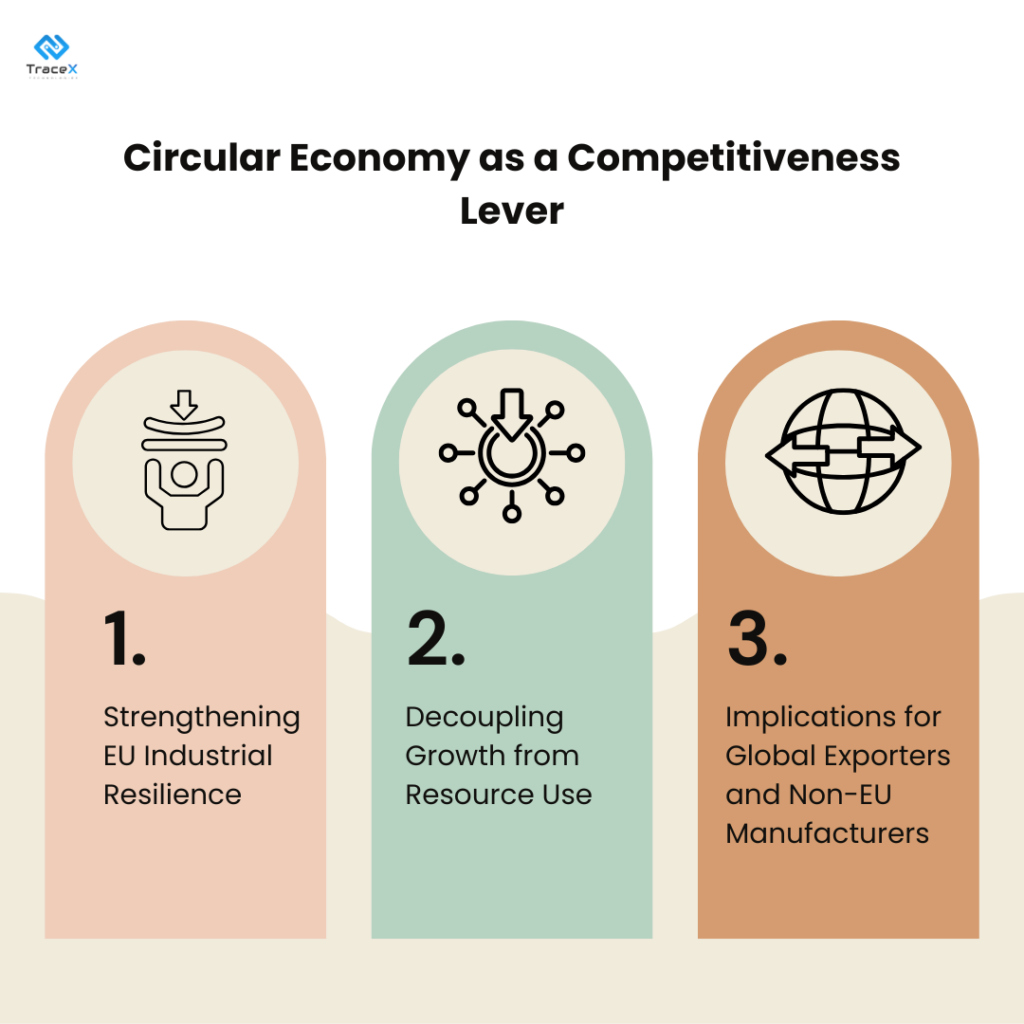
Product lifecycle transparency ensures that every stage from raw material sourcing to production, distribution, use, and end-of-life is visible and accountable. This visibility allows companies to identify inefficiencies, minimize environmental impact, and ensure compliance with circular economy standards. By understanding the complete lifecycle, businesses can make informed decisions on material selection, process optimization, and sustainability investments.
Effective lifecycle management involves quantifying and monitoring key metrics such as material composition, carbon emissions, energy use, and waste generation across the supply chain. Companies can pinpoint hotspots of inefficiency, target resource-saving interventions, and implement circular strategies such as remanufacturing, recycling, and reuse. This approach not only improves sustainability performance but also reduces operational costs and regulatory risk.
Digital solutions like blockchain, IoT sensors, and product lifecycle management (PLM) software enable precise tracking of materials and emissions from source to disposal. These tools facilitate real-time data sharing across suppliers, manufacturers, and consumers, creating transparency and trust. Digital product passports, for example, document material content, repair instructions, and recycling pathways, helping companies meet EU circular economy regulations and consumer demand for sustainable products.
By implementing product lifecycle transparency, businesses can optimize resource use, comply with regulatory requirements, and strengthen sustainability credentials. Visibility across the product lifecycle is a critical enabler of circular economy practices, helping companies move from linear consumption toward fully closed-loop systems.
Circular economy principles prioritize preventing waste at the source rather than dealing with it post-production. This shift encourages companies to design products and processes that minimize material loss, reduce packaging, and optimize manufacturing efficiency. Preventive strategies include modular design, repairability, and the use of renewable or biodegradable materials.
By collaborating across industries, companies can create industrial symbiosis—where the waste or by-product of one process becomes the raw material for another. This approach reduces dependency on virgin resources, lowers costs, and drives sustainability. Secondary raw materials, including recycled plastics, metals, and fibers, are increasingly integrated into production, contributing to closed-loop systems.
Key performance indicators (KPIs) such as material circularity, energy efficiency, water usage, and waste reduction help businesses track progress. Advanced tools like life cycle assessments (LCAs), digital dashboards, and AI-driven analytics enable precise monitoring, identifying areas for continuous improvement and supporting regulatory reporting.
Circular economy regulations, such as the EU Circular Economy Action Plan (CEAP) and Sustainable Products Initiative (SPI), mandate businesses to adhere to sustainable design, resource use, and transparency requirements. Compliance applies not only to EU-based companies but also to non-EU exporters supplying products to European markets.
Businesses must reconsider material sourcing, integrate eco-design principles, enhance reparability, and improve recyclability. They are also expected to maintain transparent product and supply chain data to meet reporting and audit requirements. Non-compliance can disrupt market access, increase costs, and damage brand reputation.
Failing to align with circular economy regulations exposes companies to fines, trade restrictions, and reputational risk. Early adoption, however, delivers strategic advantages: improved competitiveness, operational efficiency, reduced material costs, and stronger appeal to sustainability-conscious consumers and investors. Proactive alignment positions businesses as leaders in sustainable, circular markets.
Digital platforms provide the infrastructure to track materials, monitor resource use, and automate reporting across the product lifecycle. By capturing real-time data from raw material sourcing to end-of-life processing, companies can measure circularity metrics, reduce waste, and optimize resource efficiency. Implementing a comprehensive digital product passport solution enables automated data capture and geolocation verification, ensuring that every material flow is traceable and auditable.
Platforms from TraceX integrate regulatory frameworks such as the EU Circular Economy Action Plan (CEAP) and Sustainable Products Initiative (SPI) into operational workflows. Automated dashboards and reporting tools streamline sustainability compliance, enabling companies to generate reports that satisfy both internal KPIs and external regulatory requirements.
By digitalizing circular economy practices, TraceX helps organizations transform compliance obligations into business value. Blockchain-backed traceability, AI-driven risk monitoring, and predictive analytics reduce manual interventions, lower operational costs, and support proactive decision-making. Businesses gain a competitive advantage while demonstrating verifiable sustainability credentials to regulators, buyers, and investors.
Adopting a circular economy is no longer just about regulatory compliance it is a strategic business imperative. Companies that embed transparency, eco-design, and data-driven decision-making into their operations gain a sustainable competitive edge, reduce material dependency, and enhance resilience. By proactively preparing for evolving EU sustainability regulations, businesses can turn circular practices into growth opportunities, strengthen brand credibility, and position themselves as leaders in responsible production. In essence, circularity is becoming the blueprint for future-ready, profitable, and sustainable industrial strategies.
Learn how end-to-end product traceability improves compliance, quality control, and buyer trust across complex supply chains.
Explore Product Traceability in Supply Chains
See how tracking raw materials from source to finished product reduces risk, prevents mixing, and supports regulatory and sustainability goals.
Discover Material Traceability in Supply Chains
Understand how verified sourcing, farm-level data, and digital traceability enable responsible, transparent, and resilient agri supply chains.
Learn About Sustainable Sourcing in Agribusiness
It is an industrial model that focuses on designing out waste, extending product lifecycles, and reusing or recycling materials to reduce resource consumption and emissions.
It improves supply chain transparency, promotes circular sourcing, reduces dependency on virgin materials, and strengthens resilience through reuse and recycling.
It helps lower emissions, minimize waste, conserve resources, and align businesses with climate goals and evolving sustainability regulations.