
Quick summary: Discover how Digital MRV (DMRV) enables accurate, scalable measurement, reporting, and verification for carbon credits and nature-based solutions. Learn how DMRV improves transparency, compliance, and trust in climate and nature markets.
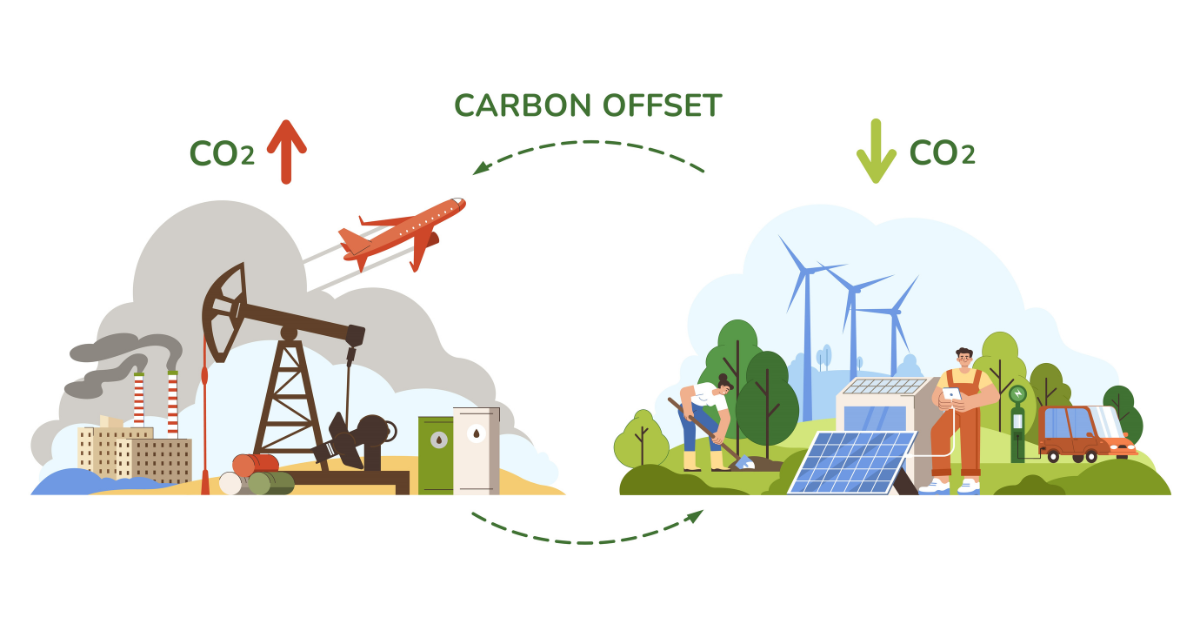
Climate and nature markets are under growing scrutiny, yet many carbon and nature-based projects still rely on slow, manual, and sample-based verification methods. As regulators, buyers, and investors demand proof, not promises, these traditional approaches are struggling to keep up with requirements for transparency, accuracy, and scale. Digital MRV systems for carbon and nature-based solutions emerge as a critical solution, addressing the core pain point of unreliable and fragmented data by enabling continuous, technology-driven measurement, reporting, and verification for carbon and nature-based solutions.
Digital MRV (DMRV) Systems for Carbon & Nature-Based Solutions refers to the use of digital technologies such as satellite monitoring, geospatial mapping, automation, and secure data systems to measure, report, and verify climate and nature outcomes accurately and at scale. Digital MRV (DMRV) replaces manual, sample-based monitoring with continuous, data-driven verification, improving transparency, auditability, and credibility of carbon credits and NbS projects. It enables regulators, buyers, and investors to validate deforestation-free sourcing, carbon sequestration, and ecosystem impact with verifiable, real-time evidence, supporting high-integrity climate and nature markets.
Key Takeaways
Digital MRV (Digital Measurement, Reporting, and Verification) is a technology-enabled approach to measuring, reporting, and verifying climate and nature outcomes. MRV refers to the processes used to quantify impacts such as carbon sequestration, emissions reductions, and ecosystem health. The “digital” layer replaces manual, sample-based monitoring with satellite data, geospatial mapping, automation, and secure digital records, enabling continuous, scalable, and verifiable proof. Digital MRV is critical for carbon and nature-based solutions because it ensures transparency, reduces verification risk, and supports regulatory compliance and market integrity.
| Component | Traditional Way (Manual) | Digital MRV Way (Tech-Enabled) |
| M – Monitoring | Sending an auditor to a forest once every 2 years to count trees. | Satellite imagery (GIS) and IoT sensors tracking tree growth and soil health 24/7. |
| R – Reporting | Writing a 200-page PDF report based on old data. | Real-time dashboards that automatically compile data from the field into standardized formats. |
| V – Verification | Hiring a third-party consultant to spend months checking “paper trails.” | AI and Blockchain. AI detects anomalies in data, and blockchain creates an immutable record for instant verification. |
Want to understand how DMRV strengthens carbon credit integrity?
Explore how digital MRV enables credible baselines, faster verification, and high-integrity carbon credits.
Read our blog on DMRV for Carbon Credits
Measuring nature impact goes beyond carbon.
Discover how DMRV supports agroforestry, reforestation, biodiversity, and livelihood outcomes at scale.
Read Our Guide to DMRV for Nature-Based Solutions
Digital MRV is becoming essential as carbon and nature-based solutions move from pilot projects to large-scale, regulated markets. Traditional MRV systems were not designed to handle the complexity, volume, and scrutiny that modern climate and nature markets demand.
Digital MRV systems work through a structured, technology-driven workflow that transforms raw field and satellite data into verified, audit-ready climate and nature outcomes.
Digital MRV begins by establishing a credible baseline a reference scenario that defines pre-project conditions such as land use, forest cover, biomass, soil carbon, or emissions levels. Satellite imagery, historical geospatial data, and field inputs are used to create an objective baseline against which all future changes are measured. This step is critical for proving additionality and impact.
Once the baseline is set, data is continuously collected using multiple digital sources:
Collected data is processed through advanced analytics:
Processed data is converted into automated, standardized reports aligned with certification and regulatory requirements. Digital MRV systems generate audit-ready documentation, maintain secure data trails, and support third-party verification workflows, enabling faster, more reliable validation of carbon and nature-based outcomes.
Digital MRV plays a foundational role in ensuring that carbon credits are credible, verifiable, and trusted by regulators, buyers, and investors. As scrutiny of carbon markets increases, Digital MRV is becoming essential to move beyond estimation-based claims toward evidence-backed climate impact.
Digital MRV enables accurate and defensible carbon credit issuance by strengthening each core requirement of credit generation. It establishes a robust baseline using historical satellite data and geospatial analysis to define pre-project emissions or land-use conditions. This allows projects to demonstrate additionality, proving that carbon sequestration or emissions reductions would not have occurred without the intervention. Digital MRV also supports continuous leakage monitoring, detecting whether emissions are displaced to surrounding areas, and permanence monitoring, ensuring that stored carbon is maintained over time through ongoing land-use observation and risk detection.
By providing time-stamped, location-specific, and tamper-resistant data, Digital MRV significantly reduces the risk of fraud and misrepresentation. It helps prevent double-counting by maintaining clear digital boundaries and a chain of custody for carbon claims across projects and registries. Automated data pipelines and standardized reporting workflows enable faster and more cost-effective verification cycles, improving market efficiency while increasing confidence that each issued carbon credit represents a real, measurable, and durable climate benefit.
Digital MRV is a critical enabler for scaling Nature-Based Solutions (NbS) by providing continuous, verifiable measurement of environmental and social outcomes across complex landscapes. Unlike carbon-only accounting, NbS requires multi-dimensional monitoring, which Digital MRV makes feasible at scale.
Digital MRV extends NbS measurement beyond carbon by capturing biodiversity indicators such as habitat connectivity, vegetation diversity, and land-use integrity. It also enables tracking of livelihood and social impact, including farmer participation, income improvements, and labour practices. By quantifying ecosystem services such as water regulation, soil health, and landscape resilience, Digital MRV provides a holistic, evidence-based view of nature impact supporting high-integrity NbS markets and credible sustainability claims.
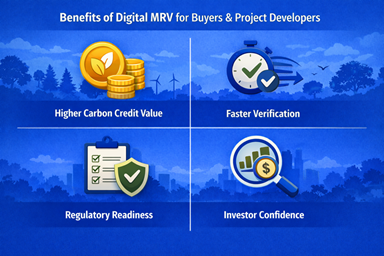
Digital MRV is powered by an integrated technology stack that combines geospatial intelligence, automation, and secure data systems to deliver accurate, scalable, and verifiable climate and nature impact measurement.
Satellite and remote sensing technologies form the backbone of Digital MRV by enabling continuous, large-scale monitoring of land use, vegetation cover, and environmental change. High-resolution satellite imagery is used to detect deforestation, forest degradation, biomass growth, and land-use transitions over time. This allows projects to monitor carbon and nature outcomes consistently across vast and remote areas without relying solely on physical site visits, reducing cost while improving coverage and accuracy.
Geographic Information Systems (GIS) connect all MRV data to precise spatial locations. GIS enables farm and plot-level mapping, boundary definition, and overlay analysis across multiple datasets such as land-use history, protected areas, and risk zones. By anchoring data to verified geolocations, GIS ensures traceability, supports baseline establishment, and enables spatial validation of project claims critical for regulatory compliance and audit readiness.
Blockchain technology strengthens trust in Digital MRV by creating immutable, tamper-resistant records of data collection, processing, and reporting events. Each data point can be time-stamped and securely recorded, ensuring transparency across the MRV lifecycle. This reduces the risk of data manipulation, supports chain-of-custody for carbon and nature claims, and enables stakeholders to independently verify data integrity.
Artificial intelligence and automation transform raw data into actionable insights at scale. AI and machine learning models analyse satellite imagery to detect biomass changes, land-use shifts, and anomaly patterns, while automated workflows generate standardized reports aligned with approved methodologies. Automation reduces manual effort, accelerates verification cycles, and ensures consistent, repeatable MRV processes making high-integrity measurement feasible for large, multi-site projects.
Digital MRV plays a central role in helping organizations meet increasingly complex regulatory, certification, and reporting requirements across climate, nature, and sustainability frameworks. As compliance expectations shift from declarations to proof, Digital MRV provides the verifiable evidence needed to demonstrate conformity at scale.
The EU Deforestation Regulation (EUDR) requires companies to prove that commodities are sourced from deforestation-free land and are fully traceable to the plot of origin. Digital MRV enables this by combining farm-level geolocation, satellite monitoring, and land-use change detection to verify that production areas have not been associated with deforestation after the regulatory cut-off date. Continuous remote sensing and time-stamped data provide defensible proof for due diligence statements, significantly reducing the risk of non-compliance, shipment delays, or market exclusion.
Digital MRV supports alignment with leading carbon standards and integrity frameworks, including Verra (VCS), Gold Standard, and the Integrity Council for the Voluntary Carbon Market (ICVCM). These frameworks require transparent baselines, ongoing monitoring, and independent verification. Digital MRV ensures that data collection, calculations, and reporting follow approved methodologies, while maintaining auditable records throughout the project lifecycle. This strengthens carbon credit integrity, improves verification efficiency, and increases acceptance by buyers and registries.
For corporates, Digital MRV provides the data backbone needed for ESG disclosures, climate reporting, and nature-related risk management. It enables consistent measurement of emissions reductions, carbon removals, and nature impacts across operations and supply chains. By automating data capture and reporting, Digital MRV supports alignment with evolving disclosure requirements and voluntary frameworks, helping companies move from narrative sustainability claims to data-driven, verifiable reporting that builds trust with regulators, investors, and stakeholders.
While Digital MRV offers clear advantages, implementation comes with practical challenges that organizations must address to achieve scale and credibility.
TraceX addresses these challenges by delivering a purpose-built Digital MRV platform designed for real-world carbon and nature-based projects.
TraceX provides farm and plot-level geolocation using GPS and geospatial mapping to establish accurate baselines and verify land-use claims. Its batch-level tracking links activities, outputs, and outcomes across the project lifecycle, ensuring full traceability from field data to reported impact. Automated MRV workflows standardize data collection, processing, and reporting, reducing manual effort while improving consistency, accuracy, and audit readiness.
See how boundary overlap strengthens carbon project validation
Discover how precise geospatial boundary checks improve accuracy, prevent double-counting, and boost verification confidence.
Read the Case Study
For agroforestry and broader NbS projects, TraceX enables integrated tracking of carbon sequestration, biodiversity indicators, and livelihood metrics within a single system. Satellite monitoring, field data, and analytics are combined to deliver a holistic view of impact. The platform generates audit-ready outputs aligned with certification and regulatory requirements, helping project developers, corporates, and investors demonstrate credible, verifiable outcomes while scaling nature-positive initiatives with confidence.
The future of Digital MRV in carbon and nature markets will be defined by a shift from periodic reporting to continuous, real-time proof of impact. As regulatory scrutiny increases and buyers demand higher integrity, Digital MRV will become the backbone of credible carbon credits and nature-based solutions enabling transparent baselines, ongoing monitoring, and audit-ready verification at scale. Beyond carbon, Digital MRV will expand to capture biodiversity, water, and livelihood outcomes, supporting a more holistic view of nature impact. In an increasingly regulated and trust-driven market, organizations that adopt robust Digital MRV systems early will be best positioned to secure market access, investor confidence, and long-term value.
Still relying on spreadsheets for emissions reporting?
Learn how DMRV enables accurate, automated, and audit-ready emissions reporting at scale.
Read our blog on Emissions Reporting with DMRV
Agroforestry delivers more than carbon—can you prove it?
Discover how DMRV measures carbon, biodiversity, and livelihood impact in agroforestry projects.
Read our guide to DMRV for Agroforestry
Every credible carbon project starts with a strong baseline
Understand how digital tools improve carbon baselining in agriculture and regenerative systems.
Read our blog on Carbon Baselining in Agriculture
Digital MRV (DMRV) is a technology-driven approach to measuring, reporting, and verifying carbon and nature impacts using tools like satellite monitoring, geospatial data, automation, and secure digital records.
Digital MRV ensures carbon credits are credible by enabling accurate baselines, continuous monitoring, additionality validation, and faster, more reliable third-party verification.
DMRV tracks outcomes across agroforestry, reforestation, soil carbon, and biodiversity by combining satellite data, field inputs, and analytics to verify environmental and social impact at scale.
Yes. Digital MRV supports compliance with regulations and standards such as EUDR, Verra, Gold Standard, and ESG reporting by providing audit-ready, verifiable data.
Digital MRV is essential for carbon project developers, NbS initiatives, corporates investing in climate action, and buyers seeking high-integrity, transparent, and compliant impact outcomes.