
Quick summary: Learn how to implement a Digital Product Passport (DPP) step-by-step from supply chain mapping and data collection to compliance systems, traceability tools, and DPP readiness for EU regulations

The pressure is on. Regulations are tightening, supply chains are under scrutiny, and consumers expect radical transparency. If your organization isn’t prepared for digital product passport implementation, you’re not just behind; you’re exposed.
From sustainability reporting to circular economy compliance, Digital Product Passports (DPPs) are quickly becoming a strategic necessity rather than a future concept, but turning the idea into a working system across suppliers, factories, and distribution networks? That’s where most companies stall.
The Real Challenges Companies Face
Without a structured roadmap, digital product passport implementation becomes overwhelming, expensive, and slow to deliver ROI.
That’s where TraceX Digital Product Passport solutions simplify the journey, helping organizations centralize traceability data, ensure compliance readiness, and deploy scalable DPP frameworks across the entire product lifecycle.
Digital Product Passport (DPP) implementation is the process of embedding structured lifecycle data into products to comply with EU Ecodesign regulations and enable traceability, sustainability, and circularity. It transforms regulatory requirements into operational systems that connect product data across the entire value chain from raw materials to end-of-life recovery.
From a regulatory perspective, a Digital Product Passport is a mandatory digital record required under EU sustainability legislation. It ensures that products placed on the EU market carry standardized, accessible data about material composition, carbon footprint, durability, repairability, and recycling instructions.
From an operational perspective, DPP implementation involves integrating enterprise systems (ERP, PLM, MES), supplier data, traceability technologies (QR codes, RFID, IoT), and centralized data platforms to create a continuously updated product-level record.
It’s important to distinguish between the DPP concept and DPP implementation. The concept defines what information must be available. Implementation defines how that information is collected, validated, stored, and made accessible securely and at scale.
Several industries are directly impacted by DPP mandates, including:
Over time, additional product categories will be phased in.
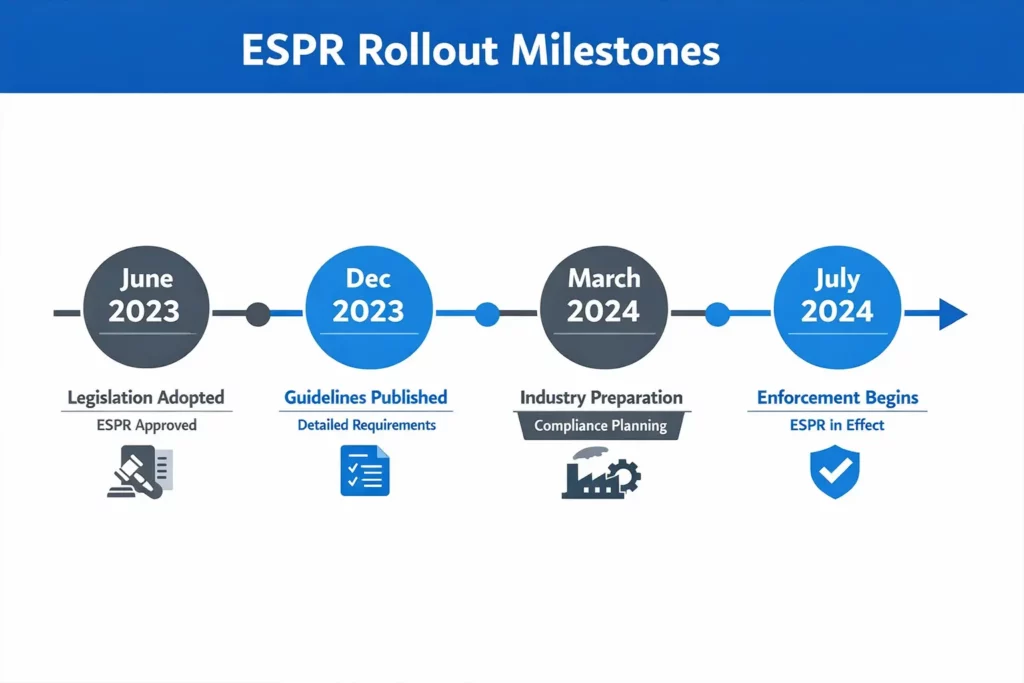
The primary compliance driver for Digital Product Passport implementation is the EU Ecodesign for Sustainable Products Regulation (ESPR), introduced under the broader EU Green Deal framework.
The ESPR expands sustainability requirements beyond energy-related products to nearly all physical goods placed on the EU market. It mandates product-level transparency covering environmental impact, durability, recycled content, and circularity metrics.
The rollout is expected to be phased, starting around 2026, with priority categories such as batteries and high-impact sectors addressed first. Delegated acts will define specific data requirements by product group.
For companies operating in or exporting to the EU, early preparation is critical. DPP implementation is not simply a compliance project it is a strategic transformation of product data governance, supply chain transparency, and digital infrastructure.
The EU plans for all product categories sold in the EU market to require a Digital Product Passport (DPP) by 2030 under the Ecodesign for Sustainable Products Regulation (ESPR), with phased rollout starting 2026-2027 for prioritized groups (10+ initial: batteries, textiles, electronics, iron/steel/aluminum, furniture, tires, detergents, paints, lubricants, chemicals).
Want to know exactly what the EU requires? Read our detailed guide on Digital Product Passport requirements under the Ecodesign regulation.
Building a Digital Product Passport system? Discover the technology architecture required for scalable DPP implementation.
The European Union is moving from voluntary sustainability reporting toward mandatory, product-level traceability, and the Digital Product Passport (DPP) is becoming a central mechanism to achieve this transition. Instead of relying on high-level sustainability claims, regulators want structured, verifiable data attached to individual products throughout their lifecycle. This shift supports the EU’s broader strategy to create a transparent, circular, and accountable marketplace.
One major driver behind mandatory DPP implementation is the EU’s circular economy agenda. Traditional supply chains follow a linear “produce–use–discard” model that generates large volumes of waste and resource inefficiency. Through the Ecodesign for Sustainable Products Regulation (ESPR), the EU aims to keep materials in circulation longer by enabling reuse, repair, refurbishment, and recycling. Digital Product Passports provide critical information such as material composition, repair instructions, durability metrics, and recyclability data, allowing manufacturers, recyclers, and consumers to make better end-of-life decisions.
Another key factor is the growing demand for supply chain transparency. Modern supply chains span multiple countries, suppliers, and regulatory jurisdictions. Governments, investors, and consumers increasingly expect proof of responsible sourcing, carbon footprint tracking, and compliance with environmental standards. DPP systems enable stakeholders to access verified lifecycle information—from raw materials to disposal ensuring that sustainability data can be traced and validated across the entire value chain.
The EU is also tightening anti-greenwashing regulations. In recent years, many companies have marketed products as “sustainable,” “eco-friendly,” or “carbon neutral” without verifiable evidence. Regulatory frameworks such as the Green Claims Directive aim to eliminate misleading environmental claims. Digital Product Passports address this issue by attaching standardized, verifiable data to each product, ensuring that sustainability claims are backed by documented evidence.
Finally, cross-border interoperability is a crucial requirement for the European single market. Products often move across multiple EU countries before reaching consumers. Without standardized digital systems, data sharing becomes fragmented and inconsistent. DPP frameworks ensure that product information can be accessed and interpreted consistently across industries, governments, and digital platforms, creating a unified approach to sustainability compliance across the EU.
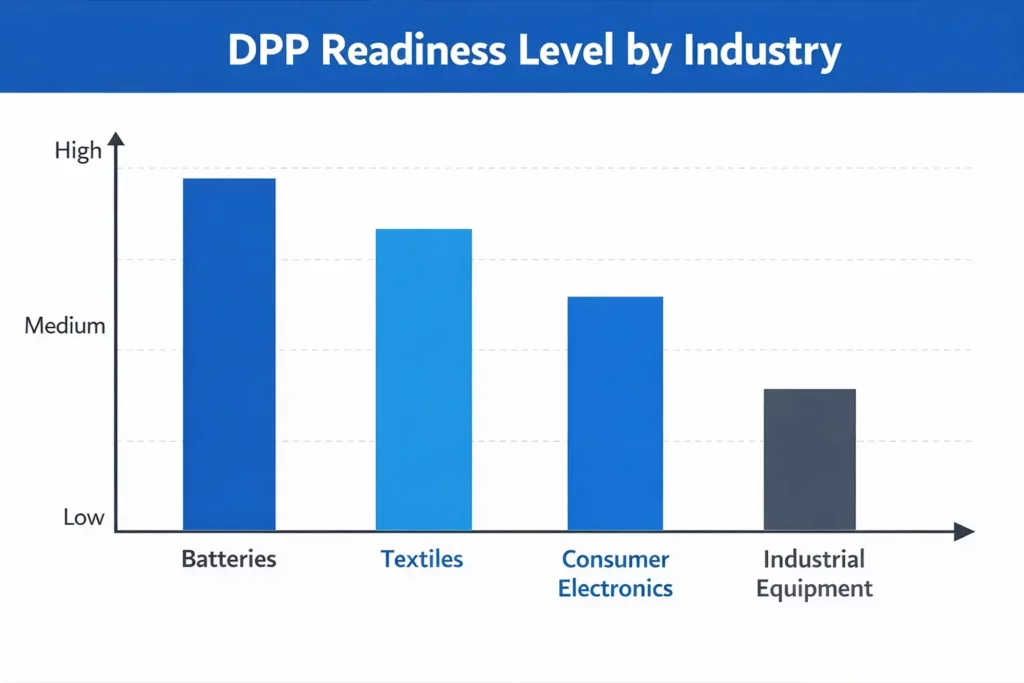
Several industries have been prioritized for early Digital Product Passport adoption due to their environmental impact, regulatory urgency, and complex supply chains.
Batteries are the top priority category. The EU Battery Regulation requires detailed lifecycle data covering raw material sourcing, carbon footprint, performance, and recyclability. Because batteries are critical for electric vehicles and renewable energy storage, regulators want full transparency to support sustainability and safe recycling processes.
Textiles are another key sector due to their significant environmental footprint and high waste levels. Digital Product Passports will track fiber composition, manufacturing processes, durability, and recycling instructions, helping reduce fast-fashion waste and enabling circular textile systems.
Consumer electronics will also face early DPP requirements. These products contain valuable and sometimes hazardous materials such as rare earth metals and lithium components. Passports will support repairability, responsible disposal, and improved recycling by documenting product components and lifecycle data.
Finally, industrial equipment and machinery will be included due to their long operational lifecycles and complex component structures. Digital Product Passports will provide maintenance histories, component specifications, and refurbishment information, helping extend equipment life and reduce industrial waste.
Together, these sectors will set the foundation for broader DPP adoption across the European market.
| Aspect | Estimate |
| SME Initial Cost | €10k-€500k/product |
| Penalty Max | 4% EU turnover |
| Rejection Impact | €10k+/shipment |
ESPR/DPP compliance costs vary by firm size. SMEs face €10k-€500k initial per product (data gathering/DPP setup/LCA), often passed to consumers; penalties up to 4% of EU turnover (up to €100M cap), plus daily fines €500-€1M for ongoing breaches
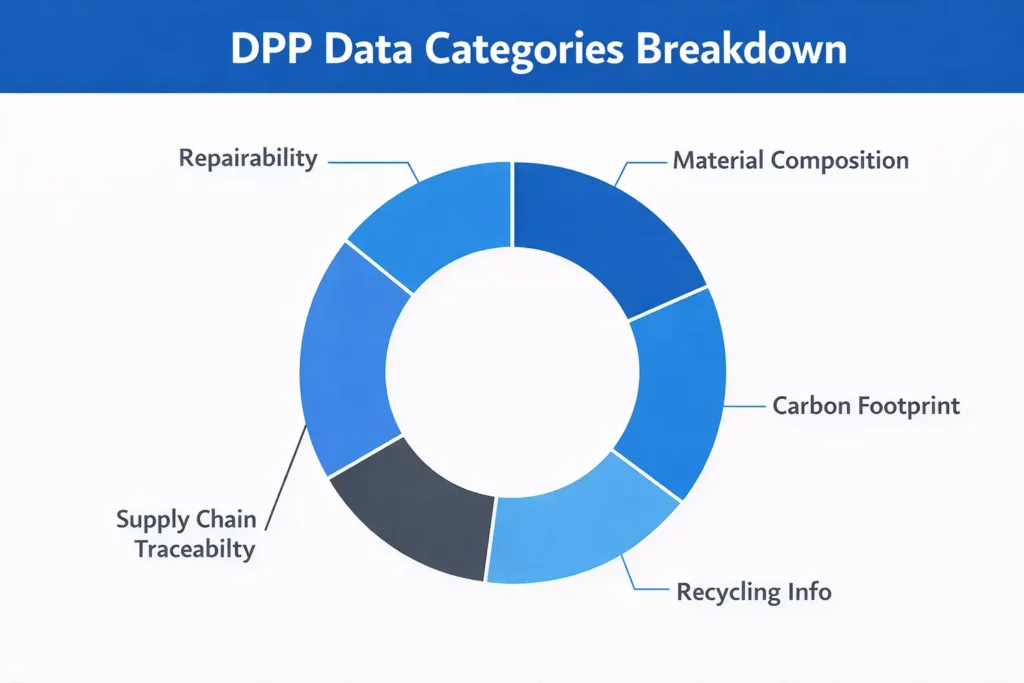
A compliant Digital Product Passport (DPP) must include structured lifecycle, material, environmental, and traceability data that allows regulators, supply chain partners, and consumers to verify sustainability, compliance, and circularity performance. The goal is to ensure that every regulated product placed on the market carries standardized, machine-readable information across its entire lifecycle.
At a minimum, a DPP typically includes:
Together, these data elements form a transparent and verifiable digital profile for each regulated product.
Not all data fields carry the same regulatory weight.
Regulatory minimum (mandatory fields):
These are defined under delegated acts of EU legislation and vary by product category. They typically include:
Industry-specific extensions (optional or conditional fields):
Certain sectors may require additional disclosures:
Companies may also add voluntary sustainability metrics for brand differentiation.
For Digital Product Passport implementation to function at scale, data must follow recognized standards and interoperability frameworks.
GS1 Standards:
GS1 provides globally recognized identification and data-sharing standards (e.g., GTIN, Digital Link QR codes). These ensure product identifiers are scannable and interoperable across borders and supply chains.
ISO Alignment:
DPP data structures often align with ISO standards such as ISO 14040/44 (Life Cycle Assessment) and ISO 22095 (chain of custody). This ensures environmental data is calculated and verified consistently.
Interoperability Frameworks:
To enable cross-platform data exchange, DPP systems must support APIs, structured data schemas, and machine-readable formats (e.g., JSON-LD, EPCIS). Interoperability ensures suppliers, manufacturers, regulators, and recyclers can securely access relevant data without duplicating systems.
Without standardization, Digital Product Passport implementation risks fragmentation, undermining regulatory compliance and the broader goal of a unified, circular European market.
81% of European companies lack structured lifecycle data required for DPP compliance, per KPMG’s 2026 European Digital Product Passport Readiness Survey (70+ firms across sectors like textiles, 44%, metals 16%). “Many suppliers currently lack the necessary systems, resources, or regulatory awareness to deliver structured DPP data.
Gap stems from fragmented systems (ERPs/PLMs), supplier hesitancy on confidentiality; ties to agri-commodities (cocoa/EUDR) where Tier 2/3 data blind spots mirror DPP needs for traceability/ESPR by 2030
Successful DPP implementation requires cross-functional coordination across IT, sustainability, compliance, and operations. It is not just a regulatory project it’s a structured transformation of how product data is captured, validated, and shared across the lifecycle. Below is a practical step-by-step roadmap organizations can follow.
The first step is understanding what applies to you and when.
Start by identifying which product lines fall under current or upcoming Digital Product Passport requirements. High-priority sectors such as batteries, textiles, electronics, and construction materials are being phased in first under EU regulations.
Key actions include:
This gap assessment clarifies the scope, budget requirements, and urgency of implementation. It also prevents overbuilding systems for non-regulated product lines.
Once the regulatory scope is defined, conduct a comprehensive data audit.
Most companies already hold relevant data, but it is fragmented across ERP, PLM, MES, supplier portals, and spreadsheets.
Key activities:
Data must then be structured into machine-readable formats aligned with interoperability standards. At this stage, organizations often discover inconsistent supplier reporting formats, missing environmental metrics, or incomplete traceability at component level.
A strong data foundation reduces future compliance risk and simplifies scaling.
With structured data requirements defined, the next step is selecting the right technology architecture.
Organizations typically choose between:
Critical considerations include:
The goal is to ensure real-time synchronization between physical products and their digital passports.
Rather than deploying across the entire portfolio at once, begin with a controlled pilot.
Select:
Test data capture, QR labeling, system integration, and stakeholder access. Validate regulatory reporting outputs and identify operational bottlenecks.
After refining workflows, scale gradually:
Phased rollout reduces disruption while allowing teams to build internal capability.
Enterprises typically require 12-18 months for full DPP implementation, from discovery/planning (Months 1-3), infrastructure build (4-8), pilot/validation (9-12), to scaling/production (13-18), per industry guides for ESPR compliance across batteries/textiles
| Phase | Duration | Focus |
| 1: Planning | 1-3 months | Data gaps, pilot selection |
| 2: Build | 4-8 months | IT/supplier integration |
| 3: Pilot | 9-12 months | Testing/validation |
| 4: Scale | 13-18 months | Production rollout |
DPP systems must integrate product data, traceability infrastructure, and consumer-facing access layers into a unified, interoperable architecture. Because Digital Product Passports sit at the intersection of compliance, supply chain visibility, and sustainability reporting, the underlying technology must support structured data collection, secure validation, and controlled information sharing across stakeholders.
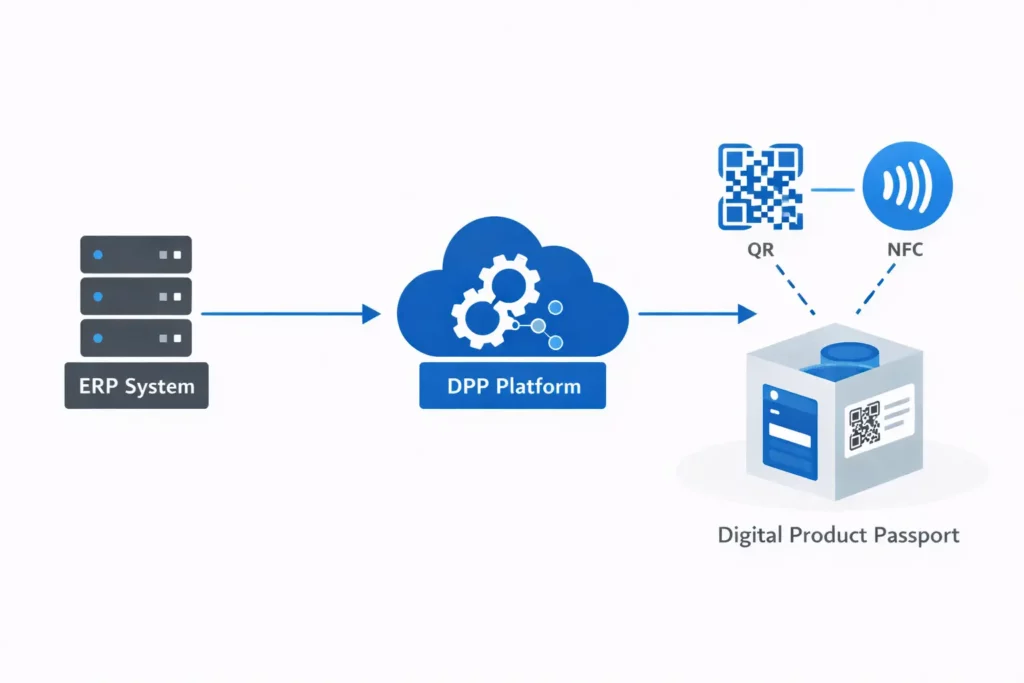
A robust DPP architecture typically consists of four key layers:
This is where primary product information originates.
It integrates with enterprise systems such as:
The data layer ensures that lifecycle, compliance, and environmental metrics are captured at source rather than manually entered later.
This layer enables structured data exchange across systems and supply chain partners.
Key components include:
Interoperability ensures suppliers, manufacturers, regulators, and recyclers can securely access relevant DPP data without duplicating databases.
This layer provides trust and auditability.
The choice depends on supply chain complexity and stakeholder trust requirements.
The final layer connects the physical product to its digital passport.
Common tools include:
This layer determines how data is displayed and who can view specific information.
Blockchain adoption in DPP pilots stands at 45%, as projected for current Digital Product Passport solutions, driven by needs for tamper-proof traceability in EU pilots like CIRPASS (electronics/apparel) and battery regulations.
| Feature | Blockchain (Distributed Ledger) | Centralized Database (Cloud/RDBMS) |
| Data Integrity | Immutable: Once a farm polygon is recorded, it cannot be altered without an audit trail. | Mutable: Admins can edit records. Requires external logs to prove no tampering. |
| Trust Model | Decentralized: Trust is built into the math/consensus. Ideal for multi-tier, multi-country sourcing. | Institution-Based: Trust depends on the owning organization’s governance and security. |
| Compliance Fit | EUDR/DPP “Gold Standard”: Perfect for proving “Chain of Custody” to suspicious regulators. | Operational Efficiency: Best for internal KPIs, inventory management, and rapid “what-if” simulations. |
| Cost & Speed | Higher/Slower: Gas fees (on public chains) or node maintenance can be costly. Slower write-speeds. | Lower/Faster: High transaction throughput (TPS). Low latency for real-time warehouse apps. |
| Integration | Moderate: Requires “Oracles” or Middleware to talk to legacy ERPs (SAP/Oracle). | Native: Seamlessly plugs into existing IT stacks via standard REST/GraphQL APIs. |
| Privacy (GDPR) | Complex: “Right to be Forgotten” is a challenge. Requires “Off-Chain” hashing for PII. | Simple: Data can be deleted or anonymized instantly to comply with global privacy laws. |
The biggest barriers to DPP implementation are data fragmentation, supplier transparency, and system interoperability. While the concept of a Digital Product Passport is straightforward, executing it across complex global supply chains introduces operational, technical, and organizational hurdles.
TraceX DPP solutions simplify Digital Product Passport implementation by providing a centralized platform to collect, manage, and share product lifecycle data across the supply chain. The solution helps companies map suppliers, capture product and material data, and generate compliant digital passports aligned with EU requirements.
With built-in traceability tools, automated data workflows, and integration with existing ERP and supply chain systems, TraceX reduces manual effort and accelerates DPP readiness. This enables businesses to achieve regulatory compliance, improve transparency, and manage product data at scale without complex IT development.
Digital Product Passport (DPP) implementation is quickly becoming both a regulatory necessity and a strategic opportunity for businesses operating in global supply chains. As transparency requirements increase across industries, companies that adopt DPP frameworks early will gain deeper visibility into their products, materials, and supplier networks. This not only supports regulatory compliance but also strengthens brand credibility with regulators, partners, and increasingly sustainability-conscious consumers.
Early movers can leverage DPP systems to improve traceability, streamline reporting, and build trust across the value chain. Rather than treating DPP as a compliance burden, organizations can use it to enhance operational efficiency and differentiate themselves in competitive markets.
Not sure what data a Digital Product Passport must include? Explore our guide to DPP data requirements and mandatory product information.
Building a Digital Product Passport system? Discover the technology stack powering DPP implementation.
What does the ESPR regulation require from businesses? Read our complete guide to ESPR and Digital Product Passport rules.
DPP will roll out gradually from 2026–2027 under the EU Ecodesign regulation, with batteries expected first, followed by other sectors.
No. Blockchain is optional. Companies can use any secure digital system that ensures traceability and data accessibility.
Approximate ranges:
Early sectors include batteries, textiles, electronics, construction materials, and furniture.
Yes. SaaS-based DPP platforms allow SMEs to implement compliance without major IT infrastructure costs.