
Quick summary: Understand Digital product passport requirements before the mandate takes effect. Learn what data is required, common pitfalls, and how to prepare for compliant Digital Product Passports.

Before investing in new systems, hiring consultants, or pressuring suppliers for more data, there’s one critical step every company must take: clearly understanding Digital Product Passport requirements.
Many organizations are already collecting data, but without clarity on what is truly required under the Digital Product Passport framework, they risk overengineering, underpreparing, or misallocating resources.
If Digital Product Passport is on your roadmap, the smartest move isn’t immediate digitization; it’s regulatory clarity.
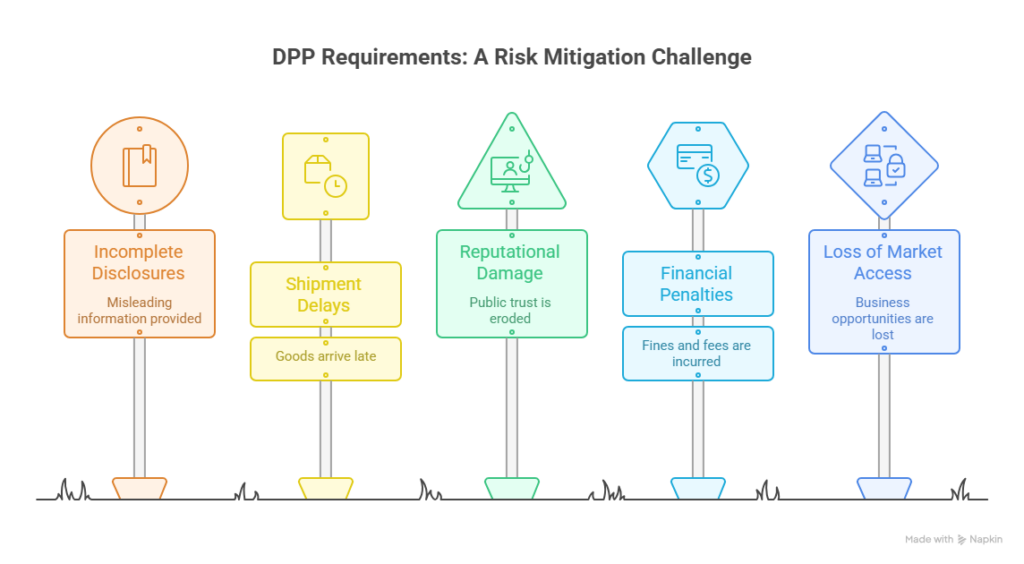
The Most Common Challenges Companies Face:
Understanding DPP requirements first transforms compliance from a reactive scramble into a structured, strategic rollout.
TraceX Digital Product Passport solutions help enterprises map regulatory requirements, structure product-level data, and build audit-ready Digital Product Passports with scalable traceability and governance controls.
Key Takeaways
DPP requirements refer to the mandatory data elements that must be digitally attached to a product under the Digital Product Passport framework. These requirements are designed to improve transparency, sustainability, traceability, and circularity across product lifecycles.
At their core, Digital Product Passport requirements ensure that every regulated product placed on the market carries structured, verifiable information that can be accessed by regulators, supply chain partners, and, in some cases, consumers.
Every product must be clearly identifiable.
This typically includes:
This ensures traceability at the product or batch level and enables lifecycle tracking.
Digital Product Passport requirements often mandate transparency into what the product is made of.
This may include:
This supports regulatory compliance, recycling efficiency, and safer product design.
Sustainability performance is a central pillar of Digital Product Passport requirements.
Depending on the product category, this may involve:
These metrics allow regulators and buyers to compare environmental performance objectively.
Traceability is fundamental to Digital Product Passport compliance.
Requirements may include:
This enhances supply chain transparency and strengthens responsible sourcing enforcement.
Circularity is a major objective of the Digital Product Passport.
DPP requirements may require:
This supports extended product life and reduces waste.
Not all products will have identical DPP requirements.
Specific obligations will be defined through delegated acts under the Ecodesign for Sustainable Products Regulation (ESPR). For example:
This means companies must first determine which product category rules apply before structuring their data collection efforts.
Understanding category-specific DPP requirements is the foundation for building a compliant, scalable Digital Product Passport strategy.
Before building your compliance roadmap, make sure you know whether your products are in scope.
Read our detailed guide on DPP Scope to understand which product categories are affected and how delegated acts define applicability.
Clarity on data obligations prevents overcollection and reduces compliance risk.
Explore our breakdown of DPP Data Requirements to see the exact information businesses must prepare across identity, sustainability, traceability, and circularity.
Data collection becomes easier and far less expensive when DPP requirements are clearly mapped before implementation begins.
Many organizations make the mistake of starting with technology procurement or supplier data requests before fully understanding what is actually mandated. This reactive approach creates operational friction, internal confusion, and unnecessary cost.
When you begin with a structured understanding of DPP requirements, compliance becomes a controlled process rather than a last-minute scramble.
Without clarity on DPP requirements, companies often:
This leads to wasted effort and supplier fatigue.
When requirements are clearly defined:
This makes the compliance program lean and focused.
A lack of regulatory clarity often results in:
When DPP requirements are mapped first, you can:
This protects your technology budget and reduces integration risk.
Suppliers are already facing multiple compliance demands. If requests are vague or constantly changing, resistance increases.
Clear Digital Product Passport requirement mapping allows you to:
When suppliers understand exactly what is required and why cooperation improves significantly.
Unclear requirements create:
By defining DPP requirements early:
Clarity reduces waste.
Regulators will expect:
If requirements are understood upfront:
This prevents last-minute compliance panic.
To make DPP requirements operational, not theoretical, it helps to group them into four structured buckets. This approach simplifies regulatory interpretation and turns complex compliance obligations into manageable data streams.
Understanding DPP requirements through these four lenses makes implementation clearer, faster, and more scalable.
At the foundation of all DPP requirements is clear product identification.
Digital Product Passports are designed to uniquely identify each regulated product, ensuring traceability across its lifecycle.
This typically includes:
Why this matters:
Without standardized product identity data, no other DPP requirements such as sustainability metrics or circularity information can be reliably attached or verified.
In essence, product identity is the anchor that connects all other required disclosures.
A major objective of DPP requirements is improving environmental transparency.
This bucket includes measurable sustainability disclosures such as:
These environmental DPP requirements support:
Importantly, these requirements often require validated methodologies and documented calculation logic not just declared values.
Traceability is central to Digital Product Passport compliance.
These DPP requirements focus on upstream transparency and due diligence:
This category ensures regulators can trace a product’s journey from raw material to finished good.
For many companies, this is where the largest data gaps exist especially if supplier information is fragmented or not digitally structured.
The Digital Product Passport is designed to enable a circular economy.
These DPP requirements support repairability, reuse, and recycling by requiring:
These elements ensure products can stay in use longer and be responsibly processed at end-of-life.
This moves compliance beyond transparency into product lifecycle responsibility.
When companies view DPP requirements as one overwhelming regulatory demand, implementation becomes chaotic.
By categorizing them into:
You can:
Most importantly, this structured breakdown reinforces that DPP requirements are not just a reporting exercise, they are a cross-functional governance framework touching product, sustainability, supply chain, and compliance teams simultaneously.
Clarity at this stage reduces friction later.
Understanding DPP requirements in these four practical buckets transforms regulatory uncertainty into operational structure.
As organizations begin preparing for Digital Product Passport implementation, many misunderstand what DPP requirements truly demand. These misinterpretations can lead to wasted investment, supplier friction, and compliance risk.
Understanding these common mistakes helps position DPP readiness as a strategic governance initiative, not a reactive compliance exercise.
Many companies believe that existing certifications (e.g., sustainability labels, environmental standards, supplier audits) automatically satisfy DPP requirements.
This is risky.
While certifications may support parts of the disclosure framework, DPP requirements demand structured, machine-readable, product-level data not just proof of compliance to a standard.
Certifications are supportive evidence.
They are not substitutes for Digital Product Passport data architecture.
In the absence of clarity, companies often request excessive information from suppliers “just in case.”
This leads to:
DPP requirements are category-specific and legally defined. Collecting beyond scope adds complexity without reducing risk.
DPP requirements extend deep into the supply chain. However, many organizations design compliance frameworks without assessing whether suppliers can realistically provide structured data.
Common oversights include:
If suppliers are unprepared, compliance timelines will suffer.
Many organizations underestimate upstream readiness when preparing for DPP compliance, particularly at Tier 2 and Tier 3 levels where digital systems are limited, data governance maturity is low, and material traceability is inconsistent. TraceX DPP solutions address these structural gaps by enabling structured supplier onboarding through standardized, regulation-aligned data templates and easy-to-use web portals that do not require heavy IT infrastructure. The platform establishes clear data ownership, role-based access controls, approval workflows, and version tracking to strengthen governance and audit readiness. At the same time, it enables product- and batch-level material traceability with documented origin linkage and due diligence records, transforming fragmented supplier disclosures into a centralized, defensible Digital Product Passport framework aligned with evolving regulatory requirements.
One of the biggest strategic errors is delegating DPP implementation solely to IT.
DPP requirements impact:
Without cross-functional governance:
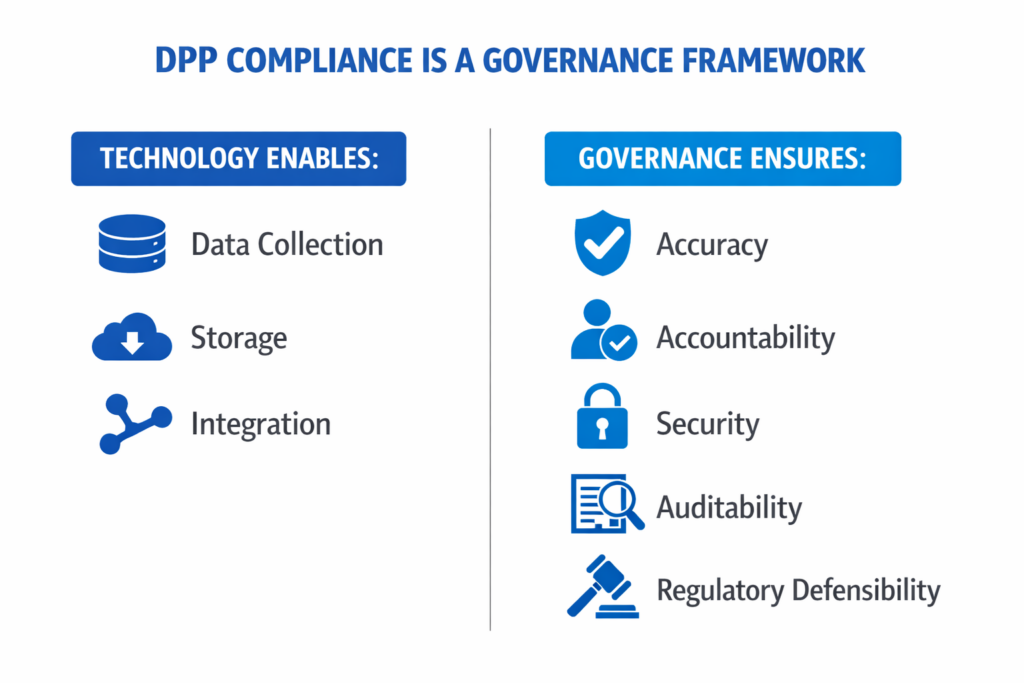
DPP is a regulatory governance transformation technology is an enabler, not the driver.
Some companies delay preparation, assuming timelines may shift or enforcement details may evolve.
This reactive stance creates:
Even if enforcement details evolve, core DPP requirements around identity, sustainability, traceability, and circularity will remain foundational.
Many organizations assume that meeting Digital Product Passport requirements is primarily a software challenge. In reality, technology is only one component. Digital Product Passport compliance fundamentally requires structured governance, clear ownership, controlled processes, and defensible accountability.
Without governance, even the best technology stack will fail to deliver compliant, reliable, and audit-ready DPP data.
One of the most critical elements of DPP requirements is knowing who owns each data point.
For example:
DPP compliance requires defined data stewards across product, sustainability, procurement, and compliance teams. Governance ensures responsibility is assigned not assumed.
DPP data is not static.
Products evolve.
Suppliers change.
Materials are substituted.
Environmental metrics are recalculated.
DPP requirements demand that companies track:
This transforms DPP from a one-time reporting exercise into a living compliance system.
Regulators will not only ask for DPP data, but they may also require proof of how that data was generated and validated.
This means organizations must be able to demonstrate:
Technology can store information, but governance ensures that:
Audit traceability is where governance protects against regulatory exposure.
Not all Digital Product Passport data is public-facing.
Certain information may be:
Without clear access controls:
DPP requirements demand tiered access models, ensuring that the right stakeholders see the right information at the right level.
Governance defines these boundaries.
A significant portion of DPP requirements relies on upstream data.
If suppliers:
The compliance liability may still sit with the brand owner or manufacturer.
Governance mechanisms must therefore include:
Without supplier accountability structures, DPP compliance becomes fragile.
Step 1: List All Applicable DPP Requirements
Step 2: Identify Data Sources
Step 3: Assign Ownership
Step 4: Assess Current Availability
Step 5: Identify Gaps
| DPP Data Domain | Key Data Point | Source System | Data Owner | Status (Ready/Gap) | Access Level |
| Product Identity | Unique Product ID (GS1 Digital Link) | ERP / PIM | IT / Product Mgmt | ✅ Ready | Public |
| Material DNA | Detailed Bill of Materials (BOM) | PLM | Engineering | ⚠️ Manual | Regulators |
| Sustainability | Recycled Content (%) | Supplier Portal | Procurement | ❌ Gap | Public |
| Environmental | Carbon Footprint (kg CO2e) | LCA Software | Sustainability | ✅ Ready | All |
| Circularity | Non-Destructive Disassembly Guide | CAD / Tech Doc | Design | ⚠️ Manual | Repairers |
| Compliance | EU Declaration of Conformity | Quality Mgmt | Legal | ✅ Ready | Regulators |
| Chemicals | REACH / RoHS Declarations | LIMS / Supplier | Compliance | ❌ Gap | All |
| Data Category | Current Availability | Target (2026 Standard) | Priority Level |
| Material DNA | 60% (Manual PDF) | 100% (Machine-Readable JSON) | CRITICAL |
| Carbon Footprint | Spend-based average | Primary Activity Data (DMRV) | HIGH |
| Repair Instructions | Static Webpage | Serial-linked Digital Manual | MEDIUM |
| Recycled Content | Supplier Self-Claims | Blockchain-verified Certificates | CRITICAL |
Before building new systems, onboarding suppliers, or investing in Digital Product Passport infrastructure, the most strategic move is simple: achieve absolute clarity on Digital Product Passport requirements. When organizations clearly understand what data is mandatory, at what level, and for which product categories, compliance stops being overwhelming and becomes structured. Clarity prevents overcollection, reduces supplier friction, protects budgets, and strengthens audit readiness. In a regulatory landscape where transparency and traceability are non-negotiable, companies that prioritize understanding before implementation will move from reactive compliance to confident, controlled execution.
DPP doesn’t exist in isolation it is governed under a broader sustainability framework.
Read our complete guide to ESPR to understand the regulation shaping Digital Product Passport requirements across industries.
Before operationalizing compliance, understand the regulatory structure behind it.
Explore our in-depth breakdown of DPP regulations to see what’s mandatory, what’s evolving, and what it means for your product category.
Digital Product Passports are not just about compliance they are a catalyst for circular product design and lifecycle transparency.
Read our in-depth blog on DPP and the Circular Economy to understand how structured product data enables repairability, reuse, and sustainable growth.
Yes. While enforcement timelines may vary by product category, Digital Product Passport requirements will fundamentally reshape product data governance. Early preparation prevents rushed implementation, supplier disruption, and costly system overhauls later.
Not entirely. Certifications may support parts of compliance, but DPP requirements demand structured, product-level, machine-readable data across identity, sustainability, traceability, and circularity categories.
Not necessarily. Many companies already hold 60–70% of required data across ERP, PLM, or sustainability systems. The first step is mapping DPP requirements to existing data before investing in new platforms.
Supplier readiness is a common gap. Proactive engagement, standardized templates, and updated contractual obligations significantly reduce upstream risk before DPP becomes mandatory.
While DPP requirements are regulatory in nature, structured product transparency enhances supply chain resilience, ESG credibility, and competitive differentiation in sustainability-driven markets.