
Quick summary: DPP Readiness for Brands explained: key requirements, responsibilities, common gaps, and practical steps to prepare for Digital Product Passport compliance under ESPR.

Digital Product Passports (DPPs) will redefine how brands prove sustainability, compliance, and transparency in the EU. Achieving DPP readiness for brands requires structured data governance, supplier data validation, traceability, and audit-ready documentation. Early preparation reduces regulatory risk, prevents greenwashing exposure, and safeguards continued access to EU markets.
Brands must ensure accurate product identification, verified sustainability and environmental data, and compliant consumer-facing disclosures. While data often comes from suppliers, brands remain responsible for the credibility of product claims and market-facing compliance. For brands, DPP readiness is about owning product claims, ensuring supplier data credibility, and protecting market access under ESPR
A Digital Product Passport (DPP) is a standardized, digital record introduced under the EU Ecodesign for Sustainable Products Regulation (ESPR). It is designed to make product information such as origin, material composition, environmental performance, and circularity accessible across the product lifecycle.
For brands, the DPP becomes the single source of truth for product compliance and sustainability data in the EU. It must be machine-readable, interoperable, and accessible to regulators, market surveillance authorities, and, in some cases, consumers. The specific data required will vary by product category, but the objective is consistent: enable transparency, traceability, and enforcement of sustainability and compliance rules at scale.
Although multiple actors contribute data to the DPP, brands are the public-facing owners of the product. This places them at the centre of reputational and commercial risk.
If DPP data is incomplete, inaccurate, or misleading:
Even when data originates from manufacturers or suppliers, the brand is typically the entity that must stand behind the claims presented to the market.
A key challenge for brands is the gap between responsibility and control.
This mismatch means brands must actively govern how data is collected, validated, and maintained. Relying on unverified supplier declarations increases compliance and reputational risk.
DPP is not just a technical requirement it reshapes how brands manage compliance, sustainability, and supply-chain transparency. Brands that treat DPP readiness as a strategic capability, rather than a last-minute compliance task, will be better positioned to protect market access, reduce risk, and build long-term trust in increasingly regulated EU markets.
Which products need a Digital Product Passport and when?
Explore our breakdown of DPP product scope to understand which product categories fall under ESPR, what data is required, and how timelines apply.
Read the blog: DPP Product Scope Explained
What does EU regulation actually require for DPP?
Dive into our guide on DPP regulations covering ESPR obligations, enforcement, and compliance expectations.
Read the blog: DPP Regulations Explained
Under the EU’s Digital Product Passport (DPP) framework, brands play a central coordinating and accountability role. Even when data is sourced from manufacturers and suppliers, brands remain responsible for how product information is presented, validated, and disclosed to the market.
Brands are responsible for defining and maintaining the official identity of the product placed on the EU market. This includes product names, models, SKUs, and any claims associated with the product.
All environmental, sustainability, or performance claims linked to the product must be:
Unsubstantiated or inconsistent claims can expose brands to enforcement actions and greenwashing allegations.
DPP requires brands to disclose environmental and sustainability information as defined by product-specific delegated acts under ESPR.
Brand responsibilities include:
Brands must ensure that disclosures reflect the actual product, not aspirational or outdated data.
For certain product categories, DPP information will be accessible to consumers via QR codes or digital interfaces. Brands are responsible for ensuring that this information is:
Misalignment between consumer-facing messaging and DPP data increases legal and reputational risk.
Brands typically do not generate most DPP data themselves. Instead, they must coordinate data collection across manufacturers, processors, and upstream suppliers.
This includes:
Effective governance of supplier data is essential to ensure that DPP information remains accurate, consistent, and audit ready.
DPP shifts brands from passive recipients of supplier information to active stewards of product data and compliance. Brands that clearly define responsibilities, validate inputs, and govern disclosures will reduce regulatory risk, protect market access, and strengthen trust with regulators, buyers, and consumers.
Under the Digital Product Passport (DPP) framework introduced by the EU Ecodesign for Sustainable Products Regulation (ESPR), brands are responsible for ensuring that a defined set of mandatory data points is complete, accurate, and accessible regardless of where the data originates. While suppliers may generate much of the information, brands remain accountable for its presence and consistency in the DPP.
Brands must ensure that every product placed on the EU market has clear, unambiguous identification within the DPP. This forms the foundation of regulatory enforcement and market surveillance.
Key requirements include:
This information allows authorities to reliably identify the product and verify that it complies with ESPR and other applicable EU rules. Inaccurate or missing identifiers can lead to products being flagged or removed from the market.
Depending on the product category, brands must ensure that mandatory environmental performance and circularity data is included in the DPP.
This may cover:
These metrics are intended to support the EU’s circular economy objectives and enable comparison, enforcement, and informed decision-making. Brands must ensure the data is current, consistent, and based on approved methodologies, particularly when product designs or materials change.
Brands are also required to ensure high-level transparency on material composition and regulated substances.
This includes:
While detailed formulations may remain confidential, the DPP must provide enough information to demonstrate compliance and enable regulatory checks. Brands must coordinate closely with manufacturers to ensure these disclosures are accurate and defensible.
Mandatory DPP data is not optional or cosmetic it is the baseline requirement for EU market access. Brands that fail to ensure completeness and accuracy risk enforcement action, product withdrawal, and reputational damage. Treating mandatory DPP data as a governed, auditable dataset rather than a one-time upload is essential for long-term compliance under ESPR.
While the Digital Product Passport (DPP) mandates a core set of compliance data, it also provides brands with an opportunity to go beyond minimum requirements. Voluntary data, when accurate and verifiable, can differentiate brands, strengthen trust, and future-proof compliance as regulations continue to evolve.
Including verified sustainability certifications in the DPP allows brands to demonstrate independent assurance of responsible practices.
Examples include:
When certifications are linked directly to DPP data and supported by audit evidence, they:
Unverified or outdated certifications, however, can increase compliance and greenwashing risk, making accuracy essential.
Voluntary inclusion of carbon footprint information especially Scope 3 emissions helps brands show transparency around climate impact.
High-value disclosures include:
These narratives support alignment with net-zero commitments, investor expectations, and emerging climate regulations. When grounded in traceable data and consistent methodologies, they enhance credibility rather than marketing exposure.
Brands can also use DPPs to communicate ethical and social performance across supply chains.
This may include:
While often voluntary, this data addresses growing regulatory and buyer focus on human rights and social due diligence. Transparent, evidence-based disclosures help brands demonstrate responsible sourcing without overstating impact.
Voluntary DPP data is not about adding volume it is about adding meaningful, verifiable context. Brands that selectively include high-quality sustainability, carbon, and social data can:
When governed carefully, voluntary DPP data turns compliance infrastructure into a strategic brand asset.
As brands begin preparing for Digital Product Passport (DPP) compliance under ESPR, several recurring gaps emerge. These gaps increase regulatory risk and often stem from how sustainability and supply-chain data has historically been managed.
Many brands depend heavily on declarations from manufacturers and upstream suppliers for sustainability, material, and origin data. Without structured validation, these claims may be incomplete, outdated, or inconsistent with regulatory requirements.
Under DPP, brands are still accountable for the accuracy of market-facing information even if the data originates elsewhere. Relying on unverified supplier inputs exposes brands to audit failures, enforcement actions, and reputational damage when discrepancies are discovered.
Sustainability data is often scattered across multiple systems, teams, and formats spreadsheets, certifications, emails, and reports maintained by different functions. This fragmentation makes it difficult to:
DPP requires structured, interoperable, and continuously maintained data, not static reports compiled at the last minute.
One of the most significant risks for brands is misalignment between sustainability claims and verifiable data. Overstated, unclear, or poorly substantiated claims can trigger greenwashing scrutiny under EU consumer protection and environmental marketing laws.
With DPP making product data more transparent and accessible, inconsistencies are easier for regulators, NGOs, and buyers to identify. Brands that do not tightly govern claims and disclosures face heightened legal exposure and loss of trust.
Addressing these readiness gaps is essential for brands to move from reactive compliance to proactive governance. Brands that verify supplier data, centralize sustainability information, and align claims with evidence will be better positioned to meet DPP requirements, protect their reputation, and maintain uninterrupted access to EU markets.
Preparing for Digital Product Passport (DPP) compliance requires more than gathering data it demands clear governance, defined ownership, and the right digital infrastructure. Brands that start early can reduce regulatory risk and avoid costly last-minute remediation.
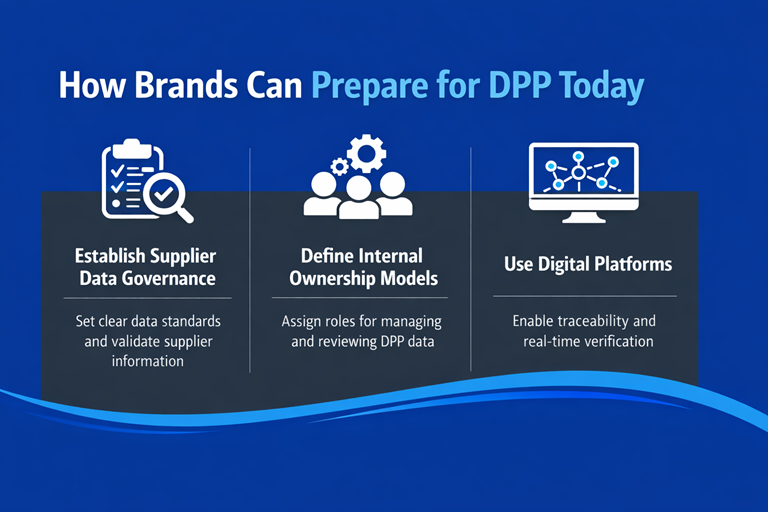
Brands must move from informal data requests to structured supplier data governance. This starts with clearly defining:
Supplier contracts, onboarding processes, and audits should reflect these expectations. Governance frameworks ensure that supplier-provided data is consistent, verifiable, and suitable for regulatory use rather than marketing claims.
DPP readiness requires cross-functional ownership. Sustainability, compliance, product, procurement, and IT teams all play a role, but accountability must be clear.
Effective brands:
Clear ownership prevents gaps, duplication, and conflicting claims across the organization.
Manual systems and spreadsheets cannot support DPP requirements at scale. Brands should invest in digital platforms that enable traceability, verification, and audit readiness.
The right platforms allow brands to:
Digital systems turn DPP from a one-time compliance task into a repeatable, defensible process.
DPP implementation will roll out in phases, but expectations are clear. Brands that establish governance, ownership, and digital foundations today will face fewer disruptions, lower compliance costs, and stronger trust as DPP becomes mandatory across product categories.
TraceX provides a unified digital platform that helps brands achieve Digital Product Passport (DPP) readiness with confidence. By integrating traceability, supplier data governance, and audit-ready verification, TraceX enables brands to collect, validate, and maintain structured product and sustainability data across complex supply chains.
With TraceX, organizations can:
TraceX turns DPP compliance from a manual, siloed exercise into a scalable, defensible capability helping brands reduce risk, streamline reporting, and unlock trust with regulators, partners, and consumers.
DPP Readiness for Brands is no longer a future consideration it is a near-term requirement for maintaining access to EU markets under the Ecodesign for Sustainable Products Regulation (ESPR). By establishing strong supplier data governance, defining clear internal ownership, and adopting digital platforms for traceability and verification, brands can move from reactive compliance to proactive control. Early preparation not only reduces regulatory and greenwashing risk but also enables brands to turn Digital Product Passports into a foundation for trust, transparency, and long-term competitiveness.
Not sure what data the Digital Product Passport actually requires?
Explore our guide to DPP data requirements, including mandatory vs voluntary data points and how ESPR applies by product category.
Read the blog: DPP Data Requirements Explained
Who owns DPP data—and who is liable if it’s wrong?
Discover how DPP data ownership works across brands, manufacturers, and importers under ESPR.
Read the blog: DPP Data Ownership Explained
Your DPP is only as strong as your supplier data.
See how leading companies govern supplier data in Digital Product Passports to stay audit ready.
Learn How to Manage Supplier Data for DPP
DPP readiness for brands means having accurate, verified, and audit-ready product data that meets Digital Product Passport requirements under ESPR, including sustainability, material, and compliance information.
Yes. While suppliers provide much of the data, brands are responsible for the accuracy of product claims and market-facing DPP information placed on the EU market.
Mandatory data includes product identifiers, compliance declarations, environmental and circularity metrics, and high-level material and substance disclosures, as defined by product-specific ESPR rules.
DPP increases transparency and scrutiny. All sustainability and environmental claims must align with verified DPP data, reducing the risk of greenwashing and regulatory action.
Brands should establish supplier data governance, assign clear internal ownership for DPP data, and implement digital platforms that support traceability, verification, and continuous updates.