Quick summary: Discover how ERP Integration in Food Traceability improves compliance, accelerates recall response, strengthens supplier transparency, and ensures audit readiness for food manufacturers.
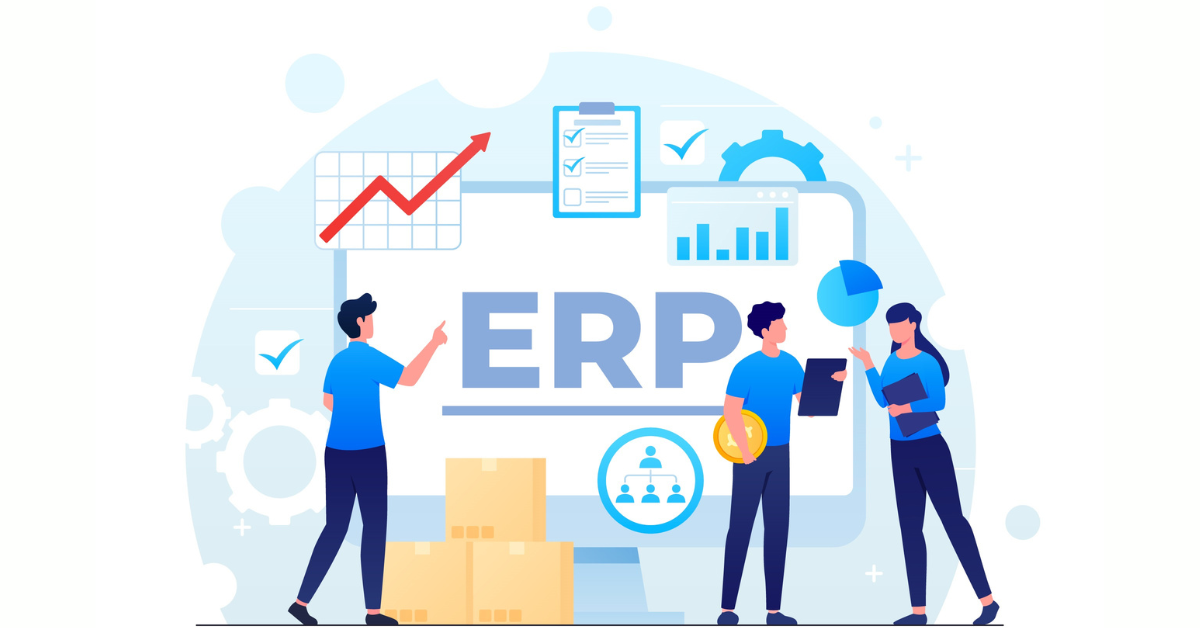
One contaminated ingredient. One delayed recall. One compliance gap. That’s all it takes to trigger a multimillion-dollar recall, damage brand trust, and invite regulatory scrutiny that can take years to recover from. In today’s hyper-regulated and transparency-driven food industry, traceability is no longer a back-office function it’s a frontline defense. This is where ERP Integration in Food Traceability becomes mission critical.
With increasing oversight from organizations like the U.S. Food and Drug Administration and strict mandates under the Food Safety Modernization Act, food manufacturers are under immense pressure to track every ingredient, every batch, and every shipment in real time. Yet many companies still rely on disconnected systems, spreadsheets, and manual documentation that slow down recall response and increase compliance risk.
By connecting procurement, production, quality control, inventory, and distribution into a unified system, ERP integration creates end-to-end visibility across the entire food value chain. It transforms traceability from a reactive process into a proactive compliance strategy enabling real-time batch tracking, automated documentation, and faster recall execution.
For food manufacturers looking to protect their brand, reduce compliance risk, and future-proof operations, ERP integration is no longer an IT upgrade it’s a strategic necessity.
Key Takeaways
ERP integration in food traceability is the process of connecting an Enterprise Resource Planning (ERP) system with all critical food manufacturing operations such as procurement, production, quality control, inventory, warehousing, and distribution to enable real-time tracking of ingredients and finished products across the entire supply chain.
Instead of managing traceability through disconnected spreadsheets or siloed software, ERP integration creates a single source of truth. Every transaction from raw material receipt to final shipment is recorded, linked, and traceable within one centralized system.
When ingredients are received:
This ensures immediate backward traceability to suppliers if issues arise.
During manufacturing:
This creates a complete digital production history.
The ERP system connects with warehouse systems to:
Every product movement is documented in real time.
Once products are shipped:
Instead of taking days to trace impacted products, companies can respond in minutes.
Regulatory bodies such as the U.S. Food and Drug Administration require rapid traceability under laws like the Food Safety Modernization Act. Companies must be able to trace “one step forward and one step back” in the supply chain often within 24 hours or less.
Without ERP integration:
With ERP integration:
Discover how a modern Digital Traceability System delivers real-time visibility, automated compliance reporting, and end-to-end batch control across your food supply chain.
Read the blog: “How Digital Traceability Systems Transform Food Safety & Compliance”
Learn how Blockchain Traceability enhances food safety with immutable records, supplier verification, and real-time product authentication.
Explore the blog: “Blockchain Traceability in Food Supply Chains: The Future of Transparent Compliance”
Food traceability has shifted from being a regulatory checkbox to becoming a strategic necessity. In today’s food ecosystem where supply chains are global, consumers are informed, and compliance standards are tightening manufacturers can no longer afford blind spots in their operations.
Governments worldwide have strengthened food safety laws to prevent contamination rather than react to it. In the United States, the Food Safety Modernization Act (FSMA) requires food companies to implement preventive controls and maintain detailed traceability records. The U.S. Food and Drug Administration now expects rapid access to production and distribution data during inspections or recall events.
Globally, standards from organizations like the Global Food Safety Initiative demand documented proof of product tracking and risk management.
Why it matters:
Failure to provide accurate traceability records can result in:
Compliance is no longer optional it’s enforced.
Modern consumers want to know:
Retailers and major grocery chains now require traceability documentation from suppliers. Many brands even offer QR codes that allow customers to trace product origins.
Why it matters:
Transparency builds trust. Without traceability systems in place, brands risk:
Traceability has become a competitive advantage, not just a compliance requirement.
Food recalls are increasing due to:
Without robust traceability, identifying affected batches can take days. Every hour of delay increases:
Why it matters:
Fast, accurate traceability can mean the difference between a limited recall and a nationwide crisis.
Today’s food products often involve:
This multi-layered supply chain creates traceability gaps if systems are not integrated.
Why it matters:
When one supplier fails, manufacturers must immediately trace:
Manual systems simply cannot keep pace with this complexity.
Food traceability is no longer optional because the risks of operating without it are too high regulatory penalties, recall costs, reputational damage, and lost market access.
For food manufacturers, the real question is no longer “Do we need traceability?” but rather “Is our traceability system strong enough to withstand a regulatory audit or recall tomorrow?”
Food & Beverage Manufacturing Solutions
For true end-to-end food traceability, an ERP system cannot operate in isolation. It must integrate with operational, quality, warehouse, supplier, and monitoring technologies to create a seamless data flow across the entire food value chain.
Here’s how each system plays a critical role:
A Manufacturing Execution System (MES) manages and monitors shop-floor production in real time.
Why integrate MES with ERP?
Traceability Impact:
MES ensures every finished product can be traced back to the exact raw materials, operators, and production conditions involved in its creation.
Without MES integration, production data may be delayed, incomplete, or manually entered raising compliance risk.
A Warehouse Management System (WMS) controls inventory movement and storage.
Why integrate WMS with ERP?
Traceability Impact:
If a recall occurs, integrated WMS data helps identify:
This dramatically reduces recall response time.
A Laboratory Information Management System (LIMS) manages quality testing and compliance documentation.
Why integrate LIMS with ERP?
Traceability Impact:
Integrated LIMS ensures that only approved, compliant batches move forward in production and distribution. If contamination is detected, affected lots can be isolated immediately.
Supplier portals provide visibility into vendor certifications, shipments, and compliance documentation.
Why integrate supplier portals with ERP?
Traceability Impact:
This enables backward traceability to the source of raw materials critical under regulations like the Food Safety Modernization Act.
Without supplier integration, tracing contamination to its origin becomes slow and error-prone.
IoT sensors monitor environmental conditions such as temperature and humidity during storage and transportation.
Why integrate IoT with ERP?
Traceability Impact:
Temperature excursions can be automatically linked to specific batches and shipments. If a cold chain breach occurs, companies can identify impacted products instantly.
This is especially important for perishable goods like dairy, meat, and seafood.
When MES, WMS, LIMS, supplier portals, and IoT systems operate independently, traceability becomes fragmented. Data must be reconciled manually, increasing the risk of delays and inaccuracies.
When fully integrated with ERP:
In today’s regulatory and risk-heavy food industry, system integration is not just an IT upgrade it’s a core compliance strategy.
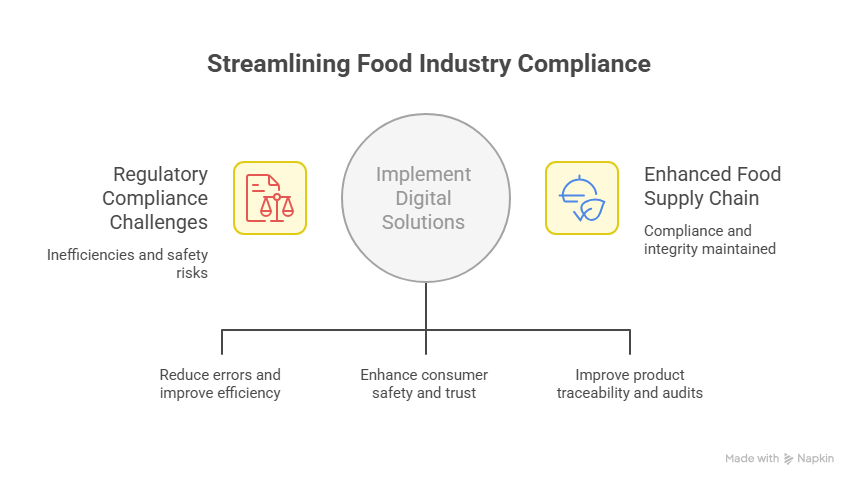
ERP integration transforms food traceability from a reactive record-keeping task into a proactive, real-time control system. By connecting production, quality, inventory, procurement, and distribution data into one unified platform, manufacturers gain full visibility across the food value chain.
Here’s how ERP integration directly strengthens traceability and compliance:
Modern food safety regulations, including the Food Safety Modernization Act, require companies to trace products “one step forward and one step back.” ERP integration makes this instantaneous.
1. Forward & Backward Traceability
If contamination occurs, companies can isolate affected lots within minutes minimizing recall scope and cost.
2. Ingredient-Level Visibility
Every ingredient lot is digitally linked to:
This creates a complete digital genealogy for every product.
3. Real-Time Recall Management
With integrated ERP systems:
This dramatically reduces financial losses and reputational damage.
Manual documentation is one of the biggest compliance risks in food manufacturing. ERP integration replaces paper-based processes with automated digital workflows.
1. Digital Audit Trails
Every transaction ingredient receipt, production step, quality check, shipment is time-stamped and stored. During audits, companies can instantly produce traceability documentation.
This is critical when working with regulators such as the U.S. Food and Drug Administration or third-party certification bodies.
2. Automated HACCP Documentation
Hazard Analysis and Critical Control Point (HACCP) monitoring becomes automated:
No more manual logs or missing paperwork.
3. Regulatory Reporting Dashboards
Integrated systems generate:
This turns compliance from a reactive burden into a controlled, measurable process.
Traceability doesn’t end at production it extends to storage and distribution.
1. FIFO / FEFO Control
ERP systems enforce:
This ensures older or soon-to-expire products are used or shipped first reducing spoilage and regulatory risk.
2. Cold Chain Monitoring
Integrated temperature sensors feed real-time data into the ERP system. If storage or transport conditions deviate:
This is critical for perishable goods like dairy, meat, and seafood.
3. Waste Reduction
By tracking expiry dates, stock rotation, and storage conditions, ERP systems:
The result is improved margins alongside stronger compliance.
Food safety begins long before ingredients reach your facility. ERP integration extends traceability upstream to suppliers.
1. Approved Supplier Tracking
Manufacturers can:
Only certified suppliers are authorized in the system.
2. Certification Management
Supplier certifications (organic, HACCP, GFSI, allergen-free, etc.) are:
This prevents non-compliant materials from entering production.
3. Risk Scoring
Advanced ERP systems analyze:
This data-driven risk scoring helps procurement teams make safer sourcing decisions.
Transform compliance, recall readiness, and supplier transparency with an advanced digital traceability platform built for complex, multi-tier supply chains.
Explore Our Traceability Solutions
Even with the right intentions, many food manufacturers undermine their ERP integration efforts by overlooking critical factors. Here’s a brief look at the most common mistakes:
Not all ERP systems are built for the food industry. Generic platforms may lack:
Without food-specific functionality, companies end up relying on manual workarounds defeating the purpose of integration and increasing compliance risk.
ERP integration is not just a technology project it’s an operational transformation.
Common issues include:
Without structured change management, even the best ERP system can fail due to low adoption and inconsistent data entry.
Poor Data Migration Strategy
Migrating inaccurate or incomplete legacy data into a new ERP system creates long-term problems.
Risks include:
Clean, validated data is essential for reliable traceability.
Ignoring Scalability
Many companies choose systems that meet current needs but cannot handle:
An ERP that cannot scale becomes a costly limitation rather than a growth enabler.
Selecting the right ERP integration partner is just as important as selecting the ERP system itself—especially when food traceability and compliance are on the line. In the context of TraceX solutions, here’s what to look for:
The right ERP integration partner doesn’t just install software they enable resilient, compliant, and scalable food traceability ecosystems.
In today’s high-risk, highly regulated food industry, traceability is no longer a back-office function it is a strategic safeguard for brand protection, compliance, and operational resilience. ERP Integration in Food Traceability connects production, quality, inventory, suppliers, and distribution into a single, intelligent ecosystem that delivers real-time visibility and audit-ready documentation.
With increasing regulatory oversight from authorities like the U.S. Food and Drug Administration and stricter mandates under the Food Safety Modernization Act, food manufacturers must move beyond fragmented systems and manual processes. Integrated ERP platforms empower companies to reduce recall response time, ensure compliance, minimize waste, and strengthen supplier accountability.
Ultimately, ERP integration transforms food traceability from a compliance burden into a competitive advantage enabling faster decisions, stronger consumer trust, and long-term business growth.
Understand the difference between forward, backward, internal, and end-to-end traceability and discover which model fits your supply chain complexity.
Read Types of Traceability in Modern Supply Chains: A Complete Guide
Compliance isn’t just about meeting regulations—it’s about protecting your brand and preventing costly disruptions. Learn how to align your traceability strategy with global compliance standards and audit requirements.
Continue Reading: Supply Chain Compliance Strategies for Risk-Resilient Operations
Technology alone isn’t enough. Successful traceability requires structured processes, supplier alignment, and data governance.
Explore the Blog: Best Practices in Traceability for Transparent & Resilient Supply Chains
ERP integration in food traceability connects production, quality control, inventory, supplier management, and distribution systems into one centralized platform, enabling real-time lot tracking and compliance reporting.
Integrated ERP systems allow manufacturers to instantly trace affected batches forward to customers and backward to suppliers, significantly reducing recall response time and financial impact.
While ERP is not legally mandated, it greatly simplifies compliance with regulations like the Food Safety Modernization Act (FSMA) by automating documentation, traceability records, and audit reporting.
Major benefits include end-to-end lot traceability, automated compliance reporting, improved inventory management, supplier transparency, reduced waste, and enhanced audit readiness.
For comprehensive traceability, ERP should integrate with MES (Manufacturing Execution Systems), WMS (Warehouse Management Systems), LIMS (Laboratory Information Management Systems), supplier portals, and IoT-based temperature monitoring solutions.