
Quick summary: Preparing for Digital Product Passports under the EU Textile Strategy? Learn compliance timelines, core data requirements, implementation steps, and how brands can achieve DPP readiness before 2026–2027 enforcement.

The EU Textile Strategy is no longer a distant policy discussion it is rapidly reshaping how textile and fashion brands operate within the European market. With mandatory Digital Product Passports (DPPs) on the horizon under the Ecodesign for Sustainable Products Regulation (ESPR), compliance is moving from “future consideration” to immediate board-level priority.
For brands selling in the EU, the message is clear: transparency, traceability, and structured product data will soon be legal requirements, not voluntary sustainability initiatives.
Yet many organizations are unprepared. Supply chain data is fragmented across tiers. Material traceability is inconsistent. IT systems don’t communicate. Supplier documentation is incomplete. And internal teams are unclear on who owns DPP readiness. As enforcement timelines approach, these gaps create significant risks:
The EU Textile Strategy aims to make sustainable and circular textiles the norm, and Digital Product Passports are the mechanism that will enforce it. The brands that act now will not only ensure compliance they will gain stronger supply chain visibility, improved ESG reporting, and a competitive advantage built on verified transparency.
This practical guide provides a step-by-step roadmap to help your organization prepare for Digital Product Passports under the EU Textile Strategy strategically, efficiently, and ahead of regulatory deadlines.
Key Takeaways
The EU Textile Strategy, formally known as the EU Strategy for Sustainable and Circular Textiles was introduced by the European Commission to transform how textile products are designed, produced, used, and disposed of within the European Union.
Its objective is clear:
By 2030, textile products placed on the EU market should be durable, repairable, recyclable, largely made from recycled fibers, and free from hazardous substances.
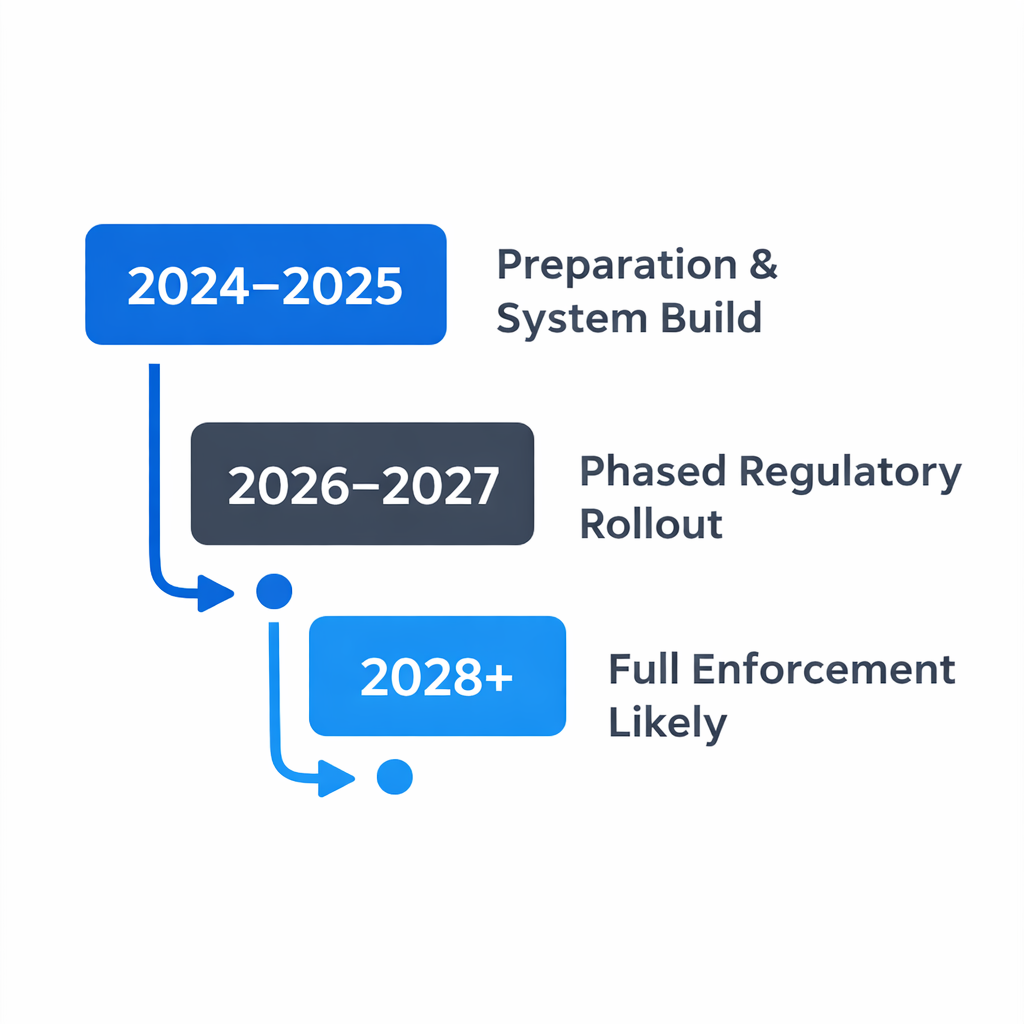
Digital Product Passport requirements for textiles are expected to phase in starting between 2026 and 2027, following the adoption of delegated acts under the Ecodesign for Sustainable Products Regulation. Exact timelines will depend on final technical standards and category-specific implementation rules, but brands should begin preparation well in advance to avoid compliance risks.
For brands, this marks a structural shift. Sustainability is no longer a voluntary marketing claim it is becoming embedded into enforceable product-level regulation.
The strategy focuses on:
Textiles are among the EU’s most resource-intensive industries, with significant environmental and social impact. As a result, regulators are targeting the sector early to drive measurable circularity outcomes.
Ecodesign for Sustainable Products Regulation
The EU Textile Strategy is implemented primarily through the Ecodesign for Sustainable Products Regulation (ESPR).
ESPR expands ecodesign requirements beyond energy-related products and introduces mandatory sustainability performance and information requirements across product categories including textiles.
Want to understand how Digital Product Passports will reshape textile compliance?
Read our in-depth guide: Digital Product Passports for Textiles
IT teams: Is your ERP and PLM system DPP-ready?
Dive into our DPP architecture framework for seamless integration.
One of the most transformative requirements under ESPR is the introduction of Digital Product Passports (DPPs).
Textiles are prioritized because:
Regulators view the textile sector as a high-impact opportunity to demonstrate how circular economy policies can function at scale.
Under ESPR, many product categories, including textiles, will require Digital Product Passports.
A DPP will store structured, standardized data about:
This information must be digitally accessible (e.g., QR codes or digital tags) and interoperable across systems.
For brands, this means compliance is not just about reporting it requires operational data transformation.
Although enforcement is phased, system readiness, supplier onboarding, and data architecture upgrades can take 18–36 months.
Brands that delay preparation risk:
The EU Textile Strategy is not simply a sustainability initiative it is a regulatory transformation that requires strategic planning today.
A Digital Product Passport is a structured digital record containing data on a textile product’s composition, origin, environmental footprint, repairability, and end-of-life instructions accessible via QR code or digital tag.
Accessible via a QR code, NFC tag, or embedded digital link, the DPP enables regulators, supply chain partners, recyclers, and even consumers to access standardized sustainability, compliance, and traceability information.
Under the EU’s evolving regulatory framework, DPPs will become mandatory for textile products placed on the EU market. Unlike traditional sustainability reports, a DPP operates at the individual product level, not just at the company level.
In practical terms, a Digital Product Passport transforms a garment into a data asset.
Below are the key categories of information brands must be prepared to collect, verify, and maintain:
Brands must disclose:
Why it matters:
This data supports circularity verification and enables recyclers to properly sort materials at end-of-life.
This includes:
Why it matters:
Ensures products are free from hazardous substances and meet EU safety regulations.
Required traceability may include:
Why it matters:
Improves supply chain transparency and enables regulatory oversight.
Brands may need to report:
Why it matters:
Supports standardized sustainability benchmarking across products.
DPPs are expected to include:
Why it matters:
Encourages longer product lifecycles and reduces textile waste.
This may include:
Why it matters:
Improves waste management efficiency and supports the circular economy.
A Digital Product Passport is not simply a digital label it requires:
For many textile brands, this represents a significant operational transformation. Those who start building structured product data systems now will be better positioned to meet regulatory deadlines and gain competitive advantage through verified transparency.
Learn how our DPP Implementation Solution supports automated data collection
If your brand sells in the EU market, you will likely fall under DPP obligations.
Under the evolving framework of the EU Textile Strategy and the Ecodesign for Sustainable Products Regulation (ESPR), compliance is not limited to European fashion houses. The scope is broad and applies to any economic operator placing textile products on the EU market.
Any brand headquartered within the European Union that designs, manufactures, or sells textile products must comply with Digital Product Passport (DPP) requirements once they become mandatory.
This includes:
Even if production occurs outside the EU, the brand placing the product on the EU market carries compliance responsibility.
Key risk: Internal data systems and supplier documentation must support product-level transparency.
If your company is based outside the EU but sells textile products into EU member states either directly or through distributors you are still subject to DPP obligations.
This applies to brands headquartered in:
Market access will depend on compliance. Without a compliant Digital Product Passport, products may face restrictions at customs or distribution.
Important: EU regulation applies based on market placement, not company location.
Importers who bring textile goods into the EU assume legal responsibility for ensuring compliance.
Private label retailers — including supermarkets, e-commerce platforms, and large retail chains — must ensure that the products sold under their brand name meet DPP requirements.
This means:
Liability does not disappear simply because manufacturing is outsourced.
While the legal obligation often rests with the brand or importer, manufacturers play a critical operational role.
Suppliers must be able to provide:
Brands cannot build compliant Digital Product Passports without reliable upstream data. As a result, EU requirements will cascade through the supply chain from Tier 1 factories down to raw material processors.
If your textile product enters the EU market at any point in its commercial lifecycle, you are likely within scope.
Compliance responsibility may sit at different levels (brand, importer, distributor), but operational readiness depends on full supply chain participation.
Implementing Digital Product Passports under the EU Textile Strategy is not a one-time IT project it is a structured transformation across data, systems, and supply chain governance. Below is a practical, phased roadmap brands can follow to move from assessment to full compliance readiness.
Before building new systems, brands must understand their current maturity level.
Audit Existing Data Systems
Evaluate whether your current ERP, PLM, sustainability reporting tools, and supplier databases can capture product-level data required for DPPs.
Ask:
Identify Missing Traceability Data
Pinpoint gaps such as:
This step prevents costly rework later.
Map Suppliers & Tiers
Document your supply chain structure:
Without upstream visibility, DPP compliance is not achievable.
This phase deepens transparency beyond direct suppliers.
Tier 1–4 Supplier Visibility
Establish documented traceability down to raw material level. This may require:
Fiber-to-Finished-Product Traceability
Ensure material flows can be tracked from:
Raw fiber → Yarn → Fabric → Garment → Distribution
Each transformation step must generate traceable data.
Chemical Usage Documentation
Capture and centralize:
Chemical transparency is a core compliance pillar.
Once traceability is mapped, the next challenge is structuring data for interoperability.
Centralized Data Architecture
Create a single source of truth for:
Disconnected spreadsheets will not meet regulatory expectations.
Interoperability Standards
Ensure your system aligns with:
Data must be machine-readable and standardized.
ERP/PLM Integration
DPP systems must integrate directly with:
This ensures passport data updates automatically when product specifications change.
Once structured, data must be made accessible.
QR Codes
The most common consumer-facing access method.
NFC Tags
Allow advanced interaction and improved durability compared to printed QR codes.
Cloud-Based Passport Platforms
DPP data is typically stored in secure cloud environments that:
Accessibility and cybersecurity both become critical considerations.
DPP implementation is continuous not static.
Data Validation Processes
Establish protocols to:
Regulators may request proof of accuracy.
Supplier Onboarding Protocols
Create standardized procedures for:
DPP obligations cascade through the supply chain.
Regulatory Monitoring System
EU delegated acts and technical standards will evolve.
Brands must assign ownership to monitor:
Implementing Digital Product Passports (DPPs) under the EU Textile Strategy is as much an organizational transformation as it is a regulatory requirement. Most brands encounter predictable obstacles but with the right approach, they can be mitigated early.
The Challenge:
Textile supply chains are highly decentralized. Data sits in multiple formats across suppliers spreadsheets, PDFs, emails, certification scans often without standardization. Tier 2–4 suppliers may not have digitized systems at all.
This results in:
The Challenge:
Many brands can trace Tier 1 manufacturers but lack visibility into yarn spinners, fabric mills, and raw fiber producers. Without upstream transparency, Digital Product Passports cannot provide verified lifecycle data.
Common gaps include:
The Challenge:
DPP compliance requires structured, machine-readable data. However, many organizations operate with disconnected systems:
Without integration, passport data becomes manual, error-prone, and costly to maintain.
The Challenge:
Many brands struggle with unclear ownership. Is DPP compliance led by sustainability, compliance, IT, sourcing, or legal? Without defined accountability, projects stall.
Symptoms include:
TraceX DPP Solutions empower textile and fashion brands to achieve end-to-end compliance with Digital Product Passport (DPP) requirements under the EU Textile Strategy. The platform integrates seamlessly with existing ERP and PLM systems to centralize product-level data, enabling structured capture of fiber composition, chemical compliance, environmental footprint metrics, and multi-tier supplier traceability. With automated supplier onboarding workflows, real-time data validation, and secure cloud-based passport hosting, TraceX ensures interoperability with emerging EU technical standards while reducing manual reporting burdens. Beyond compliance, TraceX transforms DPP implementation into a strategic advantage — delivering supply chain visibility, audit readiness, and enhanced transparency that strengthens brand trust and long-term resilience in the EU market.
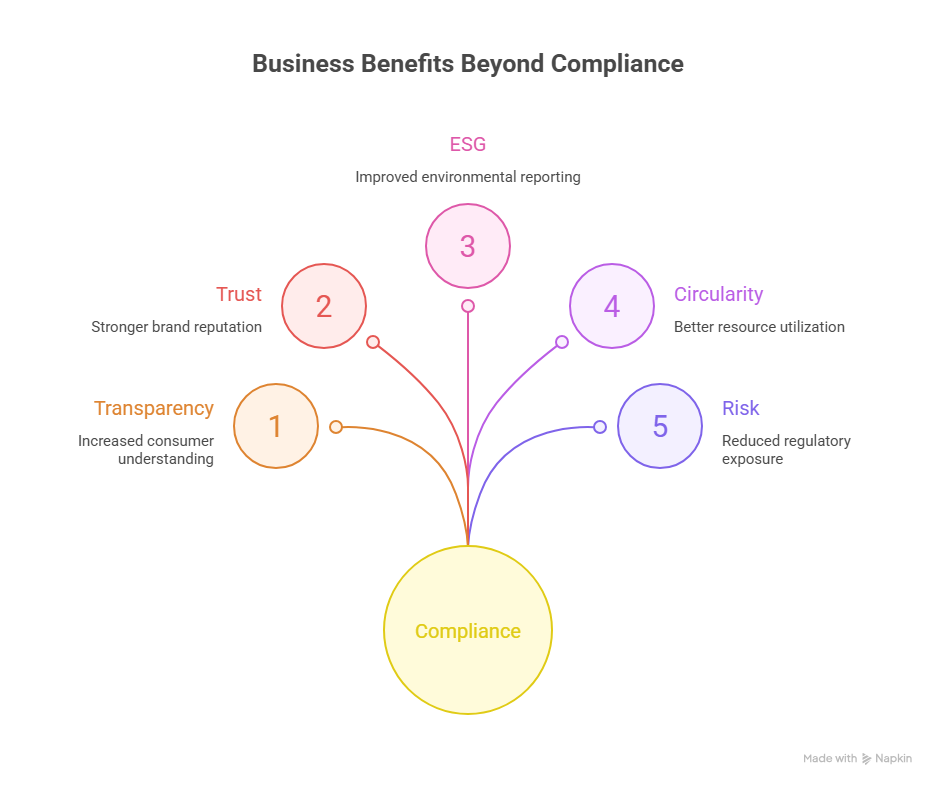
Preparing for Digital Product Passports under the EU Textile Strategy is no longer optional it is a strategic necessity for any brand operating in the European market. While compliance may appear complex, early preparation transforms DPP implementation from a regulatory burden into a competitive differentiator. By investing in supply chain transparency, structured product data, and strong governance frameworks now, brands can reduce risk, streamline ESG reporting, strengthen consumer trust, and future-proof their EU market access. The organizations that act proactively will not only meet regulatory expectations they will lead the next era of circular, data-driven textile commerce.
Confused about how ESPR mandates Digital Product Passports?
Read our full breakdown of ESPR-DPP regulations and what they mean for your business.
Is your DPP system interoperable across supply chains and regulators?
Discover why interoperability is the backbone of compliant Digital Product Passports.
What do Digital Product Passports mean specifically for brands?
Read our practical guide to DPP implementation for brand owners.
A Digital Product Passport is a structured digital record that stores product-level data, such as fiber composition, environmental footprint, chemical compliance, manufacturing origin, and end-of-life guidance, and is accessible via QR code or digital tag.
DPP requirements for textiles are expected to phase in between 2026 and 2027, following delegated acts under the Ecodesign for Sustainable Products Regulation, with broader enforcement likely by 2028.
Yes. Any brand placing textile products on the EU market — regardless of headquarters location — must comply with DPP requirements to maintain market access.
Core data typically includes fiber composition, recycled content, chemical compliance documentation, supplier origin, environmental impact metrics, durability information, and recyclability guidance.
Depending on supply chain complexity, IT maturity, and supplier readiness, full DPP implementation can take 18–36 months. Early assessment and phased rollout significantly reduce compliance risk and last-minute disruption.