
Quick summary: TraceX helps rubber companies in UK meet EUDR requirements with automated Due Diligence Statement (DDS) generation, farm-level traceability, and deforestation risk verification.
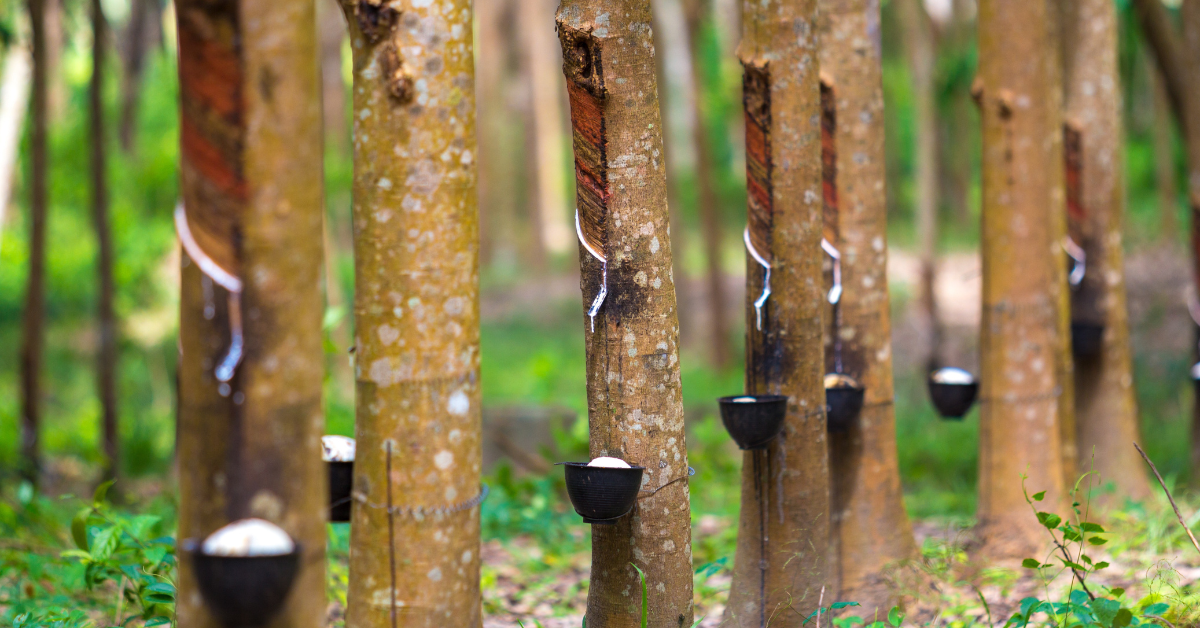
EUDR DDS for Rubber Supply Chain in the UK refers to the due diligence requirements UK-based rubber importers, processors, and exporters must meet when supplying rubber or rubber-derived products to the EU market. Although the UK is outside the EU, companies exporting to EU buyers must provide traceable, verifiable data proving that natural rubber is deforestation-free and legally produced. This includes plantation-level geolocation, legality documentation, and risk assessment records. Implementing digital traceability systems enables UK operators to streamline EUDR DDS compliance, maintain transparent supply chains, and ensure continued market access to EU partners under the 2025 regulatory deadline.
The EU Deforestation Regulation (EUDR) aims to prevent deforestation and forest degradation caused by the production and trade of high-risk commodities including natural rubber. Under the EUDR, any company placing regulated commodities on the EU market must prove that its products are deforestation-free and legally produced, verified through a Due Diligence Statement (DDS) supported by geolocation data and risk assessment.
Natural rubber is among the key commodities covered by the EUDR, along with cocoa, coffee, soy, palm oil, cattle, and wood. The regulation extends beyond raw rubber to include processed and derived products such as tyres, rubber sheets, blocks, compounds, hoses, seals, and industrial components making compliance essential across the entire value chain.
Although the United Kingdom is no longer an EU Member State, UK-based companies that export rubber or rubber-derived products to the EU still play a critical role in ensuring compliance. They must provide upstream traceability data, including plantation-level coordinates, sourcing documentation, and legality proofs to enable their EU buyers to submit compliant DDS filings. This responsibility is particularly relevant for UK automotive suppliers, tyre manufacturers, and industrial goods producers integrated into EU value chains.
All EU “operators” companies placing natural rubber or rubber-derived products on the EU market must comply with the EUDR by December 30, 2025, while small and micro-enterprises have until June 30, 2026. Although UK companies themselves are not directly regulated under the EUDR, any business supplying the EU market must align with these deadlines by ensuring all traceability and documentation requirements are met in advance for seamless trade continuity.
The UK plays a pivotal role as both a rubber importer and processor. Raw natural rubber, primarily sourced from Southeast Asia (Thailand, Indonesia, Malaysia, Vietnam) and West Africa, enters through UK ports in forms like sheets, blocks, and latex. These materials are then processed into compounds and components, supporting industries such as automotive manufacturing, engineering, construction, and aerospace.
EUDR compliance now requires traceability back to the plantation level, linking each imported batch to its verified source. UK companies exporting to EU partners must therefore digitize their supply chains, mapping plantations, validating legality documents, and tracking rubber through each transformation stage from farm to finished product.
In short, the EUDR DDS for Rubber Supply Chain in the UK represents a fundamental shift from traditional paper-based sourcing to data-driven, transparent, and traceable supply networks ensuring the UK rubber sector remains a trusted partner in sustainable, deforestation-free trade with the EU.
Master the step-by-step process of submitting Due Diligence Statements under the new EUDR rules.
Read the blog on filing DDS for EUDR compliance
Explore how rubber importers can achieve traceability, transparency, and compliance under EUDR.
Read the full blog on EUDR Rubber Compliance
The global rubber supply network is highly fragmented, with UK importers often sourcing through multiple intermediary traders, brokers, and exporters before the rubber reaches processing units. This multi-tier structure obscures the connection between the final shipment and its plantation of origin, making full traceability a significant challenge for UK firms supporting EU buyers’ DDS submissions.
The EUDR requires precise geolocation coordinates for every plantation or farm plot producing rubber entering the EU market. Given that most natural rubber originates from millions of smallholders across Southeast Asia and West Africa, geospatial mapping and verification are complex. Dispersed farms, mixed lots, and poor documentation make it hard for UK companies to link each batch to a verified, deforestation-free source.
Legal and forest management standards differ significantly across rubber-producing nations. Some operate under informal land tenure or inconsistent legality verification systems. UK companies must ensure that their suppliers adhere to both deforestation-free and legally produced criteria, often requiring independent audits or third-party validation.
Natural rubber undergoes multiple transformations from latex to sheet, block, compound, and finally to finished products like tyres, seals, or footwear. At each processing stage, material from different origins is blended, which complicates the creation of a clear, verifiable chain of custody from plantation to export.
Failure to provide compliant data can result in shipments being blocked at EU borders, loss of buyer contracts, fines, and reputational damage. For UK suppliers dependent on EU markets, this poses both financial and brand risks, particularly as European buyers intensify sustainability audits.
Many upstream suppliers lack digital systems to capture required data like geolocation, harvest dates, and plot-level documentation. For UK importers, consolidating this data manually is time-consuming and prone to error. Implementing digital traceability solutions becomes crucial to avoid delays and maintain audit-ready documentation.
Even though the UK is no longer bound by EU law, its exporters and processors that supply the EU are indirectly accountable. They must align with EUDR standards by supporting EU operators with complete, verifiable data. This includes plantation mapping, legality verification, and digital documentation sharing, ensuring smooth DDS submissions and uninterrupted access to EU markets.
In summary, UK rubber companies face a dual challenge: navigating complex, fragmented global sourcing networks while ensuring that every shipment destined for the EU market is transparently traceable to deforestation-free origins. Robust digital traceability systems and supplier engagement are key to overcoming these barriers and maintaining compliance credibility.
The EU Deforestation Regulation (EUDR) requires that every shipment of natural rubber entering the EU market be deforestation-free, legally produced, and fully traceable back to its plantation of origin. For UK-based rubber importers, processors, and exporters supplying the EU, manual compliance is complex and time-consuming. TraceX’s EUDR Compliance Platform offers an integrated, digital-first solution to simplify, automate, and verify every step of the Due Diligence Statement (DDS) process for the UK rubber industry.
TraceX automates the generation of EUDR-compliant DDS forms for each batch of rubber. Integrated directly with the EU’s reporting framework, it consolidates all essential data plantation geolocation, supplier documentation, and legality declarations into a single, auditable file. This automation reduces manual intervention, ensures accuracy, and accelerates compliance validation for UK exporters serving EU buyers.
Each rubber shipment is assigned a unique blockchain record, creating an immutable proof of origin that can be verified at any stage. This tamper-proof digital chain of custody gives UK importers and processors complete transparency across their sourcing network, enabling them to demonstrate EUDR compliance and maintain buyer confidence in regulated markets.
TraceX empowers smallholder inclusion through its mobile-enabled onboarding tools. Farmers and cooperatives can digitally register plantations, capture GPS coordinates, and upload supporting documents directly from the field. This ensures that even small-scale producers are represented in compliant supply chains a key advantage for UK companies sourcing from fragmented origin networks in Southeast Asia and West Africa.
The platform’s AI-driven dashboards provide real-time insights into deforestation exposure, supplier credibility, and sourcing risk. By combining satellite imagery, historical land-use data, and supplier profiles, UK compliance teams can quickly identify high-risk regions and take preemptive action to ensure that their sourcing remains transparent and deforestation-free.
For instance, a UK rubber compound manufacturer sourcing natural rubber from Indonesia and Ghana can use TraceX to onboard its suppliers, capture farm-level coordinates, and generate unified DDS reports for each export batch. Within weeks, the company can achieve full supply chain visibility, reduce manual reporting by 70%, and ensure uninterrupted trade with EU partners under the 2025 EUDR deadline.
By integrating blockchain traceability, AI-powered risk assessment, and inclusive smallholder engagement, TraceX transforms EUDR compliance from a regulatory challenge into a strategic advantage. UK companies using TraceX can ensure seamless DDS generation, maintain transparent, deforestation-free supply chains, and position themselves as sustainability leaders in the global rubber trade.

EU-based tyre manufacturers, automotive OEMs, and industrial component producers are increasingly demanding verifiable, deforestation-free sourcing for all natural rubber inputs. For UK suppliers, processors, and exporters, meeting these expectations isn’t just about regulatory alignment; it’s about retaining long-term contracts and supply chain partnerships with major European buyers. Transparent traceability builds buyer confidence, supports brand integrity, and positions UK rubber companies as trusted, sustainable sourcing partners within global manufacturing networks.
EUDR-aligned practices go hand in hand with broader environmental, social, and governance (ESG) goals. UK rubber companies can embed compliance within their sustainability frameworks from supporting smallholder livelihoods and ethical sourcing to advancing circular economy practices, such as recycled rubber usage and low-carbon production processes. This integration enhances brand reputation and attracts sustainability-focused investors and customers.
Early adopters of digital traceability and automated compliance tools stand to gain a first-mover advantage. Verified deforestation-free sourcing can result in fewer customs checks, faster border clearances, and preferred supplier status in EU procurement systems. For UK exporters navigating post-Brexit trade frameworks, this can mean smoother market access, reduced compliance friction, and higher buyer retention, transforming regulatory readiness into a measurable business benefit.
Failure to demonstrate EUDR compliance can lead to shipment delays, financial penalties, or exclusion from EU supply chains. By implementing robust due diligence and traceability systems, UK rubber companies can proactively manage risk, avoid reputational damage, and ensure uninterrupted trade flows into key EU markets. Effective compliance frameworks also strengthen supplier accountability and improve data reliability across sourcing tiers.
The UK rubber sector has a pivotal role in advancing global deforestation-free trade. By ensuring that natural rubber entering or processed through the UK is verified as legally produced and deforestation-free, the industry contributes directly to international climate action, biodiversity preservation, and sustainable agriculture targets. This positions UK exporters not just as compliant suppliers, but as active contributors to global sustainability progress.
In essence, EUDR-aligned traceability offers UK rubber and component manufacturers a strategic opportunity: to enhance compliance, reinforce ESG commitments, and lead the transition toward a transparent, sustainable, and responsible global rubber economy.
As the EUDR compliance deadline approaches, UK rubber importers, processors, and exporters must align their traceability systems with EU expectations to maintain seamless trade access. While the UK operates outside the EU, its exporters play a crucial role in supplying verified, deforestation-free rubber to European markets. Implementing a robust Due Diligence Statement (DDS) framework backed by digital traceability, geolocation mapping, and risk analytics is now essential for credibility and continuity.
By adopting advanced compliance platforms like TraceX, UK rubber companies can move beyond reactive documentation to achieve real-time supply chain visibility, automated DDS reporting, and verifiable proof of origin. This not only ensures full EUDR alignment but also strengthens business resilience, enhances buyer confidence, and positions the UK rubber sector as a leader in sustainable, deforestation-free trade across global markets.
Understand the key components of EUDR compliance and how to streamline your DDS process efficiently.
Read the blog on EUDR Due Diligence
Learn how AI-driven automation and intelligent workflows simplify data collection, verification, and reporting.
Explore the blog on Agentic AI for EUDR
Unpack the biggest hurdles faced by importers under EUDR and how technology can turn compliance into a competitive edge.
Read the blog on Challenges for EU Importers
The EUDR is a regulation by the European Union aimed at preventing deforestation-linked commodities like rubber from entering the EU market. It requires full supply chain traceability and submission of Due Diligence Statements (DDS) proving compliance.
A DDS is a formal declaration confirming that rubber imported or sold in UK is deforestation-free and legally sourced. It must include farm-level geolocation data and risk assessment documentation.
All UK importers, traders, processors and retailers handling rubber are required to comply. Both large corporations and small operators must provide DDS documentation for their supply chains.
Common difficulties include gathering farm-level data, verifying deforestation-free claims, managing multiple smallholders, and preparing DDS documents manually.
TraceX digitizes the entire process mapping rubber farms, verifying deforestation risks via satellite data, and auto-generating compliant DDS reports ready for submission.
Yes. TraceX is built for scalability and ease of use. It supports both large enterprises and smallholder networks, enabling simple data collection via mobile apps