Quick summary: 6 Farm Management Practices That Drive Sustainable Agricultural Operations: explore key strategies to improve farm efficiency, ensure traceability, and achieve scalable sustainability in modern agribusiness.

You’re under pressure on two fronts: produce more food to meet a growing global population and prove with verifiable data that you’re doing it sustainably. Paper records don’t cut it. Spreadsheets break at scale. And auditors are asking for plot-level evidence, not declarations. The real challenge isn’t adopting better farm management practices; it’s capturing, validating, and scaling them across thousands of farms in a way that stands up to compliance and market scrutiny.
This is where TraceX farm management solutions help, digitizing first-mile data, standardizing farm-level workflows, and turning everyday farm activities into traceable, audit-ready proof of sustainable practices.
Who This Is For: Sustainability Heads, Agribusiness Operations Managers, Supply Chain Directors, and Compliance Officers at food and beverage companies, cooperatives, and large farms who need to scale sustainable practices while meeting EUDR, CSRD, and buyer traceability requirements.
This guide breaks down the 6 farm management practices that leading agribusinesses are implementing today and how digital farm management infrastructure is turning each one into a traceable, audit-ready data asset.
Sustainable agriculture depends on adopting the right farm management practices, from crop planning and input optimization to traceability and compliance. When digitized, these practices enable agribusinesses to improve productivity, reduce environmental impact, and generate verifiable, audit-ready data, turning sustainability from intent into measurable outcomes.
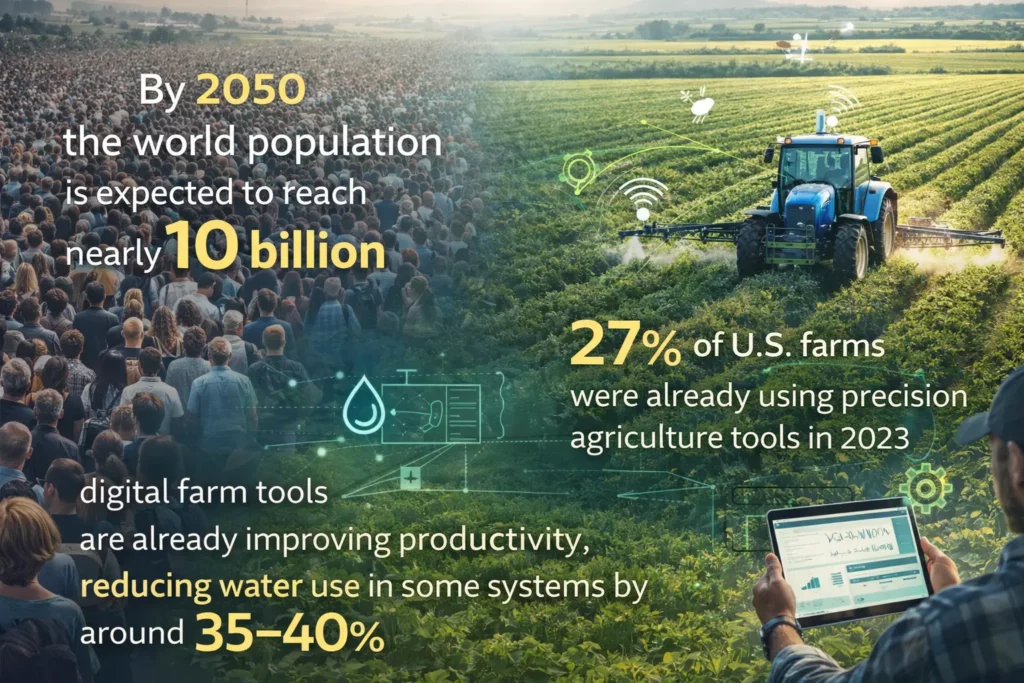
By 2050, the world population is expected to reach nearly 10 billion, while digital farm tools are already improving productivity, reducing water use in some systems by around 35-40%, and 27% of U.S. farms were already using precision agriculture tools in 2023.
The data tells a clear story: the majority of farms are still operating below their digital potential, and the ones that close that gap first will have a structural advantage in winning supplier contracts, accessing carbon markets, and passing regulatory audits.
Ready to digitize your farm operations? Explore our complete guide to digital farm management and unlock data-driven decision-making at scale.
Struggling with input distribution across farms? Discover how to streamline delivery, track usage, and improve efficiency.
Crop management encompasses every input decision from seed to harvest: soil prep, seed selection, irrigation, fertilization, pest management, and storage. When these decisions are made on paper or from memory, the data dies on the farm. When digitized, every field action becomes a data point that feeds compliance, traceability, and procurement workflows.
Improves soil fertility and erosion resistance. When logged in to a farm management system, it becomes verifiable evidence for sustainability certifications like Rainforest Alliance and Global G.A.P.
Intercropping and Crop Rotation
Two or more crops grown on the same land reduce fertilizer dependency and improve yield stability. Digital farm management links rotation schedules to plot-level records, giving procurement teams visibility on input use across seasons.
Input Optimization
Every kg of fertilizer, every liter of water, every pesticide application, when tracked digitally, is the foundation of carbon footprint reporting and Scope 3 emissions disclosure under CSRD.
| Role | Challenge | TraceX Solution |
|---|---|---|
| Agribusiness Operations Manager overseeing 500+ smallholder farmers | No standardized input logging. Each farmer records differently or not at all. Impossible to aggregate plot-level data for buyers or audits. | TraceX Farm Management digitizes field data collection via mobile, even offline. Plot-level input logs are auto-aggregated, audit-ready, and linkable to procurement records. |
C-SAFE partnered with TraceX to support tomato farmers in the Sri Amaranarayana FPO by addressing inconsistent yields and inefficient farming practices. By implementing TraceX’s Package of Practices (POP) feature, they standardized cultivation workflows, enabling farmers to follow structured, data-driven practices from land preparation to harvest. This improved consistency, productivity, and alignment with sustainable farming methods.
Explore the full case study to learn how TraceX’s POP feature helped improve yields, efficiency, and sustainability for tomato farmers.
Soil health is the foundation of long-term agricultural productivity and a growing requirement in sustainability audits. Yet most farms still rely on periodic physical sampling with no digital record continuity. The shift to digital soil management enables continuous monitoring, trend tracking, and evidence-based reporting, all of which are becoming buyer requirements in regulated supply chains.
Contour Farming and Plot Mapping
Contour farming reduces soil erosion and water consumption. When plots are geo-tagged and mapped in a farm management system, you get plot-level deforestation risk scores required for EUDR compliance.
Soil Fertility Tracking
Tracking nitrogen, phosphorus, and potassium levels over time shows buyers and auditors that your sourcing network is improving soil health, not degrading it. This data directly supports ESG reporting.
Water and Irrigation Management
Precision irrigation linked to soil moisture data reduces water usage. FAO estimates digital tools can reduce farm water consumption by up to 35%, a critical proof point for water-stressed supply chains.
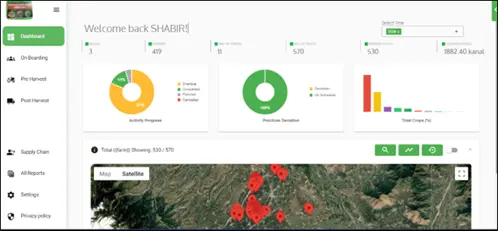
“How can I prove my suppliers are improving soil health over time?” With TraceX Farm Management, each registered plot has a continuous data log: soil inputs, practices applied, and season-over-season yield comparisons. This creates the evidence trail auditors and buyers need, without requiring a farm visit.
Precision agriculture uses GPS, sensors, IoT devices, and data analytics to manage farm inputs at a granular level. The business case is no longer just about yield; it’s about creating the structured, continuous data that regulators and supply chain buyers are demanding.
GPS and Geo-Tagging
Geo-tagged farm plots are the entry point for deforestation risk assessment, a mandatory component of EUDR due diligence. Without plot coordinates, you cannot demonstrate deforestation-free sourcing.
IoT and Remote Monitoring
Soil moisture sensors, microclimate monitors, and smart devices feed real-time data into farm management platforms. This enables proactive intervention, not reactive firefighting.
Satellite and Drone Monitoring
Remote sensing provides continuous field monitoring at scale, tracking crop health across hundreds of plots without field visits. Critical for cooperatives and sourcing companies managing geographically dispersed supplier networks.
| Role | Challenge | TraceX Solution |
|---|---|---|
| Sustainability Head at F&B company needing CSRD-compliant Scope 3 data | Fragmented farm data from multiple supplier regions. No standardized methodology for measuring agricultural emissions or soil carbon. | TraceX digitizes farm-level practices and links input data to emissions calculations, providing structured Scope 3 data without relying on farmer self-reporting. |
IPM combines cultural, biological, and chemical controls to manage pests with minimal synthetic chemical use. For supply chain buyers, the question isn’t just ‘do you use IPM?’, it’s ‘can you prove which pesticides were applied, at what dose, on which plot, and when?’
See how N+3F enabled a pesticide-free agriculture model at scale using TraceX Farm Management Solutions. Explore the full case study to learn how digital traceability drives safer, more sustainable food systems.
Without digital tracking, pesticide compliance is a declaration. With TraceX, it’s a verifiable record.
| Without Digital Farm Management | With TraceX Farm Management |
|---|---|
| Manual pesticide logs or none at all | Digital input logs per plot, per application date |
| No linkage between chemical application and crop lot | Full chain of custody from pesticide use to harvest lot |
| Cannot prove MRL (Maximum Residue Level) compliance to buyers | Continuous data capture means audits are accessible, not reconstruction |
| Audit-readiness depends on reconstructing paper records | Continuous data capture means audits are access, not reconstruction |
| No early warning system for pest-related yield risk | Agronomic alerts notify farmers before losses occur |
Livestock contributes 40% of the global value of agricultural output and supports the livelihoods of nearly 1.3 billion people (FAO). It also accounts for a significant share of agricultural greenhouse gas emissions, making livestock traceability a priority for buyers operating under ESG frameworks.
Animal Health Monitoring
Smart collars and IoT sensors track vital signs, movement, and feeding patterns, with 42.75% of surveyed farms already using them for health monitoring. Digital health records reduce antibiotic use and support welfare certification claims.
Microclimate and Environment Tracking
32% of farms use microclimate sensors to monitor temperature and humidity in livestock facilities. This data supports animal welfare certifications and environmental impact reporting.
Waste and Emissions Management
Methane from enteric fermentation and manure management is one of the largest sources of agricultural GHG emissions. Digital livestock management enables structured emissions tracking, essential for Scope 3 reporting under CSRD.
| Role | Challenge | TraceX Solution |
|---|---|---|
| Supply Chain Director at a meat processing company sourcing from 800+ farms | Cannot provide buyers with animal welfare or emissions data at farm level. Certifications are based on sampling, not continuous monitoring. | TraceX connects farm-level livestock records, health logs, feeding inputs, and environmental data into a traceable supply chain record that supports both welfare certification and carbon reporting. |
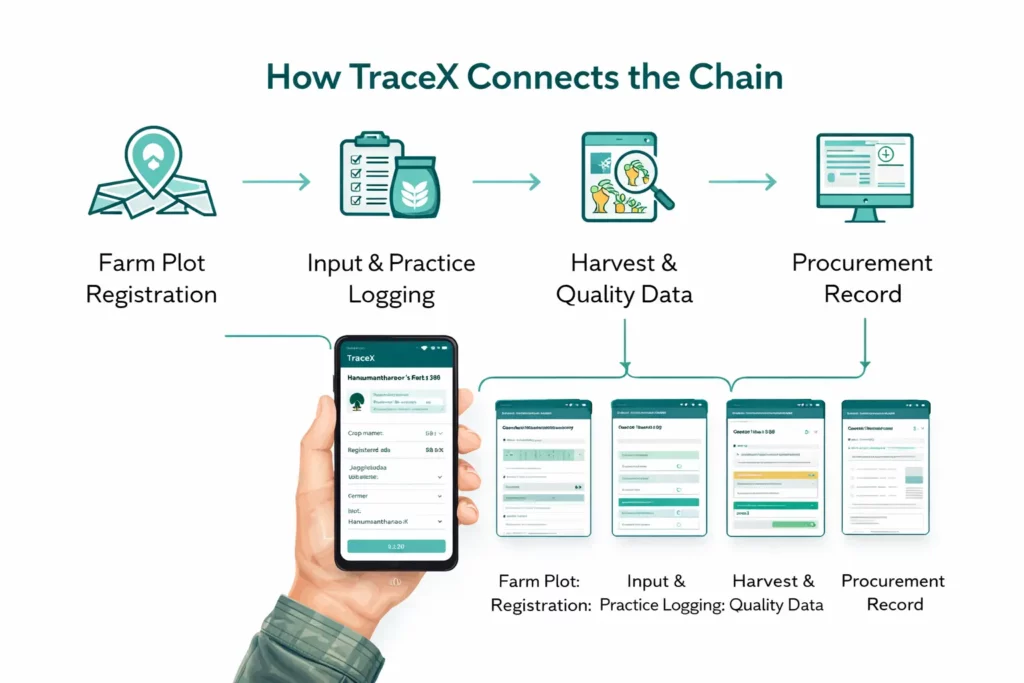
Farm management doesn’t end at the farm gate. The data collected on-farm, plot records, input logs, yield data, and quality assessments need to flow into procurement, sustainability reporting, and compliance workflows without manual re-entry or reconciliation. This is the gap where most agribusinesses lose value: data exists at the farm level, but doesn’t connect to the supply chain systems that buyers and regulators require.
The Farm-to-Compliance Data Chain:
Crop Procurement Tracking
Record crop weight, quality, quantity, and price per farmer per harvest. This data supports fair price verification for Fairtrade certification and enables accurate supplier performance scoring.
Financial Traceability
Linking input financing, crop insurance, and payment records to farm profiles creates a complete farmer livelihood picture, increasingly required for ESG supplier reporting and development-bank-linked sourcing programs.
Audit-Ready Evidence Management
Because data is continuously captured and validated at the farm level, audits become a matter of access, not reconstruction. Evidence is already in place when requested.
TraceX helped agri businesses streamline rural procurement by introducing a flexible, offline-ready Procurement Planning module. Designed for real-world field conditions, the solution enabled procurement teams to manage purchases across weight, price, and quality grades even in low-connectivity environments, improving efficiency, accuracy, and decision-making at scale.
TraceX serves different personas across the agribusiness value chain. Here’s where each role finds the most immediate impact:
| Role | Challenge | TraceX Solution |
|---|---|---|
| Sustainability Head (F&B / FMCG) | Cannot measure or prove Scope 3 agricultural emissions. Supplier data is inconsistent and manually collected. | TraceX standardizes farm-level data collection for emissions calculation, soil health tracking, and continuous sustainability monitoring across your supply base. |
| Operations Manager (Cooperative / Sourcing Company) | Managing 500-5,000+ smallholder farms with no digital infrastructure. Each farmer tracks inputs differently or not at all. | TraceX mobile-first farm registration and field data collection works offline, scales across large farm networks, and aggregates data for procurement and compliance reporting. |
| Compliance / Regulatory Affairs Manager | EUDR, CSRD, and Global G.A.P. require plot-level evidence, deforestation risk assessments, and due diligence statements currently impossible to generate from paper records. | TraceX provides the geo-tagged plot data, continuous monitoring, and structured export workflows required to generate EUDR-compliant Due Diligence Statements without manual reconciliation. |
| Procurement Manager (Agribusiness) | Cannot verify the sustainability claims of suppliers at onboarding or during annual audits. Rely on self-declarations and periodic site visits. | TraceX gives procurement teams live access to supplier farm data, practices applied, certifications held, and yield history, enabling risk scoring and evidence-based supplier selection. |
The convergence of EUDR enforcement, CSRD disclosure requirements, and buyer sustainability mandates means that farm-level data is no longer optional. It’s the price of market access.
Companies that build digital farm management infrastructure now will have a structural advantage in three ways:
Regulations require data, not paperwork. Document-based compliance models, PDFs, declarations, and static reports are failing because they cannot provide the continuous, structured, plot-level evidence that modern regulations and buyers demand. TraceX Farm Management is the infrastructure that closes this gap.
Sustainable agriculture is no longer a choice; it’s a necessity driven by climate pressures, regulatory expectations, and market demand for transparency. The six farm management practices outlined above are not just operational improvements; they form the foundation of resilient, data-driven farming systems. When combined with digital tools, these practices enable agribusinesses to move from intent to impact, ensuring traceability, improving yields, and meeting sustainability goals at scale. The future of agriculture will belong to those who can not only implement sustainable practices, but also prove them with reliable, real-time data.
Traceability starts at the farm. Discover how farm management systems enable accurate data capture and end-to-end supply chain visibility.
From farm to export – learn how digital farm management ensures quality, traceability, and seamless market access.
Sustainability begins with better farm data. Discover how farm management systems drive measurable environmental and social impact.
EUDR compliance requires geo-referenced plot data, deforestation risk assessment against a December 31, 2020 cut-off date, and a traceable chain of custody from farm to first placement. The most critical farm management practices for EUDR compliance are: (1) farm and plot registration with GPS coordinates, (2) continuous land-use monitoring via satellite or remote sensing, (3) structured input and practice logging that links to harvest lots, and (4) a digital due diligence statement workflow that aggregates farm-level data automatically.
Precision agriculture generates the structured, continuous, plot-level data that sustainability certifications like Rainforest Alliance, Global G.A.P., and Organic standards require. By digitizing input applications, soil health monitoring, and field practices, agribusinesses can demonstrate compliance with evidence, not just declarations. This is especially important for certifications that require annual renewal and ongoing monitoring rather than periodic audits.
FAO research indicates farm management software has the potential to increase agricultural productivity by up to 30% and reduce water usage by up to 35%. Beyond yield and input efficiency, the compliance ROI is significant: companies that can produce audit-ready farm data avoid the cost of manual data reconstruction (often 4-8 weeks of staff time per audit cycle) and reduce the risk of market access loss due to regulatory non-compliance.
Scope 3 agricultural emissions tracking requires farm-level data on: fertilizer type and application rates, fuel consumption in farm operations, livestock methane and manure management practices, and land use changes. Digital farm management platforms like TraceX collect this data at the plot and activity level, enabling structured emissions calculations aligned with GHG Protocol Scope 3 Category 1 (Purchased Goods and Services) methodology.