
Quick summary: GHG Accounting in Agriculture explains why traceability, chain of custody, and farm-level data are essential for compliant, low-carbon food supply chains and Scope 3 reporting.
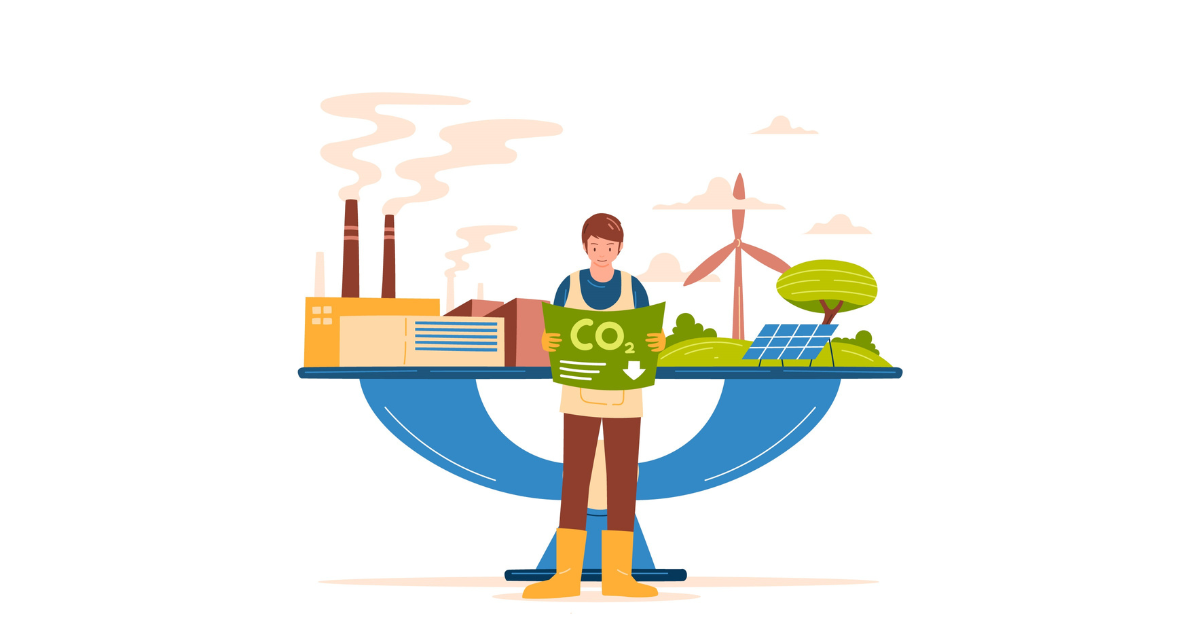
Agriculture is now the largest and least-controlled source of Scope 3 emissions for food brands, traders, and retailers, yet most emissions data still relies on averages and assumptions. This creates a critical risk: companies are making climate claims without verifiable proof. If you can’t trace it, you can’t decarbonize it. GHG Accounting in Agriculture is the process of measuring, attributing, and verifying greenhouse gas emissions across food and agricultural supply chains from farm inputs and on-field practices to processing, logistics, and final products
Unlike generic carbon accounting, it requires farm-level data, traceability, and chain-of-custody to accurately capture Scope 1, 2, and especially Scope 3 emissions. Traceable, digital GHG accounting enables food companies to meet regulatory and buyer requirements, reduce emissions credibly, and build low-carbon, audit-ready supply chains without relying on estimates or averages.
As regulators tighten disclosure rules, buyers demand product-level carbon data, and financiers link capital to ESG performance, estimated emissions are no longer defensible. The industry is shifting from spreadsheets to traceable, audit-ready GHG accounting, where emissions are linked to real farms, practices, and volumes—turning climate reporting from a compliance burden into a source of credibility and competitive advantage.
Key Takeaways
GHG accounting in agriculture is the systematic measurement, attribution, and reporting of greenhouse gas emissions generated across agricultural production systems from input manufacturing to on-farm activities and post-harvest handling. Unlike generic emissions reporting, agricultural GHG accounting must capture biological variability, land-use dynamics, and practice-driven outcomes, not just energy consumption.
Traditional inventory reporting aggregates emissions at the company or country level using averages. Product-level footprints, by contrast, allocate emissions to specific crops, farms, seasons, and batches, enabling buyer-facing disclosures, low-carbon claims, and Scope 3 accuracy.
Agriculture is biological, seasonal, and fragmented. Emissions fluctuate with soil health, weather, crop variety, and farmer practices, unlike manufacturing, where outputs and energy inputs are relatively stable. Static emission factors fail to reflect this reality.
Accurate GHG accounting in agriculture is impossible without farm-level traceability and chain-of-custody, because emissions are not just produced they are earned or reduced through practices.
Read our deep dive on land-based emissions in agriculture and why soil, land-use change, and farming practices define your climate footprint.
Explore how land use drives agricultural emissions →
Read our guide on Scope 3 emissions in agriculture and why estimates are no longer enough.
Scope 3 emissions make up 80–90% of agri footprints—do you have visibility? →
Agriculture is critical to global emissions reduction because it is the largest source of non-energy greenhouse gases and the biggest blind spot in Scope 3 accounting. No credible Net Zero pathway is possible without addressing farm-level emissions.
Up to 90% of food companies’ emissions sit in Scope 3, primarily at farm level. Without plot-level data on inputs, practices, and yields, companies rely on estimates making SBTi targets unachievable and unverifiable.
Regulatory and market alignment:
Agriculture is not just an emissions problem it is the only sector that can deliver scalable removals through soil carbon, making traceable farm data the most strategic climate asset food companies can build today.
In agri supply chains, greenhouse gas emissions are classified into Scope 1, Scope 2, and Scope 3 but their distribution is fundamentally different from manufacturing or energy sectors.
These include on-farm fuel use (diesel for tractors, pumps), on-site processing activities (drying, crushing, primary processing), and company-owned transport. Scope 1 is visible and measurable, but typically represents a small share of total agri emissions.
Emissions from electricity and energy used in cold storage, warehouses, processing plants, and factories. While easier to quantify, Scope 2 remains secondary in agriculture compared to farm-level impacts.
Includes fertilizers, seeds, chemicals, soil practices, irrigation, aggregation, transport, and third-party processing. For food and agriculture companies, 80–90% of total emissions sit in Scope 3, largely upstream at farm level.
Most companies still report Scope 3 using generic emission factors and averages. Buyers, regulators, and frameworks like SBTi FLAG and CSRD increasingly reject estimates without traceable, activity-based data.
In agriculture, Scope 3 is not “indirect” in practice it is where climate risk, compliance exposure, and competitive advantage are decided. Companies that treat Scope 3 as optional are already falling behind.
Traditional GHG accounting in agriculture was designed for consolidated, industrial systems not fragmented, smallholder-driven value chains. As a result, it systematically breaks down in real-world agri supply chains.
Where it fails:
Most agricultural emissions are calculated using regional or global averages rather than actual farm practices. This ignores variability in fertilizer rates, irrigation methods, soil conditions, and crop cycles leading to inaccurate, non-comparable results.
Tier-2 and Tier-3 suppliers often submit unverifiable estimates. Without plot-level data or chain-of-custody controls, emissions become assumptions, not evidence.
Static, retrospective data collection cannot reflect seasonal decisions or in-season changes, creating outdated and incomplete emissions profiles.
Resulting risks:
In fragmented value chains, emissions accounting fails not because of poor intent but because data is disconnected from physical product flows. Without traceability, GHG numbers are accounting artifacts, not climate intelligence.
Accurate GHG accounting in agriculture is impossible unless emissions follow the physical movement of products through the supply chain. This is where traceability for GHG accounting and robust chain of custody (CoC) systems become the core differentiator, not a compliance add-on.
Agricultural emissions are generated at specific points: input application, on-farm activities, storage, processing, and transport. If emissions data is not digitally linked to the actual farm, batch, and shipment, it becomes detached from reality. Traceability ensures emissions are attributed to the correct volume, origin, and buyer, eliminating guesswork.
Farm → batch → lot → shipment linkage
Digital traceability connects:
This creates a continuous emissions thread, enabling product-level carbon footprints instead of generic supplier averages.
Without CoC controls, emissions can be double-counted, diluted, or assigned to the wrong buyer. Traceability platforms enforce data integrity, timestamps, and volume reconciliation closing the gap between sustainability reporting and physical reality.
GHG accounting without traceability is a financial ledger without invoices. Chain of custody turns emissions from estimates into evidence, making climate claims defensible, auditable, and market ready.
Digital Platforms are the Backbone of Farm-to-Fork Emissions Data. GHG data in agriculture is collected by capturing activity-level data across the entire value chain then converting it into emissions using verified methodologies. Unlike manufacturing, agriculture requires continuous, field-level measurement tied to real operations, not annual estimates.
Traditional MRV (Measurement, Reporting, and Verification) in agriculture relies on surveys, spreadsheets, and self-reported data. This approach fails because:
Manual MRV produces reports, not evidence.
Digital farm tools capture primary emissions data at the source:
This creates activity-based data, enabling accurate calculation of N₂O, CH₄, and CO₂ emissions instead of relying on regional averages.
Procurement platforms link harvested volumes to:
This is critical for allocating emissions per lot or shipment, especially for Scope 3 accounting and buyer-specific reporting.
IoT sensors and logistics tracking capture:
These datasets convert downstream operations into measurable Scope 2 and Scope 3 emissions often ignored or underestimated in agri accounting.
Blockchain ensures that:
This transforms GHG accounting from trust-based reporting to proof-based verification.
In agriculture, emissions are not a static number; they are a living operational signal. Digital platforms convert everyday farm and supply-chain actions into continuous climate intelligence, making GHG accounting actionable, auditable, and economically relevant, not just a reporting exercise.
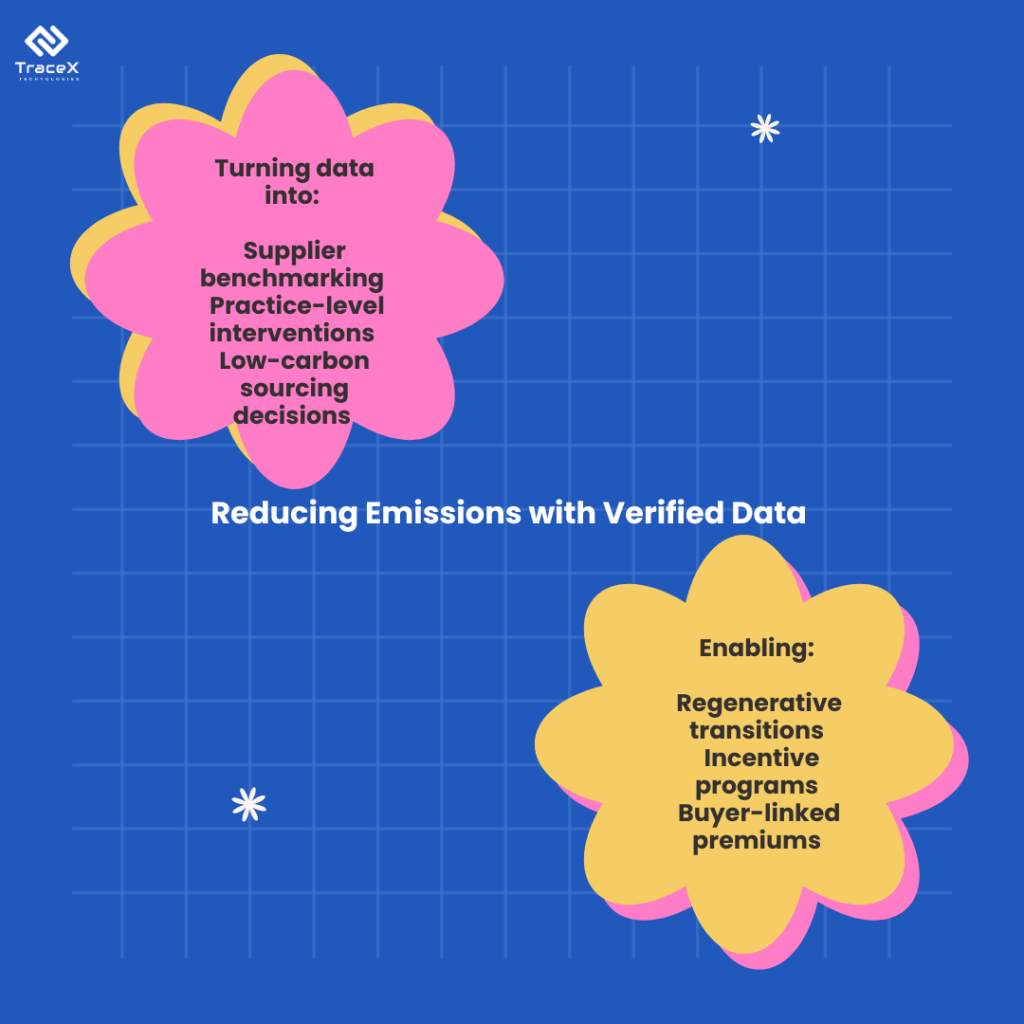
TraceX Farm Management and DMRV platform enables GHG accounting in agriculture that is traceable, defensible, and audit-ready, by embedding emissions data directly into farm-to-fork traceability workflows. Instead of estimates and surveys, TraceX builds emissions intelligence from real operational data.
TraceX digitizes on-farm activities through mobile and field-agent workflows, capturing:
TraceX links emissions to physical product flows:
By combining farm data with procurement, processing, storage, and logistics records, TraceX generates:
TraceX automates reporting aligned to global frameworks:
TraceX integrates farmers, FPOs, processors, exporters, and buyers on one platform ensuring:
Most GHG tools measure emissions after the supply chain operates. TraceX embeds emissions into daily operations turning traceability into the system of record for climate data.
GHG accounting in agriculture has moved beyond high-level estimates to a discipline grounded in traceability, chain of custody, and primary farm data. As Scope 3 scrutiny intensifies and regulations like CSRD, SBTi FLAG, and EUDR reshape sourcing requirements, food and agribusiness companies can no longer rely on averages or annual surveys. Traceable, product-linked emissions data is now the foundation for credible reporting, real reductions, and long-term competitiveness. Organizations that invest early in digital, audit-ready GHG accounting will lead the transition to genuinely low-carbon, resilient supply chains.
Stay ahead in sustainable agriculture explore our in-depth blog on SBTi FLAG and learn how to align your supply chain with science-based climate targets.
Is your supply chain Scope 3 ready? Read our expert guide on measuring, managing, and reducing indirect emissions across agricultural value chains.
Ensure transparency from farm to fork. Discover how chain of custody frameworks strengthen traceability, compliance, and trust in your supply chain.
Chain of Custody in Supply Chains:
Agricultural GHG accounting focuses on measuring and reducing real emissions within supply chains, using primary farm and activity data. In contrast, the Voluntary Carbon Market (VCM) centres on offset generation and credit trading, often based on modelled baselines rather than product-linked traceability.
Yes. Traceability is essential for credible Scope 3 reporting in agriculture because emissions must be linked to physical product flows from farms to batches to shipments. Buyers and auditors increasingly reject Scope 3 data based solely on averages or supplier self-declarations.
Absolutely. Digitized farm-level data creates verifiable audit trails, reducing reliance on assumptions and retrospective surveys. This significantly lowers the risk of audit failures, data gaps, and greenwashing exposure.
At minimum, emissions data should be batch- or lot-level. For regulated and premium markets, farm- and product-level granularity is becoming the standard, enabling accurate attribution, recall readiness, and compliance with CSRD and SBTi FLAG requirements.