
A major agribusiness exporter was able to achieve end-to-end supply chain traceability, ensuring quality control, compliance with export standards, and equitable opportunities for farmers with TraceX’s farm management platform leading to expanded market reach and benefits for all stakeholders.
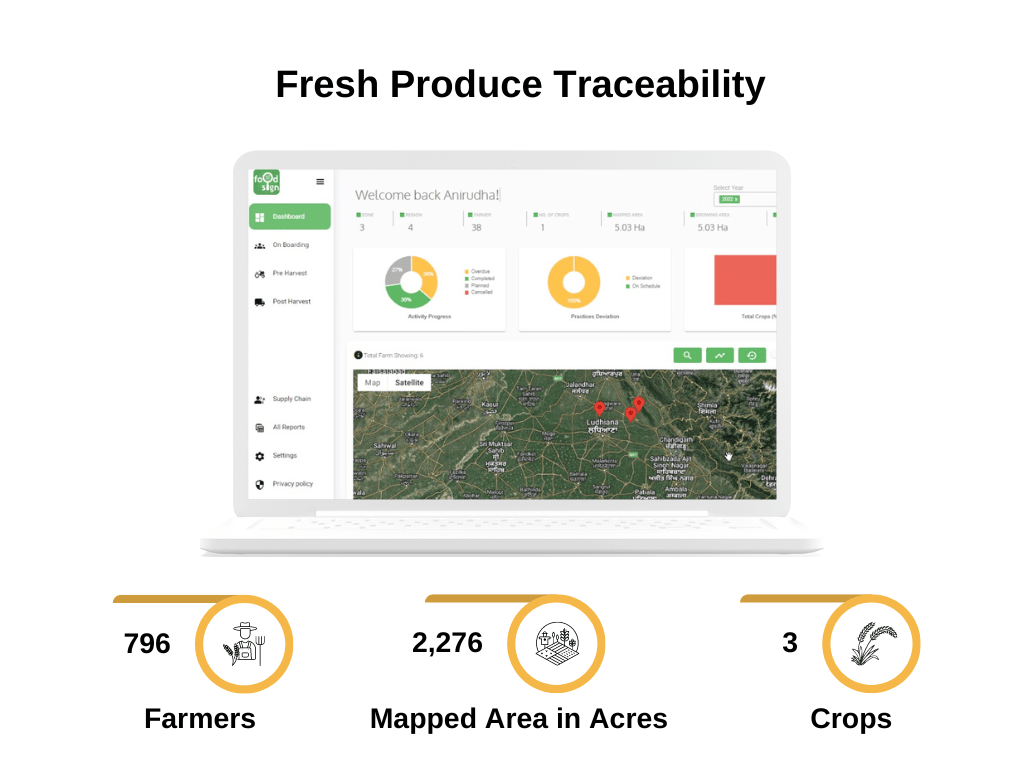
A major exporter in the agribusiness sector is dedicated to empowering farmers and providing them access to global markets. They have already provided benefits to over a million farmers and plans to scale up to 5 million by 2024.
They grow a diverse range of crops from staple crops such as rice and maize to pulses, fruits and vegetables. With a focus on quality and sustainability, this exporter also supplies baby corn, chillies, bananas and grapes to markets in Europe and the Gulf region.
Agribusiness
India- Haryana, Bihar, UP, Odisha and West Bengal
Supply chain digitization , ensuring transparency and meeting export standards for crops using Farm Management Platform
TraceX farm management platform digitally transforms the food and agriculture ecosystem, ensuring a clean, credible, and traceable supply chain. By connecting various stakeholders securely, it facilitates the exchange of verifiable and auditable data, fostering mutual trust, accountability, and transparency. The comprehensive solution includes a multilingual, offline-enabled mobile app for farm management and a web application for post-harvest management, supply chain collaboration, and blockchain-based traceability.
Explore our Farm Management Platform
The farm and farmer management feature in the platform encompasses various functionalities aimed at efficiently onboarding and managing farmers within the system.
This involves capturing essential details such as plot ID, survey number, water source, soil type, address details, production practices, and landholding information. Farmers are individually registered via the mobile app or web platform, and their data can also be imported in bulk using Excel templates.
In addition to basic information, critical details like Global GAP Number, Government Unique Code, and Farmer Contract Agreement are captured for each farmer, enhancing traceability and compliance.
Geo-coordinates of farm boundaries are plotted by field officers during farm visits, allowing for accurate mapping of farm plots. This feature provides visibility into farm boundaries and crop areas, facilitating effective farm management and monitoring.
Farmer groups are created based on geographic areas and managed by field staff throughout the crop lifecycle. The organization’s team is responsible for creating and managing these groups, ensuring streamlined coordination and communication between farmers and field officers.
The Crop Master feature in the project facilitates comprehensive crop cycle digitization and management across various crops grown by farmers in different geographies.
Project managers or crop planning heads can configure different crop varieties grown by farmers for the current season. This includes associating crop varieties with specific farmer groups, defining crop measurements, input plans, cost of production, and other preferences.
Users can create recommended input plans for crop varieties based on crop activity types, input categories, products, dosages, and multiple input options. This feature helps in planning and managing inputs effectively throughout the crop cycle.
Users can develop crop calendars for the entire crop cycle using Package of Practices (POP) associated with specific crop varieties and input plans. This feature ensures adherence to recommended agricultural practices, optimizing crop yields and quality.
Users can set up harvest estimates and patterns for each configured crop variety for the required crop season or year. This includes defining harvest types, whether single or multi-harvest, and planning harvest activities accordingly.
The Project/Operation Manager (Packhouse) will establish a Process Master for each SKU (Finished Goods) according to business requirements.
Raw produce received from farmers is cleaned. The produce is sorted and graded based on physical, chemical, and other parameters set by organizational guidelines. Users can select individual or multiple batches for grading. Details are entered in the input and output sections, with a summary page for verification. Upon submission, a new batch is created.
Graded produce is packed using pre-determined packaging materials configured in the Process Master. Users select the required batch of inputs and specify quantity details. Users select the output product SKU and quantity details for packing.
The raw produce procured from farmers will be transferred from their storage facilities to a designated warehouse for further processing or necessary actions.
At the warehouse, the admin will receive the batches sent from the farmers’ plots, verifying the actual sales details through the view receipt, Accept GRN, and Buy functions. This process ensures transparency and accuracy in recording the received quantities.
The procurement manager determines the price of the produce, which will be used to calculate the final net-off value for the farmer. This amount will account for the cost of inputs distributed to the farmer for the crop season, ensuring they receive a fair and accurate payment from the organization.
What is food traceability | Types of traceability in supply chains | Food traceability best practices | Traceability in the food industry | Digital traceability system | Blockchain food traceability solutions | QR code traceability for consumer trust | ERP integration for traceability | Conscious consumerism through traceability | Food system transformation with traceability | Coffee supply chain guide | Coffee traceability from bean to cup | Sustainable coffee supply chain | Regenerative agriculture for coffee | Agroforestry in the coffee value chain | Rainforest Alliance certified coffee | Single origin coffee explained | Cocoa supply chain traceability | Child labour in cocoa supply chains | Child labour monitoring and remediation systems | Fairtrade cocoa sourcing | Agroforestry in cocoa supply chains | Tea supply chain transformation | Sustainability in the tea value chain | Seed supply chain traceability | Seed supply chain basics | Forward traceability in seed industry | Seed supply chain challenges | Seed procurement process | Livestock traceability for meat safety | Blockchain traceability in livestock | Carbon traceability on blockchain | Maize value chain traceability | Farm to fork journey of millets | Millet value chain overview | Millets for a sustainable future | Pulse value chain traceability | Fruit and vegetable supply chain traceability | Banana supply chain traceability | Carbon footprint of banana production | Grape traceability for exports | Digital procurement for fruits and vegetables | Mango supply chain transparency | Tomato value chain challenges | Reducing post-harvest losses in potatoes | Sugarcane supply chain traceability | Sustainable sugarcane farming practices | Flower traceability from seed to scent | Orris root traceability in fragrance | Fair trade in fragrance oil supply chains | Hive to honey traceability | Cannabis supply chain traceability | Wine traceability grape to glass | Nutraceuticals and herbal supplements traceability | Rice supply chain traceability | Mill level rice traceability | Sustainable rice farming | Direct seeded rice cultivation | Sustainable rice platform standards | System of rice intensification | Alternate wetting and drying rice cultivation | Cotton supply chain traceability | Sustainability in the cotton industry | Organic cotton traceability | Fashion supply chain explained | Mapping the textile value chain | Traceability in the fashion industry | Traceability in waste management | Plastic value chain explained | Traceability for GI tagged products | Traceability for organic food brands | Spice supply chain traceability | Pepper traceability farm to table | Chilli value chain overview | Turmeric value chain | Batch level traceability for spice exports | Batch traceability in spice manufacturing | Sustainable spice sourcing technology | Sustainable farming practices for spices | Grocery supply chain challenges | Dairy supply chain guide | Real-time milk collection tracking | Dairy supply chain risk and issues | Batch level traceability in dairy | Ghee adulteration prevention | Sustainable dairy farming | Seafood supply chain ocean to plate | Sustainable fishing through supply chain transparency | Poultry value chain chicken to nugget | Tobacco supply chain overview | Digitizing tobacco farming | Tobacco traceability for compliance | Sustainable tobacco production | Sustainable tobacco programs | Digitizing the paper supply chain | Sustainable soy supply chains | RTRS certification in soy | Sustainable rubber from tree to tyre | FSC certified rubber solutions | Palm oil supply chain insights | RSPO certification with EUDR compliance | Seed oils traceability farm to refinery | Aggregation risk in oilseed supply chains | Digital traceability for cold pressed oils | Timber value chain from forest to product | Sustainable cashew production traceability | Arecanut value chain traceability | Essential guide to food supply chains | Factors influencing food supply chain management | Food supply chain in India | Blockchain for food supply chain | Agriculture and food supply chain factors | Traceability in food safety | Supply chain transparency for food safety | Understanding food recalls | Product recall in the food industry | Food waste in supply chains | Food waste recycling and composting | Food waste upcycling solutions | Supply chain traceability framework | Complete guide to supply chain traceability | Product traceability in supply chains | Material traceability in supply chains | Elements of supply chain provenance | Chain of custody in agriculture | Supplier mapping for traceability | Real-time supply chain visibility | Traceability for ESG compliance | Supply chain due diligence | Examples of food supply chain traceability | Supply chain traceability challenges | Multi-tier supply chain transparency | Traceability for supply chain managers | Mitigating supply chain risks for exporters | CTOs driving digital transformation with traceability | Digital transformation for licensed cocoa buyers | Bulk food product traceability | Automated farm input distribution | Supplier onboarding challenges | Digital process configuration in food production | Bulk GRN processing in procurement | Batch IDs in food traceability systems | Inventory management in the food industry




We use cookies on our website to give you the most relevant experience by remembering your preferences and repeat visits. By clicking “Accept All”, you consent to the use of ALL the cookies. However, you may visit "Cookie Settings" to provide a controlled consent.
| Cookie | Duration | Description |
|---|---|---|
| cookielawinfo-checkbox-analytics | 11 months | This cookie is set by GDPR Cookie Consent plugin. The cookie is used to store the user consent for the cookies in the category "Analytics". |
| cookielawinfo-checkbox-functional | 11 months | The cookie is set by GDPR cookie consent to record the user consent for the cookies in the category "Functional". |
| cookielawinfo-checkbox-necessary | 11 months | This cookie is set by GDPR Cookie Consent plugin. The cookies is used to store the user consent for the cookies in the category "Necessary". |
| cookielawinfo-checkbox-others | 11 months | This cookie is set by GDPR Cookie Consent plugin. The cookie is used to store the user consent for the cookies in the category "Other. |
| cookielawinfo-checkbox-performance | 11 months | This cookie is set by GDPR Cookie Consent plugin. The cookie is used to store the user consent for the cookies in the category "Performance". |
| viewed_cookie_policy | 11 months | The cookie is set by the GDPR Cookie Consent plugin and is used to store whether or not user has consented to the use of cookies. It does not store any personal data. |
WhatsApp us

Get the free TraceX Playbook — 10 traceability failures to fix before your next audit, a 10-point maturity scorecard.

Don’t miss out on your chance to grab access to our early bird offer!

Your essential compliance guide