
Transforming Banana Traceability with TraceX Blockchain Solutions
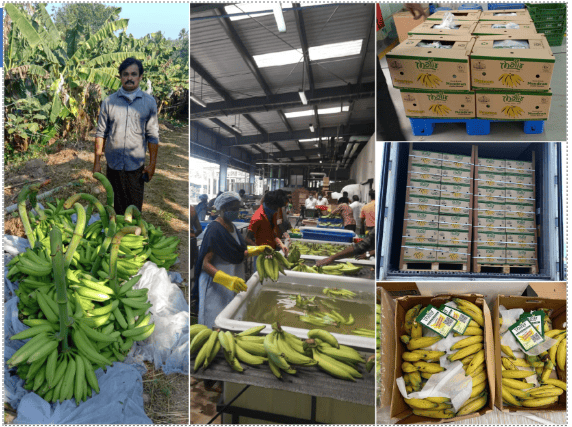
Vegetable and Fruit Promotion Council (VFPCK) is a company established with the aim of comprehensive development of the fruit and vegetable sector in Kerala. The GI authenticity of Nendran bananas is crucial for VFPCK as it safeguards the unique qualities of the bananas, enhances marketability, and protects against misappropriation. It ultimately plays a vital role in promoting and sustaining the agricultural enterprise associated with Nendran banana cultivation in Kerala.
Agribusiness
Kerala, India
Proving GI authenticity with Traceability Solutions
VFPCK, a pioneering agricultural organization, partnered with TraceX to enhance traceability in their Banana production and processing project. The objective was to create a robust pre-harvest and post-harvest solution that ensures transparency, efficiency, and sustainability across the entire supply chain.
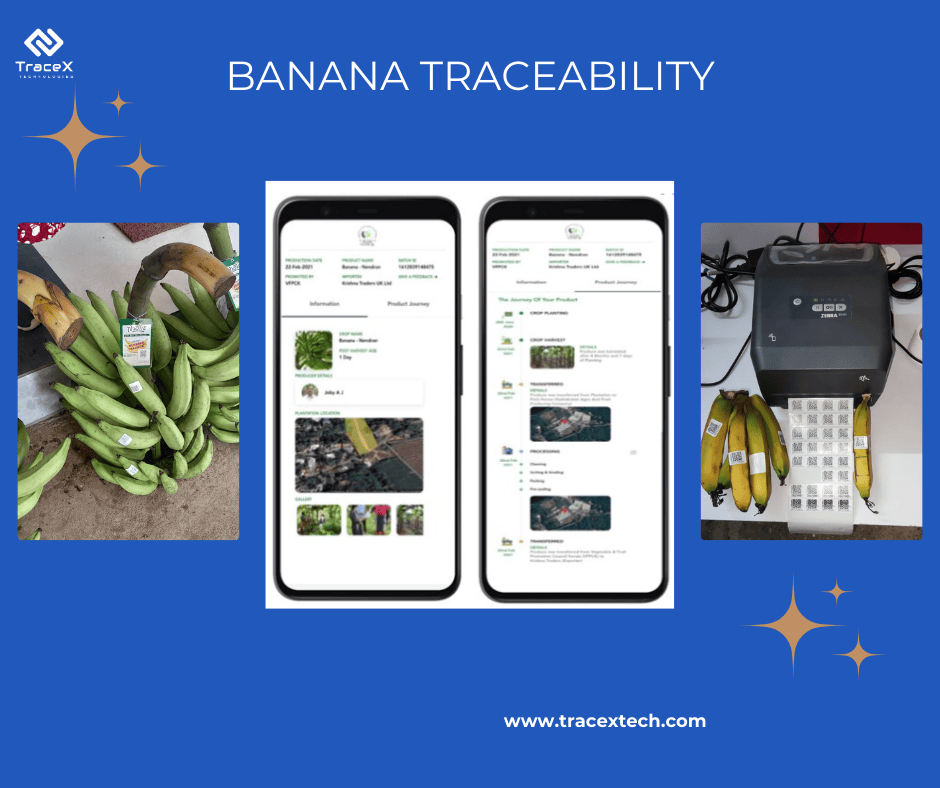
TraceX solutions in a multiuser environment were set up across 7 districts in Kerala across 45 villages with 126 planters. Site admins were registered at village level, District admins at district levels and overall, it was managed by the super admin who is the Director of VFPCK. The field staff were also configured as users. Presently, there are 60 active users in the platform.
Detailed farmer profiling involved capturing essential details such as plot ID, survey number, water source, soil type, and more. Farm geo-mapping ensured accurate mapping of farm boundaries through the mobile application.
The project focused on Banana crop production, requiring the configuration of crop varieties, input plans, and a comprehensive Package of Practice (POP). The POP was configured in alignment with the standard and sustainable cultivation practices. Crop Package of Practices is integral to sustainable agriculture as it provides a comprehensive set of guidelines that optimize resource use, preserve the environment, enhance soil health, and contribute to the long-term viability of agricultural practices. The adoption of PoP is a key strategy for farmers committed to sustainable and responsible farming. 36 activities were configured as a part of the package of practices. These activities included Planting, land management, Crop Management, Crop Soil Nutrition, Roguing, Pest, Weed and Disease Management, Staking, Suckers Management and Bunch Management. This data was meticulously managed through the application.
Daily crop activities were monitored in real-time to ensure adherence to recommended agricultural practices. The mobile application facilitated the addition of crops, allowing the field officers to update activities digitally.
Harvest planners are instrumental in aligning production with market demand, optimizing resource use, and enhancing overall efficiency in agriculture. They provide the necessary tools for farmers and sales teams to make informed decisions, improve collaboration, and meet the demands of a rapidly evolving agricultural landscape.
Harvest estimates and patterns for each configured crop variety were set up through the Harvest Planner, enabling single or multi-harvest types.
The web dashboard provided an overview of the harvested amount from various farmers, enhancing visibility.
Once the banana reaches the desired growth stage, farmers manually harvest it. The system, configured for Harvest Management, displays an estimated weight of the harvest based on the farmer’s acreage. The farmer then transports the harvest to SKS (controlled by the Government of Kerala) for domestic sales in the marketplace. SKS administrators accept the harvest (Goods Receipt – GRN), weigh the produce conduct auctions, , and sell it to traders or buyers. The weighing is done to ensure accuracy in weighing metrics for the purpose of traceability . At the SKS level, batches of banana harvest are visible in the web application’s inventory. QR codes can be generated at this stage and are tagged to the Thalir card.
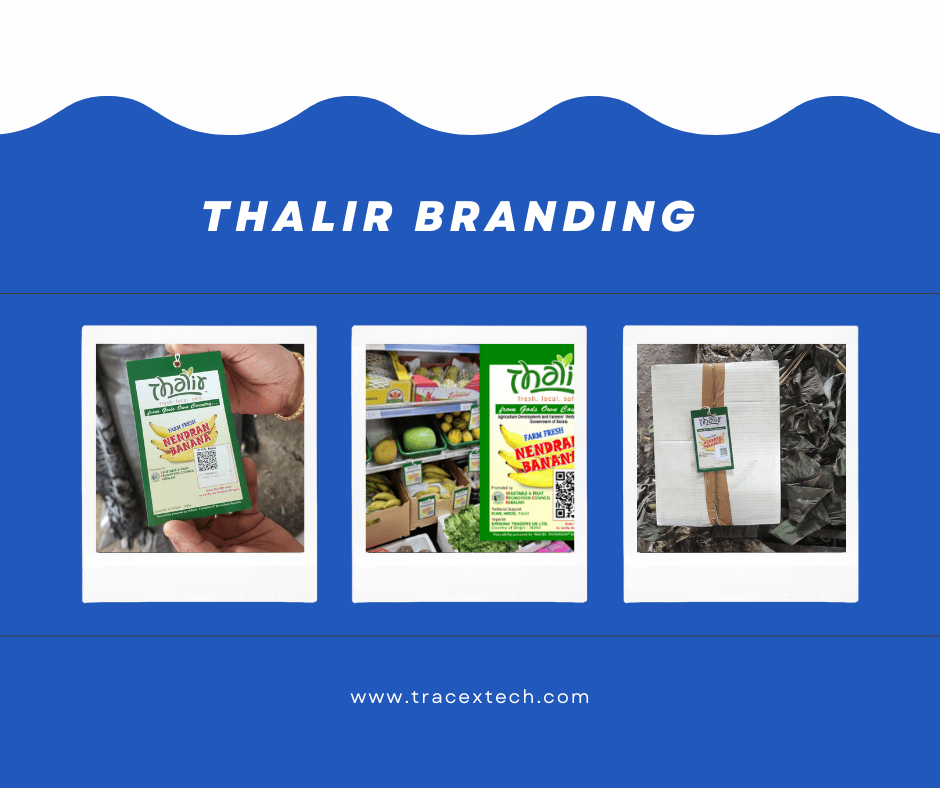
Thalir, introduced by VFPCK, is a brand that prioritizes authenticity, quality, and sustainability in agricultural products. The inclusion of QR code tagging on Thalir products serves as a transparency measure, allowing consumers to access detailed information about the product’s origin, cultivation practices, and adherence to quality standards. This innovative approach not only enhances consumer trust but also positions Thalir as a reliable and transparent brand committed to delivering high-quality and sustainable agricultural goods. The QR code tagging system provides consumers with a direct link to the product’s journey, fostering confidence and loyalty in the Thalir brand.
For batches requiring processing activities, such as those intended for Ecoshops and international sales, the harvest is transferred to the Primary Processing Centre (PPC).
Batches requiring processing are moved to the Primary Processing Centre (PPC). The harvest undergoes a series of processing steps, and the final produce is packed into specific Stock Keeping Units (SKU).
SKUs serve as the backbone of traceability systems by uniquely identifying products, and printing plays a pivotal role in translating these identifiers into scannable codes on labels. The integration of SKUs and printing technologies ensures that traceability is accurate, reliable, and seamlessly integrated into the product’s lifecycle.
All processing steps at the PPC are recorded in the Post Harvest section of the web application by the PPC Admin or SKS Admin. After packing, a unique QR code is printed and affixed to the designated container or box. The container is then either sent for sale or stored in the cold storage until the optimal time for sales to buyers.
Domestic sales are of 3 types – Trader Purchase, D2C Sales and Ecoshop Center Sales.
Explore our Food Traceability Platform
Transparency, Trust and Success for your Climate Journey.
What is food traceability | Types of traceability in supply chains | Food traceability best practices | Traceability in the food industry | Digital traceability system | Blockchain food traceability solutions | QR code traceability for consumer trust | ERP integration for traceability | Conscious consumerism through traceability | Food system transformation with traceability | Coffee supply chain guide | Coffee traceability from bean to cup | Sustainable coffee supply chain | Regenerative agriculture for coffee | Agroforestry in the coffee value chain | Rainforest Alliance certified coffee | Single origin coffee explained | Cocoa supply chain traceability | Child labour in cocoa supply chains | Child labour monitoring and remediation systems | Fairtrade cocoa sourcing | Agroforestry in cocoa supply chains | Tea supply chain transformation | Sustainability in the tea value chain | Seed supply chain traceability | Seed supply chain basics | Forward traceability in seed industry | Seed supply chain challenges | Seed procurement process | Livestock traceability for meat safety | Blockchain traceability in livestock | Carbon traceability on blockchain | Maize value chain traceability | Farm to fork journey of millets | Millet value chain overview | Millets for a sustainable future | Pulse value chain traceability | Fruit and vegetable supply chain traceability | Banana supply chain traceability | Carbon footprint of banana production | Grape traceability for exports | Digital procurement for fruits and vegetables | Mango supply chain transparency | Tomato value chain challenges | Reducing post-harvest losses in potatoes | Sugarcane supply chain traceability | Sustainable sugarcane farming practices | Flower traceability from seed to scent | Orris root traceability in fragrance | Fair trade in fragrance oil supply chains | Hive to honey traceability | Cannabis supply chain traceability | Wine traceability grape to glass | Nutraceuticals and herbal supplements traceability | Rice supply chain traceability | Mill level rice traceability | Sustainable rice farming | Direct seeded rice cultivation | Sustainable rice platform standards | System of rice intensification | Alternate wetting and drying rice cultivation | Cotton supply chain traceability | Sustainability in the cotton industry | Organic cotton traceability | Fashion supply chain explained | Mapping the textile value chain | Traceability in the fashion industry | Traceability in waste management | Plastic value chain explained | Traceability for GI tagged products | Traceability for organic food brands | Spice supply chain traceability | Pepper traceability farm to table | Chilli value chain overview | Turmeric value chain | Batch level traceability for spice exports | Batch traceability in spice manufacturing | Sustainable spice sourcing technology | Sustainable farming practices for spices | Grocery supply chain challenges | Dairy supply chain guide | Real-time milk collection tracking | Dairy supply chain risk and issues | Batch level traceability in dairy | Ghee adulteration prevention | Sustainable dairy farming | Seafood supply chain ocean to plate | Sustainable fishing through supply chain transparency | Poultry value chain chicken to nugget | Tobacco supply chain overview | Digitizing tobacco farming | Tobacco traceability for compliance | Sustainable tobacco production | Sustainable tobacco programs | Digitizing the paper supply chain | Sustainable soy supply chains | RTRS certification in soy | Sustainable rubber from tree to tyre | FSC certified rubber solutions | Palm oil supply chain insights | RSPO certification with EUDR compliance | Seed oils traceability farm to refinery | Aggregation risk in oilseed supply chains | Digital traceability for cold pressed oils | Timber value chain from forest to product | Sustainable cashew production traceability | Arecanut value chain traceability | Essential guide to food supply chains | Factors influencing food supply chain management | Food supply chain in India | Blockchain for food supply chain | Agriculture and food supply chain factors | Traceability in food safety | Supply chain transparency for food safety | Understanding food recalls | Product recall in the food industry | Food waste in supply chains | Food waste recycling and composting | Food waste upcycling solutions | Supply chain traceability framework | Complete guide to supply chain traceability | Product traceability in supply chains | Material traceability in supply chains | Elements of supply chain provenance | Chain of custody in agriculture | Supplier mapping for traceability | Real-time supply chain visibility | Traceability for ESG compliance | Supply chain due diligence | Examples of food supply chain traceability | Supply chain traceability challenges | Multi-tier supply chain transparency | Traceability for supply chain managers | Mitigating supply chain risks for exporters | CTOs driving digital transformation with traceability | Digital transformation for licensed cocoa buyers | Bulk food product traceability | Automated farm input distribution | Supplier onboarding challenges | Digital process configuration in food production | Bulk GRN processing in procurement | Batch IDs in food traceability systems | Inventory management in the food industry




We use cookies on our website to give you the most relevant experience by remembering your preferences and repeat visits. By clicking “Accept All”, you consent to the use of ALL the cookies. However, you may visit "Cookie Settings" to provide a controlled consent.
| Cookie | Duration | Description |
|---|---|---|
| cookielawinfo-checkbox-analytics | 11 months | This cookie is set by GDPR Cookie Consent plugin. The cookie is used to store the user consent for the cookies in the category "Analytics". |
| cookielawinfo-checkbox-functional | 11 months | The cookie is set by GDPR cookie consent to record the user consent for the cookies in the category "Functional". |
| cookielawinfo-checkbox-necessary | 11 months | This cookie is set by GDPR Cookie Consent plugin. The cookies is used to store the user consent for the cookies in the category "Necessary". |
| cookielawinfo-checkbox-others | 11 months | This cookie is set by GDPR Cookie Consent plugin. The cookie is used to store the user consent for the cookies in the category "Other. |
| cookielawinfo-checkbox-performance | 11 months | This cookie is set by GDPR Cookie Consent plugin. The cookie is used to store the user consent for the cookies in the category "Performance". |
| viewed_cookie_policy | 11 months | The cookie is set by the GDPR Cookie Consent plugin and is used to store whether or not user has consented to the use of cookies. It does not store any personal data. |
WhatsApp us

Get the free TraceX Playbook — 10 traceability failures to fix before your next audit, a 10-point maturity scorecard.

Don’t miss out on your chance to grab access to our early bird offer!

Your essential compliance guide