
Quick summary: Discover the top 7 best practices in sustainable agriculture that are revolutionizing the farming industry. From regenerative farming techniques to innovative water management strategies, this blog highlights actionable steps for a greener future. Learn how sustainable agriculture can lead to improved yields, environmental conservation, and a resilient food system. Read on to unlock the secrets of sustainable farming practices and contribute to a more sustainable world.
Agribusinesses are under pressure, like never before, to adopt Sustainable Agriculture Practices, but most are still operating with fragmented data, limited visibility into farm-level activities, and growing compliance demands from regulations such as EUDR and ESG frameworks. The challenge isn’t intent, it’s execution.
How do you ensure that farmers consistently follow sustainable practices? How do you prove it across thousands of smallholders and complex supply chains?
This is where the gap lies.
Sustainable Agriculture Practices are no longer just about better farming; they’re about verifiable, traceable, and data-backed systems. Solutions from TraceX help bridge this gap by digitizing first-mile data, enabling real-time monitoring of farm activities, and turning sustainability into something that’s not just practiced but measured, validated, and scaled.
This guide covers the most impactful sustainable agriculture practices and how technology platforms from TraceX help agribusinesses, cooperatives, food manufacturers, and NGOs implement and prove them at scale.
This guide is built for decision-makers experiencing one or more of these challenges:
| Your Role | Your Key Challenge |
|---|---|
| Agribusiness Procurement Teams | Struggling to verify supplier sustainability credentials |
| Food Manufacturers and Processors | Needing traceability documentation for EUDR, Organic, Fairtrade |
| Agricultural Cooperatives | Managing thousands of smallholder farmers without digital systems |
| Export-Oriented Farms | Facing buyer audits and losing contracts due to lack of proof |
| Sustainability / ESG Managers | Required to report Scope 3 emissions but lacking farm-level data |
| NGOs and Development Programs | Running sustainable livelihoods programs at scale across geographies |
Three forces are making sustainable agriculture a business-critical priority not just a brand positioning choice.
The EU Deforestation Regulation (EUDR) requires companies to prove that commodities like cocoa, coffee, palm oil, soy, cattle, wood, and rubber are not linked to deforestation after December 31, 2020. Non-compliance means market exclusion, not a fine. Similar regulations are emerging in the UK, the US, and across APAC.
Over 80% of agribusiness procurement teams surveyed by Deloitte cited regulatory compliance as their top sustainability investment driver in 2024.
Retailers like Walmart, Tesco, and Aldi have published public sustainability commitments requiring their suppliers to provide verified sustainability data, not PDFs of internal policies. The shift from self-declared to third-party verified compliance is already here.
The Corporate Sustainability Reporting Directive (CSRD) in Europe now requires companies above a threshold to report on Scope 3 emissions, which includes agriculture and land use. Without farm-level data capture, it is impossible to comply accurately.
The following practices are not just environmentally sound; they are the specific practices that certification bodies, regulators, and enterprise buyers look for when assessing compliance readiness. Each one requires documentation, data capture, and ideally third-party verification.
Why it matters: Buyers sourcing agricultural commodities increasingly require suppliers to demonstrate soil carbon sequestration and reduced erosion as part of EUDR and regenerative sourcing policies.
Key practices include conservation tillage, cover cropping, crop rotation, and composting. These build soil organic matter, improve water infiltration, and reduce input costs while increasing the carbon sequestration capacity of the farm.
Tracking Challenge:
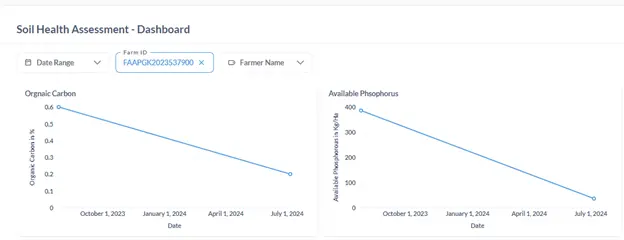
Most farms rely on manual soil tests done once a year. This creates a data gap that auditors flag immediately during certification reviews.
How TraceX helps: TraceX’s Farm Management Platform captures soil health indicators in real time, integrates with field visit tracking, and generates structured soil health reports ready for audit submissions across thousands of farmers simultaneously.
Why it matters: Agroforestry is now a recognized nature-based solution (NbS) for carbon credits and biodiversity commitments. Buyers and investors reward suppliers who can demonstrate measurable regenerative outcomes.
Integrating trees with crops or livestock increases biodiversity, improves microclimate stability, reduces soil erosion, and creates additional income streams all while contributing to carbon sequestration. This is particularly relevant for coffee, cocoa, and spice value chains.
Why it matters: Water scarcity is a top supply chain risk flagged in CDP Water Security reports. Buyers and lenders use water data as a key ESG risk indicator.
Practices include drip irrigation, rainwater harvesting, contour farming, and water-efficient crop selection. These reduce pressure on local water systems, lower operating costs, and improve resilience to drought a key climate risk.
Why it matters: Organic and Fairtrade certification requires documented IPM strategies. Without this, certification renewals fail. Buyers using these certifications as sourcing filters will delist uncertified suppliers.
IPM combines cultural controls (crop rotation, intercropping), biological controls (natural predators), and reduced chemical inputs. It minimizes pesticide residue, protects non-target species, and maintains ecosystem health all audited during certification.
Why it matters: Monoculture dependence creates supply concentration risk, something that food manufacturers and commodity buyers are actively trying to reduce. Diversified farms are viewed as more resilient supply partners.
Rotating crops breaks pest and disease cycles, reduces synthetic fertilizer dependency, improves soil biodiversity, and increases farm income stability. It is a foundational practice for both organic certification and climate-resilient supply chain strategies.
TraceX Farm Management Solutions are designed to digitize, standardize, and monitor farm-level activities in alignment with defined crop calendars and Package of Practices (POP).
Here’s how it enables configuration and tracking:
Why it matters: Social audits are now standard for enterprise buyers. Child labor, forced labor, and unsafe working conditions are zero-tolerance policy violations that result in immediate supplier delisting.
Documenting fair wages, safe working conditions, gender equity programs, and community engagement is no longer optional for suppliers selling to European, UK, or US retailers. This data must be capture-ready for audits not assembled after the fact.
TraceX Case Study:
A biopharmaceutical company using TraceX’s platform demonstrated measurable improvements in labor practices and supply chain transparency, strengthening brand reputation and increasing demand for ethically sourced products.
Why it matters: CSRD compliance, net-zero pledges, and Scope 3 reporting all require farm-level GHG data. Without it, your ESG reports will fail third-party verification.
Measuring farm-level emissions (N2O from fertilizers, CH4 from livestock, land-use change emissions) and carbon sequestration from agroforestry and soil practices is now required for companies with sustainability commitments. Nature-based carbon credits are also creating new revenue streams for compliant farms.
The intent to adopt sustainable practices isn’t the barrier. The barriers are operational and they’re the same ones we hear repeatedly from our customers:
| Challenge | Why It Blocks Progress |
|---|---|
| Challenge 1: Data Fragmentation | Farm data lives in spreadsheets, notebooks, and WhatsApp. There’s no single system of record. |
| Challenge 2: Certification Complexity | Multiple overlapping standards (EUDR, Organic, Fairtrade, GLOBALG.A.P.) with conflicting documentation requirements. |
| Challenge 3: Smallholder Scale | Cooperatives managing 5,000-50,000 smallholder farmers can’t capture consistent data without a mobile-first digital tool. |
| Challenge 4: Proof of Outcomes | Buyers don’t trust self-reported sustainability claims they need third-party verified data trails. |
| Challenge 5: Scope 3 Visibility | Manufacturers can’t measure upstream agricultural emissions without farm-level data from their suppliers. |
TraceX’s technology platform digitizes, tracks, and proves sustainable agriculture practices at the farm level, in real time, across any geography.
From farm gate to market, TraceX mobile app captures and records every step of the supply chain. Every input (seed, fertilizer, pesticide), every harvest event, and every processing stage is logged, timestamped, and traceable. This creates an immutable audit trail that satisfies EUDR and due diligence requirements.
TraceX’s mobile application works in low-bandwidth rural environments the last-mile connectivity problem that makes digital traceability impractical for most platforms. Field agents and farmers can capture data offline and sync when connected.
TraceX’s Regenerative Score Card allows cooperatives and agribusinesses to configure farm-level assessments for soil health, water use, biodiversity, and social indicators and score farms against regenerative milestones. The TechnoServe partnership demonstrated this at scale across coffee smallholders in India.
Whether you need to submit to EUDR due diligence systems, apply for Fairtrade certification, or respond to a Walmart sustainability audit TraceX generates structured, submission-ready documentation automatically from the data already captured in the platform.
TraceX calculates Scope 3 emissions from upstream agriculture using farm-level input and land-use data. It tracks nature-based solutions, including agroforestry, cover cropping, and reforestation, and generates carbon reports ready for CSRD submissions or voluntary carbon credit applications.
Proven at Scale:
TechnoServe used TraceX to improve coffee quality, track regenerative practices, and document socio-economic outcomes for thousands of smallholder farmers across India, connecting them to global premium markets.
| Customer / Partner | Outcome |
|---|---|
| TechnoServe (Coffee, India) | Improved farmer incomes, market linkages, and coffee quality documentation through regenerative scorecards across thousands of smallholders |
| Agribusiness Export Client | Drove sustainable exports, established data-driven agriculture standards, and reduced environmental impact of sourcing operations |
| Biopharmaceutical Supply Chain | Enhanced labor practices documentation, improved social transparency, boosted consumer trust and brand demand for sustainably sourced products |
| Cooperative | Centralized farm-level data capture across 15,000+ farmers, reduced audit preparation time from 6 weeks to 3 days |
| NGO Program Partner | Configured regenerative practice tracking and Fairtrade certification workflows for multi-country program with real-time dashboards |
Building sustainable food supply chains starts with visibility. Discover how traceability and data drive resilience and compliance from farm to fork.
Can farming fight climate change? Explore how agroforestry is emerging as a powerful carbon solution for sustainable agriculture.
Navigating sustainability certifications can be complex. Learn how to align your farm and supply chain with global standards.
For EUDR compliance, the most critical practices are deforestation-free land use, geo-referenced farm mapping, input documentation (no banned substances), and audit-ready supply chain traceability. You must be able to prove that commodities were not produced on land deforested after December 31, 2020 with verified geospatial data, not declarations.
The only scalable solution is a mobile-first digital platform that works offline. Field agents use the platform to capture farm-level data during visits, which syncs when connected. TraceX was built specifically for this challenge cooperatives managing tens of thousands of farmers use it to centralize data, generate compliance reports, and monitor sustainable practice adoption in real time.
EUDR is a legal due diligence requirement failure means market exclusion from the EU. Organic and Fairtrade are voluntary third-party certifications that open access to premium markets and improve buyer trust. They have different documentation requirements but share a common need: verified, farm-level data about inputs, practices, and land use. TraceX supports all three simultaneously.
Scope 3 agricultural emissions measurement requires farm-level data on fertilizer application (N2O emissions), livestock (CH4), fuel use, and land-use change. Without a digital data capture system at the farm level, manufacturers are forced to use industry averages which rarely satisfy third-party auditors or CSRD requirements. TraceX captures this data at source and calculates Scope 3 emissions automatically.
TraceX’s platform is designed to support Organic, Fairtrade, Rainforest Alliance, GLOBALG.A.P., EUDR, ESPR Digital Product Passports, and voluntary carbon certification standards including Verra and Gold Standard. Compliance modules are configurable based on which certifications are relevant to your value chain.
Yes. TraceX is designed as an open, API-first platform that integrates with supply chain management, ERP, and procurement tools commonly used by agribusinesses and food manufacturers. Integration ensures data flows between systems without duplication and traceability data is available where procurement decisions are made.