
Quick summary: The global rice trade is shifting from a focus on volume to a demand for transparency. As policy and climate risks increase, digital traceability is becoming the key to competitiveness. We break down the top 10 exporters and the forces redefining the market in 2026.
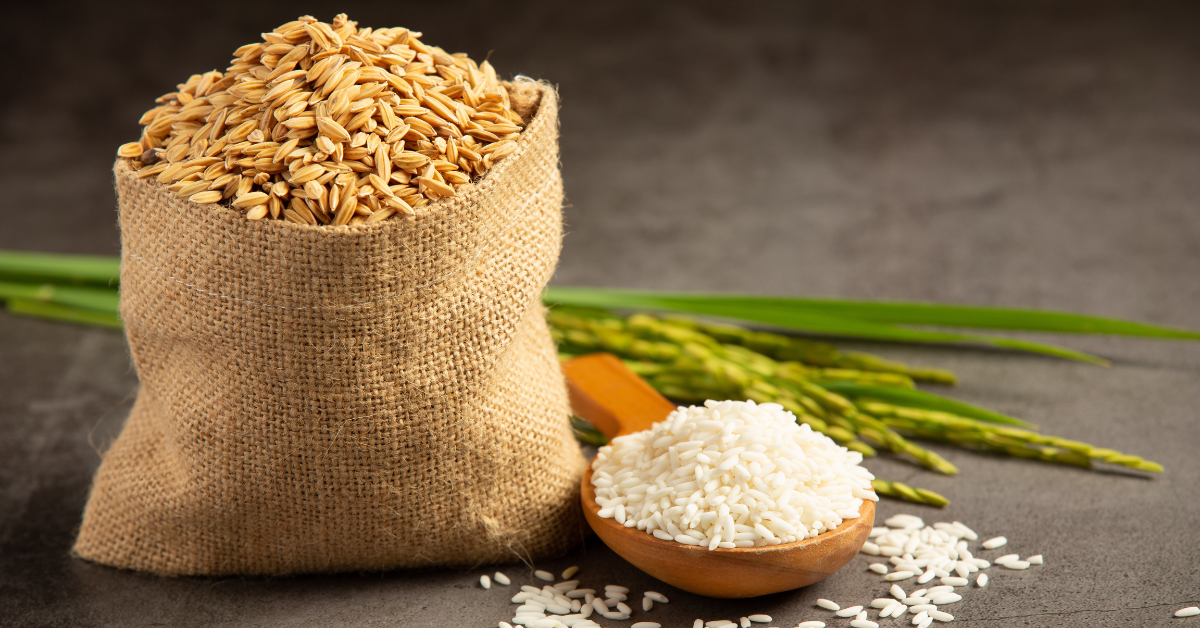
Rice is one of the world’s most traded staple commodities and a critical component of global food security. International rice trade links producing regions with importers that rely on rice for domestic consumption, industrial use, and food reserves. Over the last decade the rice market has been shaped by a few dominant exporters, policy changes (export restrictions and lifts), shifting demand in Africa and the Middle East, logistical shocks, and weather-driven production volatility.
This blog examines the top 10 global rice exporters, explores the dynamics behind their market positions, and highlights the structural, policy, and operational factors shaping international rice trade today.
Key Takeaways
Rice accounts for a significant portion of global agricultural exports due to:
Each year, tens of millions of tonnes of rice cross international borders. While estimates vary slightly by source and reporting period, roughly 40–50 million tonnes of rice are traded globally annually. The actual market size fluctuates with harvest outcomes, domestic policy decisions, and changes in demand patterns. Major importing regions include:
Several structural drivers shape the global rice export market:
1. Production Concentration
A handful of countries produce enormous rice surpluses relative to their domestic needs — enabling them to export competitively. India, Thailand, and Vietnam are perennial leaders, collectively accounting for a large share of global exports.
2. Price Competitiveness
Export competitiveness is influenced by yield levels, input costs (fertilizer, water, labor), logistics efficiency, and government policy support. Countries with high yield potential and efficient logistics often secure stronger export positions.
3. Policy and Regulation
Government policies including export taxes, quotas, or outright bans can quickly shift global flows. For example, export restrictions from a major supplier can tighten global availability and push up prices, prompting importers to diversify their sourcing.
4. Trade Agreements and Logistics
Free trade agreements, port capacity, and freight costs shape how rice moves globally. Well-connected exporters with efficient logistics have comparative advantages in reaching distant or high-value markets.
5. Product Differentiation
Rice is not a single commodity: aromatic varieties like basmati or jasmine occupy premium markets, while standard long-grain rice is traded on volume and price. Exporters who can supply both depth (high volume) and breadth (premium products) have broader market access.
In recent years, the market has experienced several notable trends:
The global rice export market functions as a strategic lifeline for many countries. Export flows influence:
For import-dependent countries, reliable rice exports are not merely commercial arrangements they are central to food security and socio-economic stability.
The global rice export market is highly concentrated. While more than 100 countries grow rice, only a small group consistently exports at scale. These leading exporters shape global prices, influence food security in importing regions, and determine how resilient the rice trade is to shocks such as weather events or policy changes.
Based on recent global trade reports and export rankings, the following countries regularly appear among the top 10 rice exporters worldwide.
India is the undisputed leader in global rice exports, supplying both premium basmati rice and high-volume non-basmati varieties to markets across Asia, Africa, the Middle East, and Europe. Its dominance comes from vast production capacity, varietal diversity, and competitive pricing.
India’s role in the market is so significant that any change in its export policy directly impacts global prices and availability. Periodic export restrictions, minimum export prices, or quota adjustments often introduced to control domestic inflation—can tighten global supply overnight. Conversely, when India relaxed export restrictions in late 2024, global rice prices eased and trade flows stabilized.
India’s ability to serve both price-sensitive and premium markets makes it the most influential rice exporter globally.
Thailand is globally recognized for its Thai jasmine rice, a fragrant, premium variety with strong brand recognition. While Thailand may not always match India’s export volumes, it commands higher average prices due to consistent quality, strict milling standards, and strong branding.
Thailand’s competitiveness is reinforced by:
Thai rice is especially popular in East Asia, the Middle East, and premium retail markets, where buyers prioritize aroma, texture, and brand reputation over price alone.
Vietnam is one of the world’s most efficient exporters of long-grain white rice, competing primarily on price, reliability, and delivery speed. Its exports serve large, price-sensitive markets in Africa, Southeast Asia, and the Middle East.
Vietnam’s export strength lies in:
Vietnam often benefits when other exporters impose restrictions, quickly scaling shipments to meet short-term demand gaps.
Pakistan is a major supplier of basmati rice, particularly to Middle Eastern and European markets, and also exports increasing volumes of non-basmati rice to Africa and Asia.
In 2024–2025, Pakistan experienced notable export growth, capitalizing on supply constraints from other major exporters. Competitive pricing, expanded milling capacity, and favourable exchange rates supported this expansion.
Pakistan’s challenge going forward lies in improving consistency, traceability, and logistics resilience to sustain its growing export footprint.
The United States plays a distinctive role in the rice export market, focusing on medium- and short-grain rice (notably from California) as well as long-grain rice from southern states.
U.S. rice exports are characterized by:
The U.S. supplies markets in Latin America, Northeast Asia, and select premium segments, where reliability and regulatory compliance matter more than lowest-cost sourcing.
China is the world’s largest rice producer and consumer, meaning exports are not its primary focus. However, China appears in export rankings due to seasonal surpluses and specific product categories.
Chinese rice exports typically serve:
While China’s export volumes fluctuate year to year, its presence adds complexity to regional trade dynamics.
Myanmar exports significant volumes of rice to neighbouring Asian markets, benefiting from geographic proximity and competitive pricing. Despite political instability and logistical challenges, Myanmar remains an important regional supplier.
Its exports are largely:
Infrastructure constraints and compliance challenges limit Myanmar’s access to premium markets but keep it relevant in regional supply chains.
Brazil is the leading rice exporter in South America, supplying regional markets and select international buyers. While exports are smaller than Asian leaders, Brazil plays a strategic role in stabilizing supply within Latin America.
Brazil’s competitiveness stems from:
Brazilian rice is often favoured in neighbouring countries for shorter transit times and stable supply.
Cambodia has carved out a niche in fragrant and specialty rice varieties, exporting primarily to Asian markets and select European buyers. Cambodian rice often competes in the premium segment alongside Thai jasmine rice.
Though volumes are smaller, Cambodia’s focus on:
allows it to command higher prices and maintain a loyal buyer base.
Argentina and Uruguay, along with countries like Egypt or Guyana, periodically round out the global top-ten list depending on harvest conditions and trade flows.
These exporters typically:
Their presence highlights how global rice exports are shaped not just by scale, but by timing, quality, and regional demand.
The concentration of rice exports among a small group of countries means the global market is highly sensitive to disruptions, whether from climate events, export bans, or geopolitical shocks. For importers and buyers, understanding who the top exporters are, what they specialize in, and how stable their supply chains are is critical for managing risk.
In the next sections, we explore the key challenges these exporters face, insights from the 2025 rankings, and how digital traceability and compliance solutions are reshaping the future of global rice trade.
| Rank | Country | Estimated Export Volume (Million Metric Tonnes) | Estimated Export Value (USD Billion) | Primary Rice Types Exported |
| 1 | India | 21.5 – 25.0 | $11.5 – $13.0 | Basmati, Non-Basmati Long-Grain, Parboiled |
| 2 | Thailand | 7.0 – 8.0 | $4.2 – $5.0 | Jasmine (Hom Mali), Parboiled, White Rice |
| 3 | Vietnam | 7.5 – 8.1 | $4.1 – $4.8 | Long-Grain White, Fragrant (ST25), Broken |
| 4 | Pakistan | 6.5 – 7.0 | $4.0 – $4.3 | Basmati (1121), IRRI-6, Long-Grain White |
| 5 | United States | 3.5 – 4.0 | $2.3 – $2.6 | Medium-Grain (Calrose), Long-Grain |
| 6 | China | 1.5 – 2.0 | $0.8 – $1.1 | Specialty Varieties, Surplus Round-Grain |
| 7 | Myanmar | 2.5 – 3.0 | $1.2 – $1.5 | Long-Grain White, Broken Rice |
| 8 | Brazil | 1.2 – 1.6 | $0.5 – $0.7 | Long-Grain White |
| 9 | Cambodia | 1.0 – 2.2 | $0.9 – $1.2 | Fragrant (Malys Angkor), Specialty Rice |
| 10 | Argentina / Uruguay | 0.9 – 1.3 | $0.6 – $0.9 | Premium Medium- and Long-Grain |
Learn how farm-to-export traceability improves compliance, buyer trust, and supply resilience.
Explore How Traceability Is Transforming the Rice Supply Chain
Understand how exporters and producers are reducing risk, improving yields, and meeting sustainability expectations.
Read Our Guide to Sustainable Rice Farming Practices
See how digital platforms bring traceability, sustainability, and audit readiness together for rice value chains.
Discover the Sustainable Rice Platform Powering Compliant Exports
The global rice export market is supported by a complex, interconnected ecosystem that extends far beyond farmers and producing countries. From farm to final buyer, multiple stakeholders influence how rice is produced, processed, traded, and delivered across borders. Understanding these players and how they interact is essential for grasping why the rice trade can be both resilient and highly vulnerable to disruption.
At the center of the rice export ecosystem are large milling and trading companies. These players control critical post-harvest stages, including:
In countries like India and Pakistan, large exporters dominate basmati rice exports, operating sophisticated milling facilities capable of meeting premium buyer specifications. Their scale allows them to:
Because of their control over processing and branding, these firms often act as gatekeepers between millions of small farmers and global markets.
Exporters and traders form the commercial bridge between producers and international buyers. Unlike millers, traders may not own processing facilities but specialize in:
Traders play a crucial role during periods of market disruption. When supply from a major exporter tightens, traders quickly shift sourcing strategies identifying alternative origins and rerouting volumes to meet buyer demand. Their flexibility helps stabilize global trade, but it also means they are highly sensitive to policy changes, logistics disruptions, and regulatory shifts.
The physical movement of rice depends on logistics providers, shipping lines, ports, and inland transport networks. Even when rice is abundantly available, bottlenecks in logistics can halt exports.
Key logistics dependencies include:
Disruptions such as port congestion, container shortages, or geopolitical tensions affecting shipping lanes can delay shipments and increase costs. For bulk commodities like rice, where margins are often tight, logistics inefficiencies can determine whether an export deal remains viable.
On the demand side, buyers and governments significantly shape global rice trade flows.
Commercial buyers include:
These buyers influence quality standards, packaging requirements, and delivery schedules.
Government buyers and agencies play an even larger role in some markets. Many countries rely on rice imports for food security and operate:
Government decisions—such as releasing tenders, building reserves, or changing import duties—can trigger sudden spikes in demand, forcing exporters to scale shipments quickly or reallocate supply.
Certification bodies, regulators, and inspection agencies define who can access which markets. Compliance with phytosanitary rules, food safety standards, and buyer certifications is often non-negotiable.
Common compliance requirements include:
As regulatory scrutiny increases, especially in premium or highly regulated markets, exporters must provide verifiable, audit-ready documentation. Failure to meet these requirements can lead to shipment rejections, delays, or loss of buyer trust.
The rice export ecosystem functions as a tightly coupled system. Each participant relies on others to perform reliably:
When one node fails whether due to a policy change, port disruption, or certification issue the effects ripple through the entire system. Buyers often respond by scrambling to alternative origins, increasing pressure on other exporters and further amplifying volatility.
Despite strong and growing global demand, rice exporters across regions face a common set of structural and operational challenges. These challenges are interconnected policy decisions, climate risks, logistics constraints, and compliance requirements that often reinforce one another, increasing volatility and operational risk across the rice trade.
Government intervention remains one of the most significant sources of uncertainty in the global rice market. Export bans, quotas, or minimum export price requirements are often introduced to protect domestic food security during periods of inflation, poor harvests, or political pressure.
Because rice exports are highly concentrated, policy shifts by a major exporter, especially India, can immediately tighten global supply and push prices higher. Import-dependent countries are then forced to scramble for alternative origins, while exporters in other regions face sudden demand surges they may not be fully equipped to handle. For exporters, this volatility complicates long-term contracting and undermines market predictability.
Rice is particularly sensitive to climate conditions. Variations in monsoon timing, rainfall intensity, irrigation availability, and temperature directly affect yields and grain quality. Flooding can destroy crops, while droughts or heat stress can reduce both volume and milling quality.
As climate events become more frequent and severe, exporters face increasing uncertainty around:
This climate exposure makes it harder for exporters to commit to forward contracts and increases the likelihood of supply disruptions.
Even when rice is available, getting it to market remains a challenge. Exporters rely on complex logistics networks that include inland transport, ports, shipping lines, and global trade routes.
Recent years have highlighted how geopolitical tensions, port congestion, container shortages, and route disruptions (such as those affecting the Red Sea) can delay shipments and raise freight costs dramatically. For bulk, price-sensitive commodities like rice, logistics inefficiencies can erase margins and damage buyer relationships.
Rice buyers are increasingly specific about variety, grain length, aroma, milling quality, and packaging standards. Premium markets demand strict varietal purity particularly for basmati and jasmine rice while mass markets require consistent grain size and appearance.
Managing this at scale is challenging because:
Failure to maintain quality consistency can lead to shipment rejections or discounted pricing.
Traceability has moved from a “nice-to-have” to a core requirement in many export markets. Buyers increasingly expect:
For exporters sourcing from fragmented smallholder networks, collecting, validating, and maintaining this data is resource intensive. Manual systems and paper records are prone to errors and often fail under audit or buyer scrutiny, creating compliance risk and shipment delays.
Global rice prices fluctuate due to policy changes, weather events, currency movements, and logistics costs. These fluctuations are transmitted down the value chain, affecting farm-gate prices and farmer incomes.
Exporters face the delicate task of:
If farmers are underpaid or face high uncertainty, production stability suffers—ultimately undermining export capacity.
Different export markets impose different standards. Exporters may need to comply with:
Managing multiple certification schemes simultaneously increases operational complexity and cost. Documentation must be accurate, up to date, and aligned with buyer expectations any gap can result in delayed shipments or lost contracts.
Recent global rice export rankings continue to highlight India’s outsized influence on international rice trade. As the world’s largest exporter by volume, India functions as a critical price and supply anchor. Even modest policy adjustments such as export restrictions, minimum export prices, or quota changes tend to trigger immediate market reactions. Buyers often respond by accelerating purchases, diversifying sourcing strategies, or shifting demand toward alternative origins. This structural dependence reinforces why global rice trade remains highly sensitive to Indian policy decisions.
Whenever a dominant exporter tightens supply, secondary exporters quickly step in to fill the gap. Countries such as Pakistan, Vietnam, and select Southeast Asian exporters have demonstrated an ability to increase shipments when global buyers seek alternatives. However, the ability to capitalize on these opportunities depends heavily on logistics readiness, varietal availability, and documentation capabilities. Exporters that can scale operations quickly and meet buyer requirements tend to capture disproportionate gains.
Across recent trade cycles, Africa and the Middle East have remained the primary drivers of incremental rice import growth. Population growth, rising urban consumption, and food security priorities underpin sustained demand in these regions. Price sensitivity in many destination markets favors exporters that can deliver consistent volumes at competitive prices, reinforcing the role of high-efficiency supply origins.
While periods of higher export volumes have occasionally helped moderate global prices, the rice market remains highly vulnerable to external shocks. Weather variability, geopolitical disruptions, and sudden policy interventions can quickly tighten supply and push prices higher. As a result, price stability is often temporary, and buyers continue to prioritize supply reliability and contract performance.
Recent export data underscores the growing importance of product segmentation. Premium aromatic and specialty rice varieties continue to command higher value in markets such as the Middle East and Europe, while high-volume markets prioritize affordability and supply continuity. Exporters that can effectively segment their offerings or specialize in well-defined market niches are better positioned to manage volatility and protect margins.
Global rice exporters are entering a period where resilience and adaptability matter as much as production scale. Buyers are increasingly diversifying sourcing strategies, pushing exporters to expand market reach and reduce dependence on a limited set of destinations or corridors. At the same time, logistics reliability supported by flexible contracts and infrastructure investments will be critical to managing disruptions.
Quality differentiation and value addition through improved processing, food safety controls, and certifications will determine access to premium markets. Digital traceability is fast becoming a baseline expectation, enabling exporters to meet compliance requirements and build buyer confidence. Finally, climate adaptation and aggregation models that secure consistent, traceable supply will shape long-term competitiveness in an increasingly volatile global market.
TraceX equips rice exporters and aggregators with a practical digital backbone to manage traceability, origin verification, and compliance at scale. By digitizing farm- and plot-level data, preserving batch integrity through aggregation, and aligning records with certification and buyer requirements, TraceX reduces operational friction across the export lifecycle. Integrated risk scoring, audit-ready documentation, and ERP connectivity help exporters respond faster to buyer due diligence, minimize shipment delays, and maintain market access. In short, TraceX transforms fragmented rice supply chains into transparent, verifiable systems that support resilience, compliance, and long-term export competitiveness.
India is consistently the largest exporter by volume in recent years; policy changes there have major market impacts
India and Pakistan are chief basmati suppliers; Thailand and Cambodia are known for fragrant jasmine varieties; Vietnam is a major long-grain supplier.
Ensure batch traceability, digital farm/packhouse records, up-to-date phytosanitary documents, and rapid access to origin proofs ideally through an integrated platform. (TraceX automates many of these steps.)
Rankings can shift with policy moves, extreme weather, or logistical events. Secondary exporters can expand rapidly when a major supplier restricts trade.
A reliable, farm-to-shipment digital traceability system: it reduces risk, accelerates documentation, and supports access to premium buyers.