
Forestry to Factory Traceability in Shea Supply Chains 

Published
, 12 minute read

Quick summary: Learn how forestry-to-factory traceability transforms shea supply chains with geolocation mapping, digital onboarding, and batch tracking for transparency and compliance.

Traceability in Shea Supply Chains requires end-to-end visibility from wild shea parklands to final export batches. Because shea sourcing relies on dispersed women collectors, informal aggregation, and non-mapped parklands, exporters and brands must establish digital systems that capture geolocation polygons, collector/cooperative identities, batch-level movement, and legality documentation. Effective traceability in shea supply chains ensures compliance with regulations like EUDR, strengthens sustainability claims, enables proof of ethical sourcing, and reduces supply-chain risk. Digital tools such as GPS mapping, mobile onboarding, and blockchain-backed chain-of-custody records are now essential to verify origin, improve transparency, and build trust with global buyers. 

The shea sector can no longer rely on informal networks and trust-based sourcing. Global buyers aren’t just asking for proof of origin they’re demanding it. And without transparency, African shea exporters risk losing access to high-value markets. Demand for shea butter is booming across cosmetics, food, and pharmaceutical industries, yet the supply chain is still heavily dependent on dispersed women collectors, undocumented parklands, middlemen, and paper-based aggregation. This creates a major visibility gap: brands and regulators cannot confirm whether shea kernels were collected sustainably, legally, or from protected areas. 

With the EU and UK tightening sustainability and deforestation rules, and big beauty brands requiring verifiable data on ethical sourcing, the old way of working simply doesn’t scale anymore. This is where digital traceability becomes transformational not just as a compliance tool, but as the foundation for trust, premium pricing, and long-term market access. By mapping parklands, onboarding collectors digitally, and tracking every batch through cooperatives and processors, shea exporters can finally prove what global buyers want to see: a transparent, traceable, future-ready supply chain. 

Key Takeaways 

  • The shea supply chain is inherently complex built on wild, non-plantation parklands, informal women-led collection networks, and multi-tier aggregation. 
  • This structure makes traditional traceability nearly impossible, leading to major gaps in geolocation data, documentation, and chain-of-custody visibility. 
  • With new regulatory pressures and rising sustainability expectations from global beauty and food brands, traceability has shifted from optional to essential. 
  • Today’s biggest gap is digitalization: most shea sourcing still relies on paper logs, unverifiable claims, and fragmented data, creating risks of non-compliance, rejected shipments, and lost premium buyers.  
  • Digital traceability platforms close this gap by enabling GPS mapping of shea parklands, digital onboarding of collectors and cooperatives, batch-level tracking, and blockchain-backed proof of origin. 
  • TraceX strengthens this ecosystem with end-to-end geo-mapping, automated documentation, chain-of-custody tracking, and sustainability reporting helping shea exporters, processors, and cooperatives build transparent, compliant, and future-ready supply chains.

Ready to build transparent, compliant, and future-proof shea sourcing?

Download the Shea Supply Chain Playbook → »

Understanding the Shea Supply Chain and Its Complexity 

From Wild Shea Trees to Finished Shea Butter 

The shea supply chain is one of the most unique and human-centred agroforestry systems in the world. Unlike plantation-based commodities, shea relies almost entirely on wild, naturally occurring trees across the parklands of West Africa. Each step is deeply interconnected: 

  • Women collectors walk long distances to gather shea nuts from scattered wild trees often across shared or communal lands without formal documentation. 
  • Primary aggregation points bring together nuts from hundreds or even thousands of collectors in villages. 
  • Rural processors and cooperatives sort, dry, boil, and crack kernels often using traditional methods passed down over generations. 
  • Exporters and international buyers finally transform shea kernels or butter into ingredients for cosmetics, food, nutraceuticals, and pharmaceuticals. 

This journey from forest to factory touches multiple actors, most of whom operate informally and without structured record-keeping. 

Why Shea Is Hard to Trace 

Traceability in shea is not just difficult it’s fundamentally different from plantation-based commodities like cocoa or palm because the entire system is decentralized and forest-based. Key challenges include: 

  • No plantation system 
    Shea trees are not planted in rows; they grow wild across savannah parklands. This means there is no single “farm plot” to map, and sourcing zones can span hundreds of square kilometres. 
  • No ownership titles 
    Most shea trees do not belong to individuals. Communities may have usage rights, but legal titles rarely exist, making geolocation and legality verification complex. 
  • Multi-tier aggregators 
    Collectors sell to village-level aggregators, who sell to district traders, who sell to processors or exporters. Each step increases the risk of mixing batches making origin tracing difficult without digital systems. 
  • Paper-based tracking 
    Traditional documentation relies on notebooks, receipts, or verbal trust. As volumes grow, discrepancies, data gaps, and unverified claims become inevitable. 

Why This Matters Now 

Brands want transparency. Regulators want geolocation. Consumers want ethical sourcing. 
But the shea industry is being asked to provide levels of traceability that were never designed into the system. 

This is why digital transformation is no longer optional. Without it, exporters risk losing market access and women collectors risk losing income. 

Mapping parklands, digitizing collector networks, and tracking kernel batches from village to processor is the only scalable way to future-proof the shea industry. 

Want to understand how traceability transforms safety, quality, and compliance in modern food supply chains? 
Read our blog on Food Traceability Best Practices → 

Curious how blockchain creates tamper-proof, real-time traceability for global agri-value chains? 
Explore our blog on Blockchain Traceability Solutions → 

Why Traceability in Shea Supply Chains Is Essential Today 

Sustainability Commitments by Global Brands 

As brands transition toward climate-positive and ethically sourced ingredients, shea is under new scrutiny. Buyers now look for: 

  • Carbon accounting and insetting potential, since shea parklands act as natural carbon sinks 
  • Biodiversity protection, ensuring wild shea ecosystems remain intact 
  • Ethical sourcing and support for women collectors, who form the backbone of the industry 

Shea is uniquely positioned wild, regenerative, women-led. But without traceability, brands cannot credibly claim sustainability outcomes. Digital transparency enables shea to shine as a model for ethical supply chains. 

Competitive Advantage for Exporters & Cooperatives 

Traceability is becoming a market differentiator, not just a compliance checkbox. Exporters with strong digital systems gain: 

  • Preferred supplier status with global cosmetics and F&B brands 
  • Access to premium buyers seeking fully verified, ethically sourced shea 
  • Enhanced ESG credibility, helping cooperatives secure funding, long-term contracts, and impact-linked incentives 

The shea sector has long competed on price. Today, it competes on proof. Traceability unlocks trust and trust unlocks markets. 

What is the Digital Traceability Gap in Shea Today and Its Consequences 

Fragmented, Informal Supply Chains 

Shea moves through highly decentralized, community-driven networks, beginning with thousands of women collectors working in remote parklands. Nuts often pass through multiple small aggregators before reaching cooperatives or processors. Without a structured digital system, no single actor has full visibility, making it difficult to trace a batch back to its community or landscape of origin. 
Exporters struggle to meet traceability and due diligence expectations required by EU buyers, especially under emerging regulations. 

Dependence on Paper Logs and Verbal Records 

Most shea transactions collection volumes, payments, and aggregation data are still recorded through handwritten logs, notebooks, SMS updates, or word of mouth. These methods are prone to loss, duplication, or inconsistencies, and cannot support the geolocation, legality, or chain-of-custody requirements that global buyers now demand. 
When data is requested by regulators or brand auditors, suppliers cannot provide standardized, verifiable evidence. 

Limited Visibility for Brands and Buyers 

Global brands increasingly require transparency on: 

  • Origin of shea 
  • Women collectors livelihoods 
  • Environmental impact 
  • Deforestation and land-use risks 
    Without digital traceability, exporters cannot provide real-time data insights or sustainability proof points. 

Buyers turn to suppliers with better visibility, leaving traditional exporters at a competitive disadvantage. 

The shea sector’s biggest challenge isn’t production, it’s data. Without digital traceability, the industry risks being left behind in a world where transparency, geolocation integrity, and verifiable sustainability are becoming entry barriers rather than value-added features. 

How Digital Traceability Platforms Solve the Shea Traceability Challenge 

GPS Mapping of Shea Collection Zones 

Digital platforms enable accurate geolocation mapping of shea parklands an essential compliance requirement for global buyers and emerging regulations  

  • Instead of individual farm plots (which do not exist in wild shea systems), platforms map community-level polygons that represent natural shea landscapes. 
  • Mobile-friendly mapping apps make it easy for field agents to capture geolocation boundaries using smartphones. 
  • Built-in offline capability ensures mapping is possible even in remote areas with limited connectivity. 
    Result: Exporters gain verifiable spatial data on where shea is sourced, bridging one of the biggest traceability gaps in the sector. 

Digital Supplier Onboarding 

Modern traceability platforms digitize the onboarding of: 

  • Women collectors 
  • Rural cooperatives 
  • Community processors 
  • Aggregators 
    This includes digital KYC/KYF, identity verification, document upload (e.g., cooperative registration), and automated profiling. 
    Result: Suppliers who were previously invisible in the system become part of a transparent, verifiable digital supply chain. 

See how integrated KYC, digital identity verification, and automated onboarding can streamline your compliance workflows and bring every farmer into a transparent, trusted supply chain. 
Read the full case study → 

Batch Linking & Chain-of-Custody Tracking 

Every movement from nut collection to processing and export is tracked digitally. 

  • Time-stamped transactions build an accurate timeline of sourcing and processing events. 
  • Batch reconciliation ensures volumes match what communities can realistically produce, reducing fraud and data gaps. 
    This creates an unbroken, auditable chain of custody that global buyers increasingly demand. 

Blockchain-Based Proof of Origin 

Blockchain technology secures every data point producer’s identity, location, processing steps, and transaction history into an immutable ledger. 

  • Records cannot be altered or deleted. 
  • EU and global buyers receive tamper-proof origin verification. 
    Result: Stronger trust, reduced disputes, and audit-ready compliance documentation. 

Real-Time Dashboards for Buyers & Auditors 

Digital traceability platforms offer exporters and buyers rich, actionable insights through centralized dashboards: 

  • Sustainability metrics (women’s participation, carbon indicators, biodiversity data) 
  • Compliance status across sourcing communities 
  • Risk signals related to deforestation, legality, or supply gaps 
    Result: Faster audits, stronger buyer relationships, and a data-driven narrative of ethical, sustainable shea sourcing. 

Traceability platforms don’t just digitize the shea supply chain; they transform it. By replacing fragmented manual systems with geolocated, blockchain-secured, and real-time traceability, they empower exporters to meet global expectations and position themselves as transparent, future-ready leaders in sustainable shea. 

Need clarity on mapping shea parklands, onboarding collectors, or meeting regulatory expectations?

Talk to a TraceX expert today »

How TraceX Helps Build End-to-End Traceability in Shea Supply Chains 

Geo-Mapping of Shea Parklands 

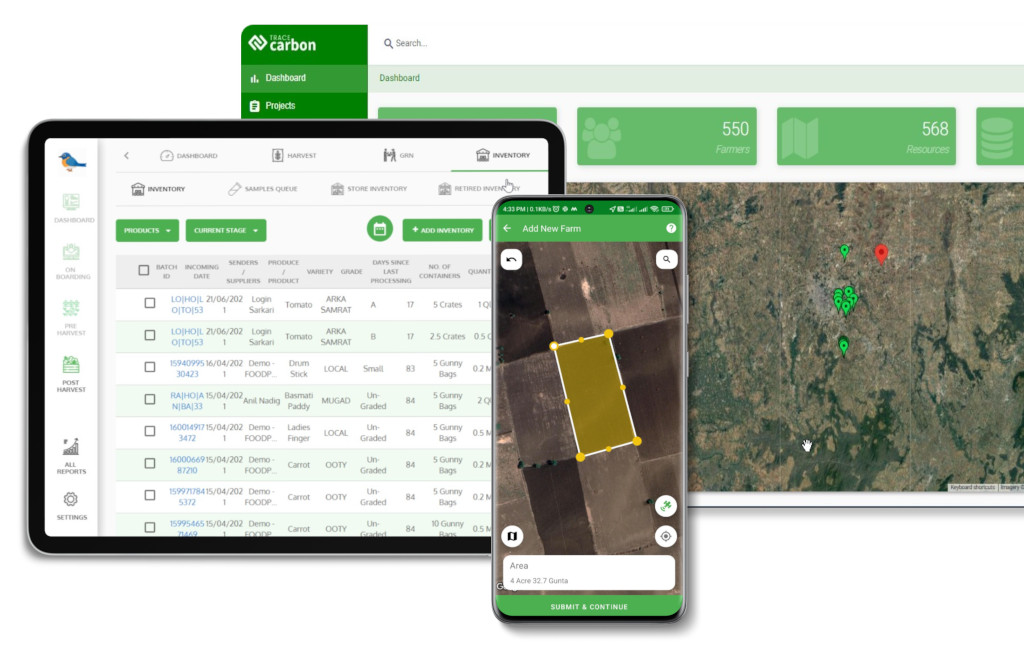
TraceX platform enables accurate geolocation mapping of wild shea collection areas, a core requirement for sustainability standards and emerging regulations like EUDR. Instead of individual farm plots, TraceX solutions support community-level polygon mapping to reflect the natural distribution of shea parklands. Field agents can capture polygons via mobile tools with offline functionality, ensuring even remote sourcing zones are accurately mapped. 
Outcome: Verified sourcing geography that meets global compliance expectations. 

Digital Onboarding of Collectors & Cooperatives 

With TraceX solutions, women collectors, community cooperatives, and rural processors are onboarded through intuitive mobile workflows. The platform captures: 

  • Digital KYC/KYF data 
  • Cooperative registration documents 
  • Contact and demographic profiles 
  • Optional livelihood and certification data 
    This shifts the shea value chain from informal record-keeping to structured, transparent supplier identity management. 
    Outcome: A digitized and verifiable supplier network that global buyers can trust. 

Blockchain-Backed Chain of Custody 

TraceX records every transaction from nut collection to drying, aggregation, processing, and export on a secure blockchain ledger. 

  • Each batch receives a unique digital ID 
  • Movements are time-stamped and immutable 
  • Lot integrity is preserved even across multi-tier aggregators 
    This provides exporters and buyers with tamper-proof proof of origin, eliminating ambiguity and inconsistencies common in traditional shea supply chains. 
    Outcome: Guaranteed data integrity and audit-ready traceability. 

Sustainability & Impact Reporting 

TraceX converts field data into rich impact dashboards that matter to global cosmetics and food brands, including: 

  • Women’s economic empowerment metrics 
  • Biodiversity indicators in Shea parklands 
  • Carbon estimates and insetting potential 
  • Traceable livelihood and community benefit stories 
    These insights enable exporters and cooperatives to communicate sustainability performance with credibility not anecdotes. 
    Outcome: Stronger buyer relationships, ESG alignment, and access to premium markets.

Learn how TraceX can power traceability for your shea supply chain.

Book a demo »

Building Shea Supply Chains That Are Traceable, Transparent & Future-Ready 

End-to-end traceability is no longer a “nice-to-have” for the shea industry it is the foundation of sustainable sourcing, regulatory preparedness, and buyer trust. As global demand for shea accelerates across cosmetics, food, and wellness sectors, exporters, cooperatives, and processors must adopt digital tools that map shea parklands, verify sourcing communities, track batches seamlessly, and deliver credible proof of origin. With platforms like TraceX bridging the gap between forest landscapes and global manufacturing lines, the shea sector can unlock premium markets, strengthen women-led livelihoods, and build resilient, future-proof supply chains from forestry to factory. 

Want a practical roadmap for building end-to-end traceability? 
Read the full guide → 

Explore how digital tools, automation, and data integration unlock real-time visibility. 
Explore the transformation playbook → 

Learn how visibility, tracking, and risk monitoring help you stay ahead of EUDR and global regulations. 
Read the compliance visibility blog → 

Frequently Asked Questions (FAQ’s)


Why is traceability important for shea supply chains? 

Traceability ensures transparency in sourcing wild shea nuts, verifies community-level collection zones, supports sustainability claims, and helps exporters meet emerging regulatory expectations. 

How do companies trace shea sourced from wild parklands without formal farms? 

Instead of plot-level mapping, digital platforms use community-level polygons, collector onboarding, and batch linkage to track shea from parklands to processing. 

Can digital traceability support sustainability certifications for shea?

Yes. Digital tools provide verifiable data on sourcing geography, women collectors, supply-chain practices, and processing steps strengthening compliance with ethical, ESG, and certification standards. 
Start using TraceX
Transparency, Trust, & Success for your Climate Journey.
Get the demo

Get your free trial

Request for a Demo Session

Download your Forestry to Factory Traceability in Shea Supply Chains  here

Download your Forestry to Factory Traceability in Shea Supply Chains  here

Download your Forestry to Factory Traceability in Shea Supply Chains  here

[hubspot type=form portal=8343454 id=304874ea-d4e0-4653-9825-707360746edb]
[hubspot type=form portal=8343454 id=b8321ac0-687a-4075-8035-ce57dd47662a]
food traceability, food supply chain, blockchain traceability, agriculture traceability software

Is Your Supply Chain Audit-Ready for 2026?

Get the free TraceX Playbook — 10 traceability failures to fix before your next audit, a 10-point maturity scorecard.

Grab your Free Trial now

Ensure your supply chain is EUDR-ready with TraceX.

Don’t miss out on your chance to grab access to our early bird offer!

food traceability, food supply chain

Are you EUDR Due-Diligence Ready?

Your essential compliance guide

food traceability, food supply chain

Please leave your details with us and we will connect with you for relevant positions.

[hubspot type=form portal=8343454 id=e6eb5c02-8b9e-4194-85cc-7fe3f41fe0f4]
food traceability, food supply chain

Please fill the form for all Media Enquiries, we will contact you shortly.

[hubspot type=form portal=8343454 id=a77c8d9d-0f99-4aba-9ea6-3b5c5d2f53dd]
food traceability, food supply chain

Kindly fill the form and our Partnership team will get in touch with you!

[hubspot type=form portal=8343454 id=b8cad09c-2e22-404d-acd4-659b965205ec]